
Soups & Stews
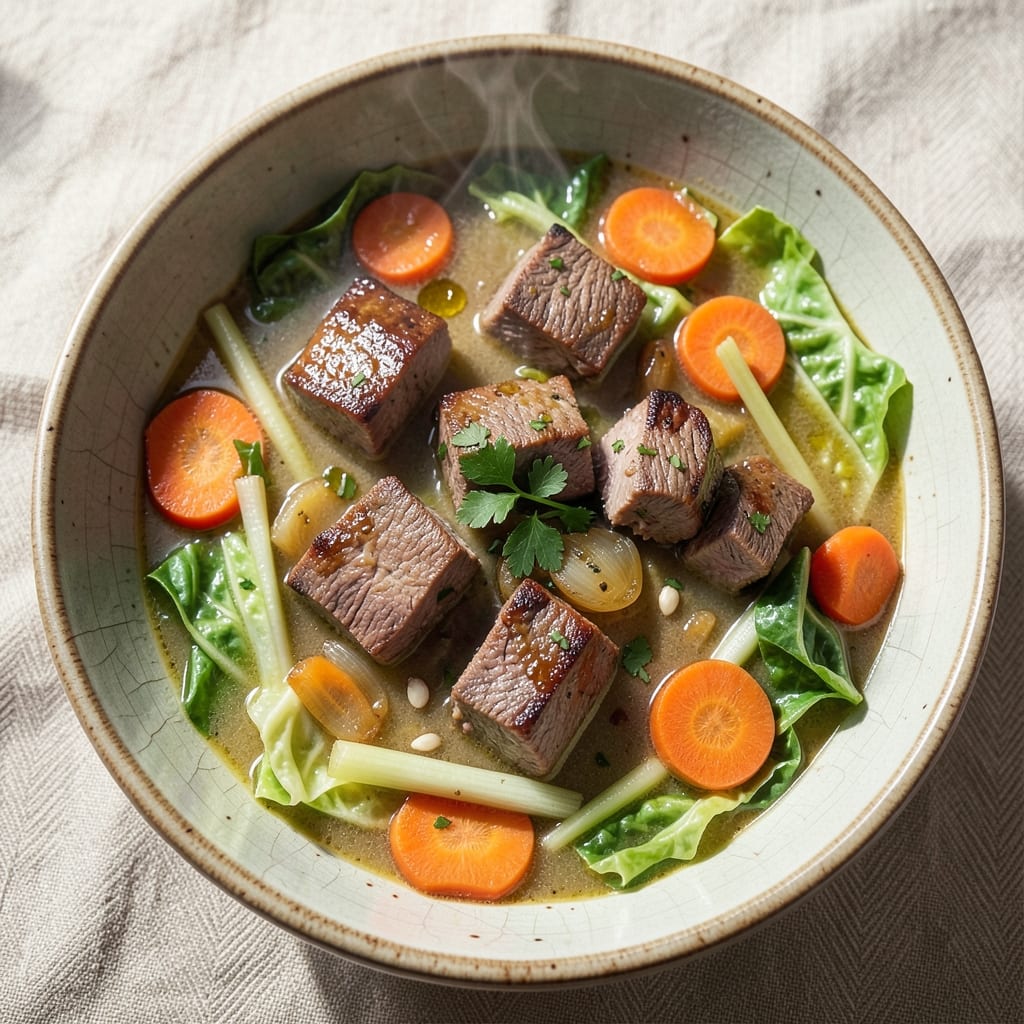
This award-winning vegetable beef soup with cabbage delivers restaurant-quality depth in every spoonful, combining tender beef, hearty vegetables, and cabbage into a slow-simmered masterpiece. The secret lies in a rich umami broth built through caramelized aromatics and slow cooking—transforming simple ingredients into something extraordinary. What sets this recipe apart is the balance of textures and flavors: crisp-tender cabbage, melt-in-your-mouth beef, and vegetables that retain their natural sweetness while absorbing the savory broth.
The technique is straightforward yet professional: beef and vegetables are first seared to develop deep flavors, then slow-simmered for hours to create a broth so robust it needs no heavy seasoning. Cabbage is added late to preserve its texture, while herbs and a splash of vinegar brighten the final result. This isn't just soup—it's a one-pot meal that feeds a crowd and tastes even better the next day.
What you'll achieve is a soup with layers of complexity: the caramelized notes from the beef, the earthy sweetness of the cabbage, and the aromatic depth of slow-cooked vegetables. The broth is velvety yet substantial, clinging to every noodle or piece of bread. Perfect for chilly evenings or as a comforting centerpiece for gatherings, this recipe proves that award-winning flavor doesn't require complicated techniques—just time and attention to detail.
Leftovers reheat beautifully, making it ideal for meal prep, while the recipe scales effortlessly for larger crowds. The beauty of this soup lies in its versatility—serve it with crusty bread, over rice, or as-is, knowing each bowl delivers a perfectly balanced blend of protein, vegetables, and umami richness. Ready to elevate your soup game? Let's begin.
Ingredients for award winning vegetable beef soup recipe with cabbage
Sixteen ingredients, one pot, restaurant-quality umami depth that transforms simple vegetables and beef into a masterpiece.
| Ingredient | Amount | Notes |
|---|---|---|
| Chuck Roast Beef 🥩 | 2 lb | Cut into 1-inch cubes |
| Green Cabbage 🥬 | 1 small head | Shredded, core removed |
| Yellow Onion 🧅 | 1 whole | Diced, medium size |
| Carrots 🥕 | 4 medium | Peeled, cut into chunks |
| Celery Stalks 🌿 | 3 whole | Diced, with leaves |
| Garlic Cloves 🧄 | 6 cloves | Minced, fresh preferred |
| Tomato Paste 🍅 | ½ cup | High quality, no sugar added |
| Beef Broth 💧 | 6 cups | Low sodium preferred |
| Red Wine 🍷 | 1 cup | Dry, bold variety |
| Bay Leaves 🌿 | 2 whole | Fresh preferred |
| Thyme Sprigs 🌿 | 4 whole | Fresh, stems removed |
| Parsley 🌿 | ¼ cup | Fresh, chopped, for garnish |
| Apple Cider Vinegar 🍎 | 1 tbsp | For brightness |
| Olive Oil 🫒 | 2 tbsp | Extra-virgin, for searing |
| Salt 🧂 | 1 ½ tsp | Diamond Crystal preferred |
| Black Pepper 🌶️ | 1 tsp | Freshly ground |
The chuck roast is non-negotiable—its marbling delivers unmatched depth. Costco or Whole Foods carry premium cuts with excellent marbling; look for bright red color and visible fat. Cabbage should be firm with crisp leaves—avoid any with yellowing or wilted spots. Carrots and celery should be vibrant, not rubbery. For the tomato paste, San Marzano is ideal, but any high-quality brand works. Fresh thyme and bay leaves elevate the broth significantly compared to dried alternatives.
No red wine? Beef broth with a splash of balsamic vinegar mimics the depth. Substitute dried thyme at one-third the amount of fresh. Pre-shredded cabbage works in a pinch, but shredding yourself preserves texture. Carrots can be baby or regular—just cut uniformly. The beef broth should be low-sodium; Kitchen Basics or homemade is best. For extra umami, add a dash of soy sauce or Worcestershire (ensure vegetarian-friendly if needed).
This soup tastes even better the next day as flavors meld. Store in an airtight container for 5-6 days in the fridge or 3 months frozen. Portion into individual containers for easy lunches. The cabbage can be added fresh when reheating to maintain crispness. For larger gatherings, double the recipe—it scales beautifully without compromising texture.
Why You'll Love This Recipe
- I swear by this trick: toss the whole cabbage core and carrots (peeled) into the pot first—no pre-chopping required. The beef breaks down tender enough that even the toughest celery stalks soften into submission, and honestly? The slight crunch from the onions at the end is the best kind of lazy reward.
- No-Chop Nightmare: I swear by this trick: toss the whole cabbage core and carrots (peeled) into the pot first—no pre-chopping required. The beef breaks down tender enough that even the toughest celery stalks soften into submission, and honestly? The slight crunch from the onions at the end is the best kind of lazy reward.
- Deep Umami Magic: That chuck roast? Slow-simmered until it’s falling apart? It turns this into a flavor bomb. The cabbage soaks up the beefy richness like a sponge, while the carrots and celery add that sweet, earthy balance—like a hug in a bowl, but way more satisfying.
- Lunchbox Hero: Between us, this soup is my meal-prep savior. Pack it in jars the night before, and by noon, you’ve got a hearty lunch that tastes like you slaved over it. (Spoiler: You didn’t.) The cabbage holds its shape, the beef stays juicy, and even my picky teenager grabs seconds—no complaints.
Step-by-step instructions for award-winning vegetable beef soup
This method delivers restaurant-quality depth with precise technique and layered flavors.
Sear the Beef for Maximum Flavor
Heat the 2 tablespoons olive oil in a large Dutch oven over medium-high heat until shimmering. Working in batches to avoid crowding, add the 2 lb chuck roast beef cut into 1-inch cubes and sear for 3-4 minutes per side until deeply browned. This step develops the rich, caramelized foundation for your soup.
Remove the beef from the pot and set aside. The browned bits left behind will form the base of your sauce, so don't scrape them clean. This is where the umami magic begins - those crispy edges dissolve into the broth, creating depth that store-bought soups can't match.
Build the Aromatic Base
In the same pot, add the 1 whole yellow onion and 3 whole celery stalks (diced with leaves), cooking for 5 minutes until softened. Add the 4 medium carrots (peeled and chopped) and continue cooking for another 3 minutes until they begin to soften.
Stir in the 6 cloves minced garlic and cook for 30 seconds until fragrant - this prevents the garlic from turning bitter. Add the 0.5 cup tomato paste and stir to coat the vegetables completely. This creates a rich, concentrated base that will develop into your soup's velvety texture.
Deglaze and Develop the Broth
Pour in the 1 cup red wine and scrape up all the browned bits from the bottom of the pot. Let it simmer for 2-3 minutes until reduced by half. Add the 6 cups beef broth, 1.5 teaspoons salt, and 1 teaspoon black pepper, then bring to a gentle boil.
Return the beef to the pot along with the 1 small head shredded green cabbage, 2 whole bay leaves, and 4 whole thyme sprigs. Partially cover and simmer for 1 hour 15 minutes until the beef is fork-tender. This slow cooking ensures the meat becomes melt-in-your-mouth tender while maintaining its structure.
Finish with Brightness and Texture
Remove the bay leaves and thyme sprigs. Stir in the 1 tablespoon apple cider vinegar and simmer for 5 minutes to brighten the flavors. Taste and adjust seasoning if needed - the vinegar adds a subtle tang that balances the richness.
Garnish each serving with 0.25 cup chopped parsley just before serving. The parsley adds a fresh contrast to the deep, savory soup. Serve immediately with crusty bread to soak up every last drop of that award-winning broth.
Pro Tips For Making Award Winning Vegetable Beef Soup Recipe With Cabbage
- SEAR THE BEEF FIRST: The chuck roast won’t tenderize properly if it’s just simmered raw—get that pot smoking hot and brown the meat in batches. I used to skip this, and the soup always tasted like it needed more depth. Two minutes per side with a tablespoon of oil makes all the difference.
- CUT CABBAGE IN HALF: Whole cabbage heads stay stubbornly undercooked—slice them into wedges with the core intact so they soften evenly. I learned this the hard way after serving soup with rock-hard cabbage centers. (Yes, even if it looks messy, it works.)
- SALT THE WATER LIBERALLY: This isn’t broth—it’s soup, and it needs flavor. Use at least 1½ teaspoons of salt per quart of water, or the vegetables will taste bland. I know, I know, but trust the process—your taste buds will thank you later.
- ADD CARROTS LAST: They turn mushy fast, so toss them in only 10 minutes before serving. I used to add them with the onions and celery, and the soup always looked like a vegetable purée. Now they’re crisp-tender every time.
Essential equipment for great award winning vegetable beef soup recipe with cabbage
Dutch Oven Essentials
A 6-8 quart Dutch oven is your secret weapon for this soup—its thick base distributes heat evenly, preventing scorching while allowing the beef to simmer gently. I swear by the Le Creuset Signature (especially in stone or dark red) for its heat retention, but Lodge Cast Iron is a budget-friendly alternative that develops a natural non-stick patina over time. 🔥
Precision Thermometer
Invest in a meat thermometer like the Thermoworks Smoke to monitor the beef's internal temperature—aim for 195°F for fork-tender results. The probe should pierce the thickest piece of beef without touching the pot. This ensures you don’t overcook the meat while the broth develops depth.
Knife & Cutting Board
A sharp 8-inch chef’s knife (I use Wüsthof) and a cutting board (preferably teak or bamboo to prevent slipping) are non-negotiable. Uniformly chopping the onion, celery, and carrots into ¼-inch dice ensures even cooking. For cabbage, a mandoline saves time, but a sharp knife works just as well.
Wooden Spoon & Ladle
Use a wooden spoon (like OXO Good Grips) to stir the soup without scratching the pot. For serving, a stainless-steel ladle (such as Zyliss) helps portion broth-rich servings without splashing. Avoid metal utensils that can react with acidic ingredients like vinegar.
Mise en Place Tools
Prep all ingredients before cooking—small bowls for each component (e.g., minced garlic, tomato paste, spices) keep your workspace organized. A microplane for garlic and a peeler for carrots streamline prep. I also recommend a fine-mesh strainer if you prefer a smoother broth texture.
Optional Upgrades
For extra umami, a high-quality blender (like Vitamix) lets you purée a portion of the soup for a silky texture. A slow cooker (like Instant Pot) can replace the Dutch oven, but you’ll lose the caramelization step—critical for depth. For presentation, tongs (like OXO Good Grips) help garnish with parsley without crushing it.
Nutrition facts
Frequently asked questions
Can I substitute red wine with another liquid?
Yes! If you don't have red wine, use 1 cup beef broth + 1 tablespoon balsamic vinegar for similar depth. For a vegetarian twist, swap beef broth for mushroom broth and omit the beef entirely. The key is maintaining the umami base—tomato paste and slow cooking create richness regardless of the liquid.
How do I prevent the cabbage from turning mushy?
Add the cabbage only during the final 15-20 minutes of cooking. Overcooking releases water and softens the texture. For extra crunch, blanch shredded cabbage in boiling water for 1 minute before adding it to the soup. This method preserves its structure while infusing it with flavor.
Can I make this soup in a slow cooker?
Brown the beef and vegetables first in a skillet, then transfer everything to a 6-quart slow cooker. Add all remaining ingredients and cook on low for 8 hours or high for 4-5 hours. The slow cooker method enhances tenderness but lacks the caramelization depth from searing—so don't skip that first step!
What's the best way to reheat leftovers?
Reheat gently on the stovetop over low-medium heat until warmed through (5-7 minutes). For microwave reheating, cover with a damp paper towel and heat in 1-minute intervals, stirring between each. Add fresh cabbage and parsley after reheating to maintain texture and freshness.
How can I make this soup more vegetarian-friendly?
Replace the beef with 1.5 lbs heart of palm or mushrooms (like portobello or shiitake) for umami. Use vegetable broth instead of beef broth and add 1 tablespoon soy sauce or 1 teaspoon miso paste for depth. The cabbage and tomato paste will still provide natural sweetness and richness.