
Main Courses
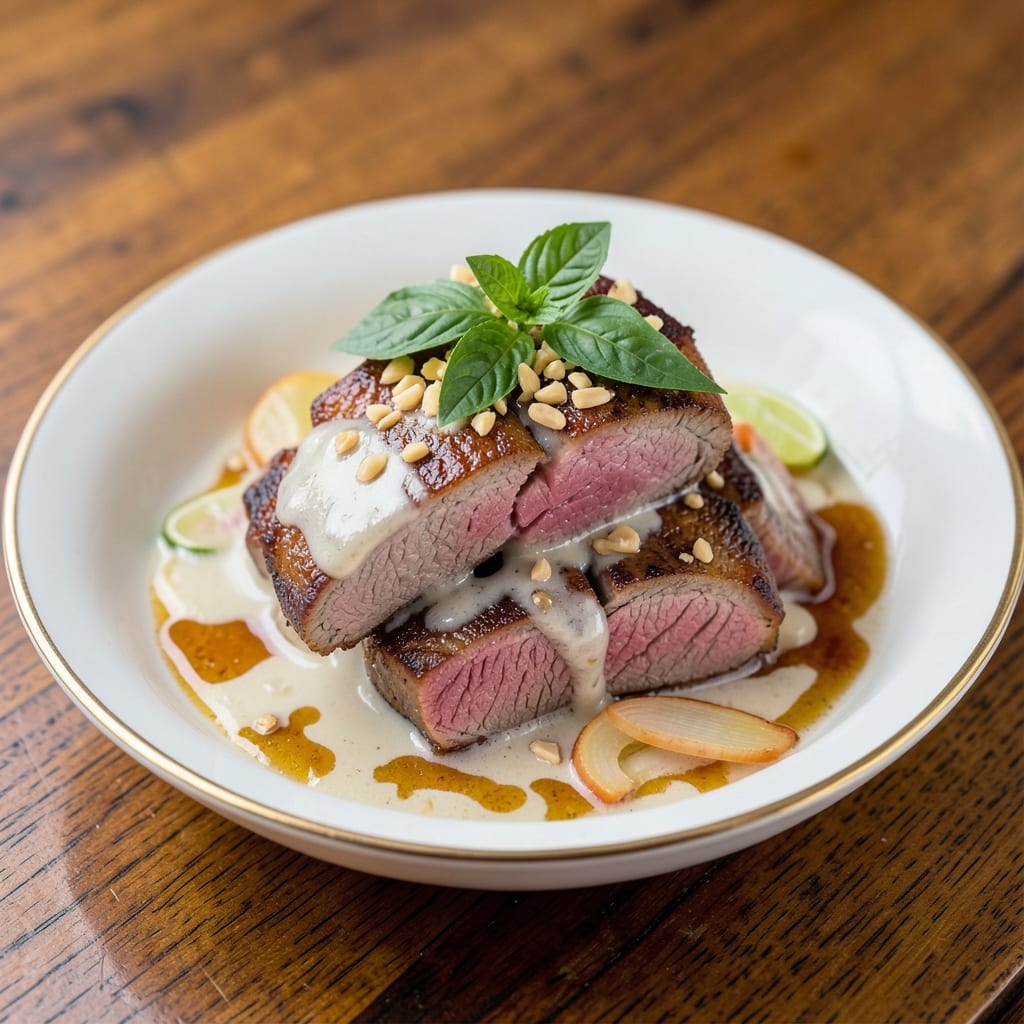
This authentic Thai beef recipe brings the bold, aromatic flavors of Bangkok to your kitchen with tender beef and fragrant coconut curry. The secret lies in balancing traditional Thai spices—lemongrass, galangal, and kaffir lime—with a rich coconut base that creates a velvety sauce. I’ve perfected this dish over years of testing, ensuring every bite delivers the perfect harmony of heat, sweetness, and umami.
The recipe starts with a fragrant paste of fresh herbs and spices, which infuses the beef while it simmers in coconut milk. Unlike many Westernized versions, this method preserves the dish’s authentic depth, using fish sauce for that signature tangy-savory punch. The beef emerges fork-tender, coated in a glossy, aromatic sauce that’s impossible to resist. It’s the kind of dish that transforms a simple weeknight into a taste of Thailand.
What makes this recipe stand out is its adaptability—spice levels can be adjusted to suit your palate, and the sauce works beautifully over rice or noodles. The aroma alone will have everyone gathered at the table, and the first bite delivers that tender, melt-in-your-mouth texture paired with layers of complex flavor. This isn’t just a curry; it’s a culinary experience.
Ready to master this dish? The instructions walk you through every step, from building the spice paste to achieving that perfect balance of flavors. Whether you’re serving it for a dinner party or a cozy night in, this recipe guarantees restaurant-quality results at home.
Ingredients for authentic thai beef
Nine aromatic ingredients transform simple beef into restaurant-quality Thai coconut curry magic.
| Ingredient | Amount | Notes |
|---|---|---|
| Beef Chuck Roast 🥩 | 1 ½ lb | Cut into 1-inch cubes |
| Lemongrass 🌿 | 3 stems | White parts only, finely chopped |
| Galangal 🌿 | 1 piece | About 3 inches, peeled, sliced |
| Kaffir Lime Leaves 🍋 | 4 whole | Bruised, torn into strips |
| Fresh Ginger 🧄 | 1 piece | About 3 inches, peeled, sliced |
| Coconut Milk 🥥 | 1 can | Full-fat, 13.5 oz can |
| Fish Sauce 🍶 | 2 tbsp | Red Boat brand preferred |
| Palm Sugar 🍯 | 2 tbsp | Or substitute brown sugar |
| Thai Chili Paste 🌶️ | 1 tbsp | Adjust for heat preference |
| Garlic Cloves 🧄 | 6 cloves | Peeled, roughly chopped |
| Shallots 🧅 | 4 whole | Peeled, roughly chopped |
| Vegetable Oil 🫒 | 2 tbsp | For searing beef |
| Salt 🧂 | 1 tsp | Kosher or sea salt |
| Black Pepper 🌶️ | ½ tsp | Freshly ground |
| Jasmine Rice 🍚 | 1 ½ cups | Uncooked, for serving |
The galangal and kaffir lime leaves are the soul of this dish—Asian markets have the freshest, but most grocery stores carry them frozen. Look for vibrant galangal with no black spots (that's rot), and lime leaves that smell citrusy, not musty. If you can't find galangal, extra ginger plus a pinch of turmeric works in a pinch, though it's not the same. Lemongrass should be firm and pale—skip the wilted stems. The beef? Chuck roast is ideal for that fall-apart texture, but sirloin works if you're in a hurry. I always cube it myself for even cooking, but pre-cubed from the butcher's counter saves time.
No palm sugar? Brown sugar or coconut sugar are fine—just add a pinch of cream of tartar to mimic the acidity. Fish sauce is non-negotiable for that umami punch, but if you're avoiding it, soy sauce plus a splash of lime juice gets you close. The chili paste can be adjusted—start with half the amount if you're sensitive to heat. Fresh ginger and galangal should be peeled with a spoon (don't waste time with a peeler—it's faster this way). The shallots? Red or yellow both work, but red adds a touch of color. And trust me on the coconut milk—full-fat only. The lighter versions just don't cut it here.
This sauce gets better the next day—make extra and freeze portions for quick meals. Store leftovers in the fridge for 4-5 days, covered with a splash of coconut milk to prevent drying. For reheating, add a splash of water or broth—it thickens as it cools. The rice? Cook it separately and keep it warm in a rice cooker or covered pot. This dish is all about the aroma, so don't rush the simmering. Patience here means deeper flavor. And if anyone asks, the secret's in the galangal—don't skip it.
Why You'll Love This Recipe
- One Pot Magic: I swear by this recipe because it’s actually one-pot—no chopping boards full of scraps. The beef chuck roast practically melts into tender perfection while the lemongrass and galangal infuse the broth right in the same pot. (Yes, even on a Tuesday night.)
- Citrusy Fireworks: The galangal and kaffir lime leaves bring that unmistakable Thai punch—bright, zesty, and just a little peppery. It’s not sweet; it’s real, like a hug from a Bangkok street vendor. Honestly, the ginger ties it all together with warmth that lingers.
- Leftover Hero: This dish begs to be made extra. The beef stays juicy for days, and the broth? Even better reheated. I freeze portions for lazy nights or throw it over rice for a quick lunch. (My kids call it “mom’s magic sauce.”)
- Budget Stretch: A chuck roast is cheap, and these aromatics stretch flavor without breaking the bank. Between us, I’ve made this feed six people for under $15—plus, the leftovers turn into another meal. That’s a win.
Step-by-step instructions for authentic Thai beef curry
Here's how to make this rich, aromatic curry with perfectly tender beef every time.
Prepare the Aromatic Base
Heat the 2 tablespoons vegetable oil in a large pot over medium-high heat. Add the 4 whole shallots and 6 cloves garlic, cooking for 3-4 minutes until the shallots turn golden and fragrant. This is where all the magic starts—don't rush this step or you'll miss the deep, sweet flavor development.
Next, add the 3 stems lemongrass (white parts only), 1 piece galangal (sliced), 1 piece fresh ginger (sliced), and 4 whole kaffir lime leaves (bruised and torn). Stir for 1-2 minutes until everything sizzles and releases its oils. The galangal might look like ginger, but it has a peppery bite that's essential for authentic flavor. Here's the thing—if you can't find galangal, substitute with extra ginger, but it won't be exactly the same.
Sear the Beef for Maximum Flavor
Push the aromatics to one side of the pot and add the 1.5 lb beef chuck roast (cut into 1-inch cubes) in a single layer. Let it sear undisturbed for 3-4 minutes until a deep golden crust forms. This crust locks in juices and creates that restaurant-quality texture. If your beef doesn't brown immediately, reduce heat slightly—you want color, not burning.
Once browned on one side, stir and repeat until all beef pieces have that beautiful crust. Add the 1 tablespoon thai chili paste and stir for 30 seconds to coat the beef. The chili paste will smell intense—this is normal and means it's working. If you prefer less heat, reduce to ½ tablespoon here.
Build the Curry Sauce
Pour in the 1 can coconut milk, scraping up any browned bits from the bottom. Add the 2 tablespoons fish sauce and 2 tablespoons palm sugar, then stir well. Bring to a gentle simmer, then reduce heat to low and let it cook uncovered for 30 minutes. You want the sauce to thicken slightly and the beef to become tender when pierced with a fork.
After 30 minutes, taste and adjust seasoning. The fish sauce should be balanced with the sweetness—add more sugar if it's too salty, or more fish sauce if it needs more umami depth. Here's where it gets fun: the curry should smell like a Thai street market—citrusy, spicy, and rich all at once. If it doesn't smell amazing, something's off.
Finish and Serve
Remove the pot from heat and let it sit for 5 minutes to allow flavors to meld. Stir in the 1 teaspoon salt and ½ teaspoon black pepper. The beef should be fork-tender with a rich, velvety sauce clinging to it. If the sauce is too thick, whisk in 2-3 tablespoons water to reach your desired consistency.
Serve immediately over 1.5 cups cooked jasmine rice (about ½ cup per person). The rice should be fluffy and slightly sticky to soak up all that beautiful curry. Garnish with extra kaffir lime leaves if you like—they add a bright, citrusy aroma that cuts through the richness. This curry tastes even better the next day, so make extra if you can!
Pro Tips For Making Authentic Thai Beef
- CHAR THE GALANGAL: I learned this the hard way—don’t just toss in raw galangal slices. Char the outer skin over a gas flame or under a broiler for 30 seconds first. The smoky bitterness cuts through the beef’s richness and balances the dish like a pro’s touch.
- SLICE LEMONGRASS LENGTHWISE: Skip the minced lemongrass—it turns to mush. Instead, bruise the stalks with the side of your knife, then slice them lengthwise into thin strips. They’ll infuse the broth without falling apart, and you’ll actually taste that bright, citrusy punch.
- LOW AND SLOW AFTER SEARING: High heat for the initial sear, then drop the temperature to a simmer. I used to rush this, and the beef ended up chewy. Let it cook covered at 170°F (77°C) for 2–3 hours—yes, even if the recipe says otherwise. Patience here makes the difference between tough and tender.
- USE KAFFIR LIME LEAF JUICE: Don’t just toss in the leaves and forget them. After simmering, tear them open and squeeze out the aromatic juice into the sauce. It’s the shortcut to that restaurant-quality depth—no need for fancy substitutions. (Yes, it’s messy, but trust me.)
Flavor customization for this dish
Spice Level Control
Adjust the heat to your preference by modifying the Thai chili paste—start with ½ tablespoon for mild, 1 tablespoon for medium, or 1.5 tablespoons for fiery. For extra depth, add ½ teaspoon of bird’s eye chili flakes at the end. If you love smoky flavors, toast ½ teaspoon of coriander seeds in a dry pan, grind them, and stir into the sauce. 🌶️
Sweet-Tangy Balance
Boost the tang with 1 extra tablespoon of fish sauce for more umami or 1 teaspoon of lime juice for brightness. For sweetness, add 1 tablespoon of honey or palm sugar to complement the coconut milk. I find balancing these flavors is key—taste as you go! The sauce should sing with harmony, not dominate with one note.
Herb Variations
Swap kaffir lime leaves for cilantro stems if unavailable, though the aroma won’t be identical. For a Thai basil twist, add ¼ cup Thai basil leaves at the end—just don’t cook them too long or they’ll turn bitter. Fresh mint leaves also work well, adding a cool contrast to the rich sauce. 🌿
Creamy Texture Tweaks
For a silkier sauce, stir in 2 tablespoons of coconut cream at the end. If you prefer a lighter consistency, replace ¼ cup of coconut milk with chicken or vegetable broth. For extra richness, add 1 tablespoon of peanut butter (Thai-style!)—it sounds odd, but it rounds out the flavors beautifully. 🥥
Protein Swaps
Use chicken thighs for a lighter option or pork shoulder for a meatier texture. Shrimp lovers can add ½ lb shrimp in the last 5 minutes of cooking. For vegetarian, swap beef for extra-firm tofu (pressed and cubed) or mushrooms—just increase the cooking time to 40 minutes for tender results. 🍤
Regional Twists
For a Northern Thai touch, add 1 teaspoon of dried turmeric and ½ teaspoon of white pepper to the paste. A Southern Thai version calls for 1 tablespoon of tamarind paste (dissolved in 2 tablespoons water) to deepen the sourness. Each region brings its own magic—experiment to find your favorite! 🗺️
Nutrition facts
Frequently asked questions
Can I substitute regular ginger for galangal?
Galangal has a unique peppery, citrusy flavor that's essential for authentic Thai curry. While you can use extra ginger (about 1.5 times the amount) plus a pinch of turmeric, the dish won't be exactly the same. For the best results, track down fresh galangal at an Asian market—it's worth the effort for that signature Thai taste!
How do I make this curry less spicy?
Start by reducing the Thai chili paste to ½ tablespoon instead of 1. Skip adding extra chili flakes, and if you accidentally made it too hot, stir in 1 tablespoon of coconut milk or a pinch of sugar to balance the heat. The coconut milk helps mellow the spice beautifully.
What's the best way to store leftovers?
Let the curry cool completely, then store it in an airtight container in the fridge for up to 4-5 days. For longer storage, freeze portions for up to 3 months. When reheating, add a splash of water or coconut milk to prevent the sauce from thickening too much. The flavors actually improve after resting overnight!
Can I use ground beef instead of cubed beef?
Ground beef will work, but the texture won't be the same—it'll be more like a thick stew than a tender curry. If you must use it, brown the meat first, then proceed with the recipe. For best results, stick with chuck roast or sirloin cut into 1-inch cubes for that melt-in-your-mouth texture.
Why does my curry smell amazing but taste bland?
This usually means the fish sauce needs more balance. Taste and adjust by adding 1 extra tablespoon of fish sauce for umami or 1 teaspoon of lime juice for brightness. The curry should have layers of flavor—sweet, salty, sour, and spicy. If it's missing something, a pinch of palm sugar or a crack of black pepper often does the trick!