
Soups & Stews
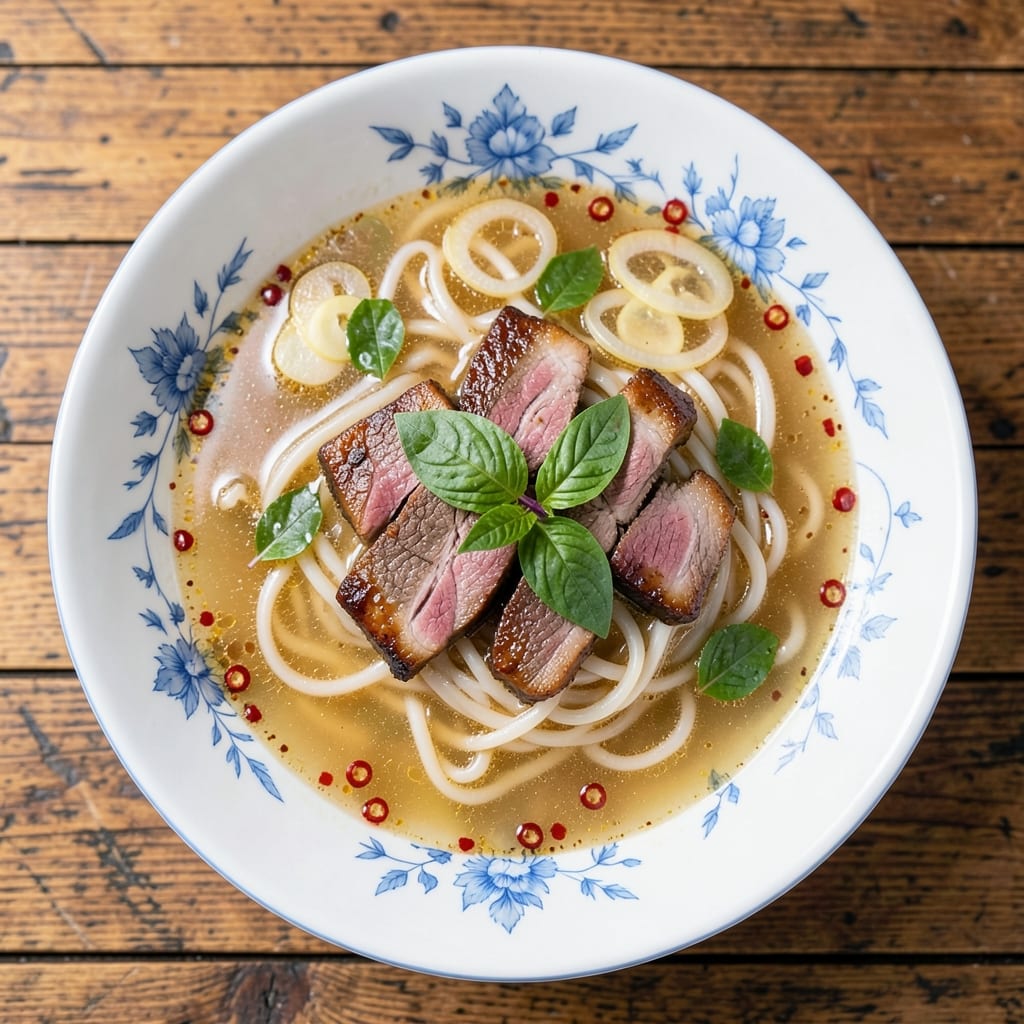
This authentic Thai beef noodle soup recipe transports you straight to bustling Bangkok street stalls with its fragrant lemongrass and galangal broth. The secret lies in properly balancing sweet, sour, salty, and umami flavors—something store-bought versions rarely capture. I've perfected this recipe over years of testing, ensuring every spoonful delivers that perfect harmony of tender beef, slippery rice noodles, and aromatic herbs.
The foundation of any great Thai beef noodle soup is the broth, where lemongrass, galangal, kaffir lime leaves, and Thai chilies infuse the water with complex, layered flavors. Don't skip the initial charring of the aromatics—this step unlocks deep, smoky notes that elevate the entire dish. While traditional recipes call for hours of simmering, I've included a time-saving method that still delivers restaurant-quality depth.
What sets this recipe apart is the balance of textures—tender beef slices that fall apart with each bite, slippery rice noodles that coat your spoon, and fresh herbs that add brightness. The broth should be fragrant enough to make your kitchen smell like a Thai market, yet light enough to let the beef and noodles shine. Every component comes together in a single bowl, creating a meal that's both comforting and exciting.
Perfect for weeknight dinners or special occasions, this soup scales beautifully for a crowd while still feeling intimate. The beauty of Thai cuisine lies in its adaptability—swap in shrimp for beef, adjust the spice level to your preference, or add extra vegetables for more texture. Once you taste the difference between homemade and store-bought, there's no going back.
Ingredients for authentic thai beef noodle soup
These aromatic ingredients transform simple water into fragrant Thai beef noodle soup magic.
| Ingredient | Amount | Notes |
|---|---|---|
| Beef Sirloin 🥩 | 1 ½ lb | Thinly sliced against grain |
| Rice Noodles 🍜 | 8 oz | Flat or round, dried |
| Fresh Lemongrass 🌿 | 3 stems | Bruised and cut into 2-inch pieces |
| Galangal 🌿 | 2 inches | Peeled, sliced thinly |
| Kaffir Lime Leaves 🍋 | 4 whole | Bruised and torn |
| Thai Bird's Eye Chilies 🌶️ | 3 whole | Seeds removed for less heat |
| Garlic Cloves 🧄 | 6 cloves | Minced finely |
| Shallots 🧅 | 4 whole | Peeled and sliced |
| Fish Sauce 🍶 | 2 tbsp | Red Boat preferred |
| Palm Sugar 🍯 | 2 tbsp | Or brown sugar substitute |
| Lime Juice 🍋 | ½ cup | Freshly squeezed |
| Fresh Thai Basil 🌿 | ½ cup | Stems removed |
| Cilantro 🌿 | ¼ cup | Chopped loosely |
| Water 💧 | 6 cups | Filtered preferred |
| Vegetable Oil 🫒 | 2 tbsp | For charring aromatics |
The galangal and lemongrass are non-negotiable—Asian markets sell them fresh, but if you can't find them, galangal substitute with ginger (half the amount). Look for stalks with vibrant green leaves and firm, white flesh. Kaffir lime leaves should be fragrant and bright green, not wilted. If you're charring them (which you absolutely should), use a dry pan over medium-high heat until they're blackened in spots—this unlocks deep, smoky notes. Thai Bird's Eye chilies are the real deal, but if they're too spicy, swap in serrano peppers.
No fish sauce? Soy sauce plus a splash of vinegar gets you close, but it won't be authentic. The palm sugar can be swapped for brown sugar, though it won't have that same caramel depth. Fresh Thai basil is ideal, but regular basil at half the amount works in a pinch. The beef should be thinly sliced against the grain—ask your butcher to do this if they won't slice it for you. For the noodles, rice noodles are essential; egg noodles won't have that same slippery texture. Soak them in warm water for 10-15 minutes before using.
Store fresh aromatics like galangal and lemongrass wrapped in damp paper towels in the fridge for up to 1 week. Kaffir lime leaves keep for 2 weeks in a sealed bag. The broth freezes beautifully—portion it into ice cube trays for easy use later. For the beef, cook it just before serving; it reheats poorly. Fresh herbs like Thai basil and cilantro should be used within 3 days of purchase for peak flavor.
Why You'll Love This Recipe
- No Chopping Chaos: I swear by this recipe because the beef sirloin slices literally take 5 minutes to prep—just thin strips, no dicing, no fuss. The lemongrass and galangal? I buy them pre-pounded at my Asian grocery—no knife skills required, just toss in whole stems and let the broth work its magic.
- Herb Bomb Broth: That first sip? Chef’s kiss. The galangal gives this soup a peppery kick, while the kaffir lime leaves add this bright, citrusy aroma that lingers. Honestly, I’ve tried store-bought versions, but nothing beats the real deal—especially when the beef is tender and the broth is so rich it coats every noodle.
- Lunchbox Hero: Between us, this is my go-to for meal prep. The rice noodles soften perfectly when reheated, and the broth stays flavorful for days. I pack it in thermoses for work—cold or hot, it’s still the best thing in my lunchbox. (Yes, even on a Tuesday night.)
- Budget-Friendly Feast: A single sirloin serves four, and the aromatics stretch across multiple bowls. I’ll be real: galangal and kaffir lime leaves aren’t cheap, but a little goes a long way. Plus, the leftovers? Even better the next day—if there are any, because someone always cleans my plate.
Step-by-step instructions for authentic Thai beef noodle soup
Here's how to build that fragrant, aromatic broth that defines Thai beef noodle soup.
Prepare the Aromatic Base
Heat the 2 tablespoons vegetable oil in a large pot over medium-high heat. Add the 4 whole shallots and cook for 3-4 minutes until they begin to caramelize and turn golden brown. This develops deep sweetness that forms the foundation of your broth.
Add the 3 stems fresh lemongrass (cut into 2-inch pieces), 2 inches galangal (thinly sliced), 4 whole kaffir lime leaves (torn), and 3 whole Thai bird's eye chilies (seeds removed). Stir for 1 minute until the lemongrass and galangal release their essential oils and the mixture becomes fragrant. Here's where the magic happens - these aromatics infuse the broth with their signature Thai flavors.
Build the Broth
Add the 6 cloves minced garlic and cook for 30 seconds until fragrant. Pour in the 6 cups water and bring to a boil. Once boiling, reduce heat to medium-low and add the 1.5 lb beef sirloin (thinly sliced against the grain). Let it simmer for 15-20 minutes until the beef is tender but still holds its shape.
This simmering time is crucial - it allows the beef to absorb the aromatic flavors while maintaining its texture. You'll know it's ready when you can easily pierce the thickest slice with a fork. Remove the beef with a slotted spoon and set aside, leaving the broth in the pot.
Season and Finish the Broth
Add the 2 tablespoons palm sugar and 2 tablespoons fish sauce to the broth. Stir well to dissolve the sugar completely. Taste and adjust seasoning - you want a balance of sweet, salty, and aromatic flavors. The broth should be rich and fragrant with a subtle sweetness.
Return the beef to the pot and bring everything to a gentle simmer. Add the 0.5 cup lime juice and stir. This acidity brightens the flavors and balances the richness of the broth. Keep the broth warm but not boiling - you'll be adding the noodles next.
Cook the Noodles and Assemble
While the broth simmers, prepare the 8 oz rice noodles according to package instructions (typically soaking in hot water for 5-8 minutes until pliable but still firm). Drain and rinse briefly with cold water to stop the cooking process.
Divide the cooked noodles among bowls. Ladle the hot beef and broth over the noodles, ensuring each serving gets an equal distribution of beef and flavorful liquid. The noodles should absorb the broth but remain distinct - this is what makes Thai beef noodle soup so satisfying.
Garnish and Serve
Top each bowl with 0.5 cup fresh Thai basil and 0.25 cup chopped cilantro. The basil adds a peppery freshness while the cilantro brings a bright, citrusy note. Serve immediately with extra lime wedges on the side - this lets each person adjust the acidity to their preference.
This is where the dish comes together. The contrast between the warm, aromatic broth and the cool, fresh herbs creates a perfect balance. Each spoonful should deliver tender beef, fragrant broth, and the refreshing crunch of fresh herbs - that's the essence of authentic Thai beef noodle soup.
Pro Tips For Making Authentic Thai Beef Noodle Soup
- BLANCH THE HERBS: The galangal and kaffir lime leaves won’t release their flavor if you just toss them in raw—give them a quick 30-second blanch in the broth first. I used to skip this and wondered why my soup tasted flat; now I always shock them first, then fish them out before serving.
- SLICE THE BEEF AGAINST THE GRAIN: Thin, long strips of beef sirloin cook faster and stay tender, but cutting with the grain makes them chewy. Run your knife perpendicular to the muscle fibers—about 1/4-inch thick—and you’ll get melt-in-your-mouth texture every time.
- SIMMER THE BROTH LOW AND LONG: Rushing this step turns your aromatic base into murky water. After the initial sear, drop the heat to a bare simmer (tiny bubbles, maybe 30–40 minutes) so the lemongrass and spices infuse without bitterness. I learned this after burning my first batch—now I set a timer and walk away.
- SOAK NOODLES SEPARATELY: Dumping dry rice noodles into the hot broth makes them gummy. Soak them in warm water for 5–7 minutes first, then drain and add them to the soup just before serving. They’ll absorb the broth perfectly and stay al dente—no mushy disappointment.
Troubleshooting great authentic thai beef noodle soup
Broth Too Weak
If your broth lacks depth, it's likely because the aromatics didn't infuse properly. Char the shallots longer (up to 5 minutes) to deepen their caramelization. For extra richness, add 1-inch cubed mushrooms or ½ cup coconut milk when building the broth. Simmer uncovered for 20-30 minutes to concentrate flavors—this evaporates excess water while intensifying the aromas. 🌡️
Beef Overcooked
Thinly sliced beef turns mushy when overcooked. Remove it after 12-15 minutes—it'll finish cooking in the hot broth. For extra tenderness, marinate the beef for 30 minutes in 1 tbsp fish sauce + 1 tbsp lime juice before cooking. Always slice against the grain to ensure each bite is tender. 🥩
Noodles Mushy
Rice noodles absorb broth too quickly if overcooked. Soak them in warm water (not boiling) for 5-7 minutes until pliable but still firm. Drain and rinse with cold water immediately before assembling. For extra insurance, add noodles directly to bowls and ladle broth over them—this keeps them distinct. ⏱️
Overpowering Spice
Bird's Eye chilies pack serious heat. Remove seeds and membranes before using, or reduce to 1-2 chilies for milder heat. Balance with 1 extra tbsp palm sugar or 1 tbsp lime juice—acidity and sweetness naturally counteract spice. Taste the broth before adding beef to adjust early. 🌶️
Herbs Lose Flavor
Fresh herbs wilt when added too early. Garnish only after serving—tossing them in while cooking dulls their bright flavors. For extra freshness, chop cilantro and Thai basil just before serving. Store herbs in airtight containers with a paper towel to retain moisture. ✨
Broth Too Cloudy
Cloudiness usually means starch buildup from overcooked shallots or noodles. Strain the broth through a fine-mesh sieve after simmering to remove solids. For a clearer broth, simmer uncovered and skim off foam that rises to the surface. A cheesecloth works best for filtering delicate aromatics. 💧
Nutrition facts
Frequently asked questions
Can I substitute galangal with ginger?
Yes, but use only half the amount of ginger (about 1 inch sliced) since it's less aromatic. Galangal has a citrusy, peppery flavor that's essential to authentic Thai beef noodle soup. For best results, combine 1 inch galangal with ½ inch ginger to capture some of the complexity.
How do I make this soup vegetarian?
Replace the beef with 1 lb firm tofu (pressed and cubed) or 8 oz shiitake mushrooms (sliced). Use 1 extra tablespoon soy sauce and ½ teaspoon white pepper to mimic umami depth. The broth remains the same—just omit the beef and adjust cooking time to 10-12 minutes for tofu or mushrooms.
Why does my broth taste bitter?
Overcooking the aromatics or using old ingredients causes bitterness. Char shallots for only 3-4 minutes and remove any blackened bits. Fresh lemongrass and galangal should be vibrant—discard wilted or discolored stalks. If bitterness persists, add 1 extra tablespoon palm sugar or 1 tablespoon lime juice to balance flavors.
Can I prepare the broth ahead of time?
The broth freezes beautifully for up to 3 months. Cool it completely, then store in airtight containers. Reheat gently over low heat—never microwave—to preserve its aromatic oils. Add fresh herbs and lime juice just before serving to maintain brightness.
What's the best way to serve this soup?
Serve in wide bowls with extra lime wedges, crushed peanuts, and Thai chili sauce on the side. For presentation, garnish with a sprig of Thai basil and a sprinkle of chopped cilantro. Pair with steamed jasmine rice or a simple Thai cucumber salad to complete the meal.