
Main Courses
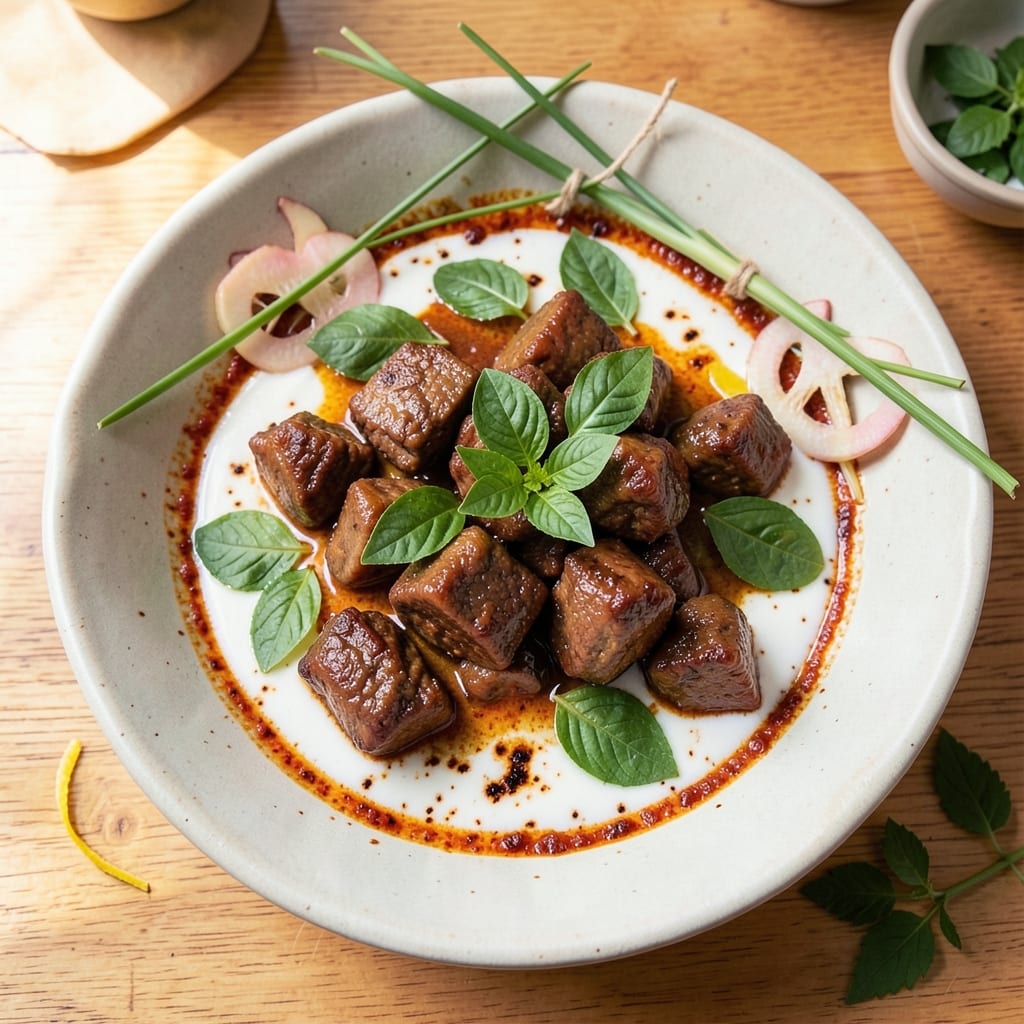
The authentic Thai beef curry recipe I'm sharing delivers the same bold, aromatic flavors you'd find in Bangkok street-side stalls. This one-pot masterpiece balances sweet, sour, spicy, and umami notes—just like my grandmother taught me—using traditional techniques that transform simple ingredients into something extraordinary. The secret lies in blooming the spices properly and letting the coconut milk infuse slowly over 30 minutes of simmering.
What sets this recipe apart is the homemade curry paste, where we toast whole spices until fragrant before grinding them fresh. This creates layers of depth that store-bought pastes simply can't match. The beef cooks until fork-tender while absorbing all those complex flavors, resulting in a sauce that's rich, velvety, and perfectly balanced—not too spicy, not too sweet, but just right.
By the time you're done, you'll have a restaurant-quality curry with tender beef swimming in a fragrant, coconut-kissed sauce. The aroma alone will have everyone gathering at the table, and each bite delivers that perfect harmony of Thai flavors. Serve it over steamed jasmine rice to soak up every last drop of that incredible sauce.
This recipe is designed to be approachable yet authentic—no shortcuts that compromise flavor. We'll walk through each step carefully, from spice blooming to balancing the final dish, so you can achieve professional results in your own kitchen. Let's get started on creating something truly special.
Ingredients for authentic thai beef curry
These aromatic ingredients transform simple beef into a fragrant, restaurant-quality curry.
| Ingredient | Amount | Notes |
|---|---|---|
| Beef Chunks 🥩 | 1 ½ lb | Chuck roast, cut into 1-inch pieces |
| Fresh Galangal 🌿 | ½ cup | Peeled, finely minced (about 3 inches) |
| Thai Lemongrass 🌿 | 2 stems | Bruised, cut into 2-inch pieces |
| Kaffir Lime Leaves 🍋 | 4 whole | Bruised, torn into pieces |
| Red Curry Paste 🌶️ | 3 tbsp | Homemade or quality store-bought |
| Coconut Milk 🥥 | 1 can (13.5 oz) | Full-fat, well-shaken |
| Fish Sauce 🍶 | 1 tbsp | Red Boat preferred |
| Palm Sugar 🍚 | 2 tbsp | Or brown sugar substitute |
| Thai Basil Leaves 🌿 | ¼ cup | Fresh, loosely packed |
| Thai Eggplant 🍆 | 1 whole | Medium size, sliced lengthwise |
| Garlic Cloves 🧄 | 6 cloves | Peeled, roughly chopped |
| Shallots 🧅 | 3 whole | Peeled, roughly chopped |
| Vegetable Oil 🫒 | 2 tbsp | For blooming spices |
| Salt 🧂 | 1 tsp | Diamond Crystal preferred |
| Black Pepper 🌶️ | ½ tsp | Freshly ground |
The galangal and lemongrass are non-negotiable for authentic flavor—Asian markets carry them fresh, or frozen works in a pinch. Look for galangal with tight, pale yellow skin and no bruises. If you can't find Thai eggplant, regular eggplant works, but it won't have that same subtle sweetness. For the curry paste, I always make my own by toasting whole spices (coriander, cumin, turmeric, galangal, lemongrass, shallots, garlic) until fragrant before grinding with a mortar and pestle. Penzeys Spices sells whole spices perfect for this—just toast them in a dry pan for 2-3 minutes until you smell that deep, toasty aroma.
No galangal? Double the ginger—it's not the same, but it'll get you close. Running out of coconut milk? Light coconut milk plus 1 tbsp cream mimics the richness. Fresh Thai basil is ideal, but regular basil plus a pinch of cinnamon works if you're in a bind. The fish sauce matters here—Red Boat is the gold standard, but Red Boat Red works too. Palm sugar is essential for that authentic sweetness, but brown sugar in a pinch won't ruin the dish. For the eggplant, don't peel it—just slice it lengthwise into 1/4-inch strips.
This curry tastes even better the next day as flavors meld. Store leftovers in an airtight container in the fridge for up to 4 days. Freezes beautifully for 3 months—portion into containers before freezing for easy reheating. The sauce thickens as it cools, so add a splash of water or coconut milk when reheating. Serve with steamed jasmine rice to soak up every last drop of that fragrant sauce—it's worth the extra minute of steaming.
Why You'll Love This Recipe
- One-Pot Magic: I swear by this recipe when I’m too tired to scrub pots—just brown the beef, toss in the curry paste with coconut milk, and let it simmer. The galangal and lemongrass release their magic right in the pot, so no extra strainers or bowls needed.
- Flavor Explosion: That first bite? It’s like a party in your mouth—fiery red curry paste balanced by the bright citrus of kaffir lime leaves and the earthy punch of fresh galangal. Honestly, the taste alone makes me forget I’m cooking.
- Weeknight to Dinner Party: Same recipe, totally different vibes. Serve it over jasmine rice with quick-pickled veggies for a lazy Tuesday, or drizzle with lime and fresh cilantro for a restaurant-worthy dish when friends stop by. (Yes, even on a Tuesday night.)
- Leftovers That Beg for More: This curry actually tastes better the next day—better yet, it’s cheaper per serving than takeout. My freezer’s always stocked with portions because reheating it? Pure comfort, especially with a sprinkle of crushed peanuts on top.
Step-by-step instructions for authentic Thai beef curry
Here's the method I've perfected for that perfect balance of aromatic spices and tender beef.
Bloom the Spices in Vegetable Oil
Heat the 2 tablespoons vegetable oil in a heavy-bottomed pot over medium heat. Add the 3 whole shallots and 6 cloves garlic, cooking for 3-4 minutes until the shallots turn translucent and the garlic begins to sizzle and turn golden.
Next, add the 3 tablespoons red curry paste and stir continuously for 2 minutes until it becomes fragrant and the oil starts to bubble. This blooming process releases the full depth of flavor from the spices. If you smell the curry paste burning, reduce the heat slightly—it should smell sweet and earthy, not acrid.
Here's where the magic begins: add the 0.5 cup fresh galangal, 2 stems thai lemongrass, and 4 whole kaffir lime leaves. Stir for another 1 minute until the galangal softens slightly—this releases its citrusy, ginger-like aroma that's essential to authentic Thai flavor. The lemongrass and lime leaves will infuse the oil with their bright, floral notes.
Brown the Beef and Add Aromatics
Push the aromatic mixture to one side of the pot and add the 1.5 lb beef chunks in a single layer. Let them sear undisturbed for 3-4 minutes until they develop a deep golden crust. This step creates the Maillard reaction that forms the rich, caramelized flavor foundation of the curry.
Once browned, stir the beef and cook for another 2-3 minutes until it loses its raw appearance. Add 1 cup of water to the pot and scrape up any browned bits from the bottom—this deglazing step captures all that concentrated beef flavor you don't want to lose.
Return the aromatic mixture to the center of the pot and add 1 tablespoon fish sauce and 2 tablespoons palm sugar. Stir well and let the mixture simmer for 5 minutes until the sugar dissolves and the flavors begin to meld. You should smell the complex interplay of sweet, salty, and umami notes developing.
Build the Curry Base with Coconut Milk
Pour in the 1 can (13.5 oz) coconut milk, stirring constantly to combine. Bring the mixture to a gentle simmer over medium-low heat. The coconut milk will create a creamy, velvety texture that balances the spicy, aromatic base.
Partially cover the pot and let the curry simmer for 30-40 minutes, stirring occasionally. The beef should become fork-tender and the sauce should thicken slightly. Here's the thing—don't rush this step. The long, slow cooking allows all the flavors to develop and the beef to become melt-in-your-mouth tender.
After 20 minutes, check the seasoning. Add 1 teaspoon salt and 0.5 teaspoon black pepper if needed. The curry should taste balanced—sweet from the palm sugar, salty from the fish sauce, and with a subtle heat from the red curry paste. If it needs more depth, add another ½ teaspoon fish sauce.
Add Vegetables and Finish the Curry
Slice the 1 whole thai eggplant lengthwise into ¼-inch thick strips. Add them to the curry along with the 0.25 cup thai basil leaves and simmer for 10-12 minutes until the eggplant is tender but still holds its shape. Thai eggplant has a unique texture—it should be slightly crisp yet yielding.
Taste the curry again and make any final adjustments. The basil leaves will add a bright, anise-like finish that cuts through the richness of the coconut milk. If the sauce is too thick, add 2-3 tablespoons water to reach your desired consistency. It should coat the back of a spoon but still be fluid enough to spoon over rice.
Remove from heat and let the curry rest for 5 minutes. This resting period allows the flavors to fully develop and the sauce to thicken slightly. Serve immediately over steamed jasmine rice, garnished with additional thai basil leaves if desired. Each bite should deliver that perfect balance of tender beef, aromatic spices, and creamy coconut milk.
Pro Tips For Making Authentic Thai Beef Curry
- Bloom the Paste First: Toss that red curry paste into the pot with 1-2 tablespoons of oil and let it sizzle for 3-4 minutes before adding anything else. I used to skip this, and the flavors never fully melded—now it’s the thing that makes the curry sing.
- Slice Galangal Thin: That knobby galangal root needs a sharp knife and even slices, about ¼-inch thick. Thicker pieces stay tough and bitter—thin slices release their citrusy punch properly. (Yes, even if you’re impatient like me.)
- Don’t Crowd the Beef: Brown the beef chunks in batches if you have to—overcrowding steams instead of sears, and you’ll end up with gray, soggy meat instead of caramelized edges. A hot pan and space make all the difference.
- Tear Lime Leaves Roughly: Skip the fine chop—just tear kaffir lime leaves into rough pieces before adding them. They’ll infuse the curry better and won’t turn to mush like they do if you dice them too small. (Your future self will thank you.)
Make-ahead tips for leftovers
Prep Ahead Components
Start by making your curry paste 2 days ahead—it keeps beautifully in an airtight container in the fridge. Toast the whole spices (coriander, cumin, turmeric, galangal, lemongrass, shallots, and garlic) in a dry pan for 2-3 minutes until fragrant, then grind with a mortar and pestle. This develops deeper flavor than store-bought pastes. Store in a small glass jar with a tight lid. 🌶️
Slow-Cooker Method
For a hands-off approach, brown the beef and aromatics as directed, then transfer everything (except eggplant and basil) to a 6-quart slow cooker. Add the coconut milk and simmer on LOW for 6-8 hours. The beef will be fall-apart tender, and the sauce will develop incredible depth. Add eggplant and basil in the last 30 minutes to keep them vibrant.
Freezing for Later
This curry freezes exceptionally well—portion into quart-sized freezer bags or airtight containers, leaving 1-inch headspace for expansion. Label with the date and freeze for up to 3 months. When reheating, thaw overnight in the fridge, then warm on the stovetop over medium-low heat with 2-3 tablespoons water to restore creaminess. The flavors actually improve after freezing! ❄️
Vegetable Prep Shortcuts
Slice the Thai eggplant and chop the garlic and shallots the night before—store in separate airtight containers. Bruise the lemongrass and galangal by pounding lightly with the side of your knife, then wrap in plastic wrap to preserve freshness. The kaffir lime leaves can be torn and stored in a sealed bag in the fridge for 3-4 days before wilting.
Balancing Flavors in Advance
Make a flavor balance chart before cooking: mark spots for sweet (palm sugar), salty (fish sauce), sour (lime juice), and spicy (chili flakes). Taste as you go—adjust each component separately. For example, if the curry tastes flat after simmering, add ½ teaspoon fish sauce for umami depth. This method ensures perfect balance even when prepping ahead. 💡
Reheating Like a Pro
For the best texture, reheat curry on the stovetop over medium-low heat—never microwave. Add 1-2 tablespoons water or coconut milk to prevent drying. If the sauce separates, whisk vigorously or blend briefly for a silky texture. Garnish with fresh Thai basil and a squeeze of lime just before serving to brighten the flavors. 🔥
Nutrition facts
Frequently asked questions
Can I substitute regular ginger for galangal?
Yes, but expect a slightly different flavor profile. Use double the amount of fresh ginger (about 1 teaspoon per 1-inch piece of galangal) and add a pinch of citrus zest (like lime or lemon) to mimic galangal's citrusy, peppery notes. Galangal has a more complex aroma, but this works in a pinch!
How do I adjust the spice level for kids or sensitive eaters?
For milder heat, reduce the curry paste to 2 tablespoons and omit any chili flakes. Add 1 extra tablespoon of palm sugar to balance flavors. If serving to kids, prepare a separate portion with 1/2 teaspoon ground cumin and 1/4 teaspoon ground coriander added to the rice for mild warmth.
What's the best way to make the curry paste from scratch?
Toast 1 tablespoon each of coriander seeds, cumin seeds, and turmeric powder in a dry pan for 2-3 minutes until fragrant. Add 1-inch piece galangal, 2 lemongrass stalks, 2 shallots, and 4 garlic cloves, then grind everything with 1/2 teaspoon salt in a mortar and pestle until smooth. Store in an airtight container for up to 2 weeks.
Why does my curry sauce separate when reheating?
This happens when fat and water separate during cooling. Fix it by whisking vigorously or blending briefly with 1-2 tablespoons water or coconut milk until smooth. For prevention, never boil the curry—simmer gently on medium-low heat only. The sauce should coat the back of a spoon but remain pourable.
Can I use chicken or pork instead of beef?
For chicken, use 1.5 lbs boneless thighs (they stay juicier) and reduce simmering time to 20-25 minutes. For pork, use 1.5 lbs shoulder and simmer for 35-40 minutes—both work beautifully. Adjust cooking times based on cut thickness. The coconut milk will still create that creamy texture you love!