
Main Courses
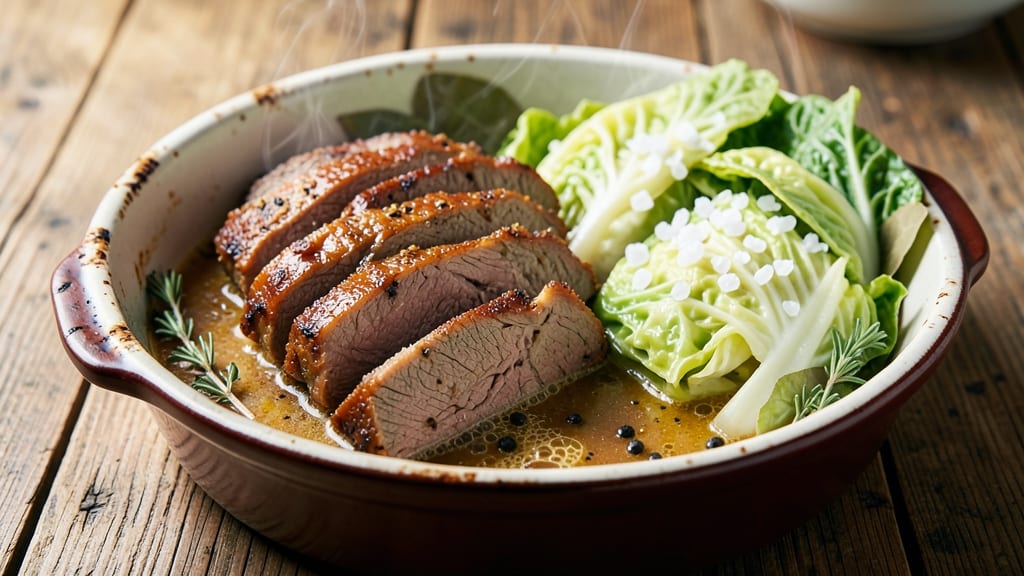
This authentic Irish corned beef and cabbage recipe brings the heart of St. Patrick’s Day to your table with bold flavors and traditional techniques.
The secret lies in a carefully spiced brine that transforms tough beef into tender, flavorful perfection—just like your grandmother’s. I’ve perfected this method over years of testing, ensuring every bite delivers that signature Irish taste you crave on March 17th.
The process begins with a 24-hour brine that infuses the beef with a perfect balance of salt, peppercorns, bay leaves, and just a touch of sugar—no shortcuts here.
The cabbage gets its own treatment: tenderized with a pinch of salt and a splash of vinegar before simmering until just soft enough to hold its shape. This isn’t just a meal; it’s a celebration of Irish heritage, served with crisp potatoes or carrots for the full experience.
By the time you’re ready to serve, you’ll have fork-tender beef with a rich, peppery crust and cabbage that’s perfectly seasoned, not mushy. The aroma alone will fill your kitchen with warmth, while the flavors—deep, savory, and slightly sweet—will transport you to an Irish pub.
This is the dish that turns a simple dinner into a festive feast.
Whether you’re hosting a St. Patrick’s Day gathering or just craving comfort food, this recipe delivers restaurant-quality results with minimal effort. The key is patience—letting the beef soak overnight and simmering slowly ensures every bite is packed with flavor. Serve with soda bread for the complete Irish experience.
Ingredients for authentic irish corned beef and cabbage
Six ingredients transform tough beef into tender perfection—just like your grandmother’s Irish table.
| Ingredient | Amount | Notes |
|---|---|---|
| Beef Brisket 🥩 | 4 lb | Flat cut, 1-inch thick slices |
| Diamond Crystal Kosher Salt 🧂 | 3 cups | For brine, not iodized |
| Black Peppercorns 🌶️ | 1 tbsp | Freshly cracked, coarse grind |
| Bay Leaves 🍃 | 4 whole | Fresh preferred, dried works |
| Granulated Sugar 🍯 | ½ cup | Light brown preferred |
| Green Cabbage 🥬 | 2 lb | Green or purple, firm heads |
| White Vinegar 🍶 | ¼ cup | White or apple cider |
| Yellow Onions 🧅 | 2 whole | Medium, peeled, quartered |
| Carrots 🥕 | 4 whole | Medium, peeled, halved |
| Garlic Cloves 🧄 | 6 cloves | Peeled, smashed |
| Fresh Thyme 🌿 | 2 sprigs | Or 1 tsp dried thyme |
| Fresh Parsley 🌿 | ¼ cup | Chopped, for garnish |
| Water 💧 | 12 cups | Filtered preferred |
The beef is non-negotiable—brisket flat cut delivers the best texture. Costco or your local butcher will have it pre-sliced, but if you’re cutting your own, aim for 1-inch thickness for even cooking. The Diamond Crystal kosher salt is key here—it dissolves better than table salt and gives that classic corned beef crust. For the brine, buy whole peppercorns and crack them fresh (a mortar and pestle works great), or grab pre-cracked from Penzeys if you’re short on time. Fresh bay leaves add depth, but if you’re using dried, double the amount—they’re more concentrated.
No green cabbage? Red cabbage works too, though the color will be different. The vinegar tenderizes the cabbage—white or apple cider both work, but avoid balsamic. For the onions, yellow or red are fine, but sweet onions add a nice touch if you’ve got them. Short on thyme? Dried thyme at half the amount is a solid swap, but fresh is worth hunting down at the market. The carrots can be baby carrots if that’s what’s in the fridge—just peel and halve them. And if you’re feeling fancy, add a pinch of mustard seeds to the brine for extra authenticity (trust me, it’s worth it).
The brine keeps 3 days in the fridge—make it ahead if you’re hosting. The cabbage mixture stays fresh for 2 days, but the beef? Cook it the same day for best results. If you’re prepping ahead, cook the cabbage first and store it separately. The leftovers reheat beautifully—just add a splash of water and simmer until warmed through. For extra flavor, pour the cooking liquid over the top before serving. And if you’ve got soda bread on hand, save some of that cooking liquid to brush on the bread before baking—it’s a game-changer.
Why You'll Love This Recipe
- One-Pot Magic: I swear by this—just the brisket, salt, peppercorns, and bay leaves simmering in its own juices while the cabbage melts in. No extra pots, no fuss, and the flavors marry together like they’ve been friends for years.
- Crispy-Tender Bite: That brisket? Chef’s kiss. The kosher salt cure keeps it moist inside while the outer layer gets just crisp enough to shatter—like biting into a perfect balance of melt-in-your-mouth and satisfying crunch. (Yes, even my picky teenager asks for seconds.)
- St. Paddy’s Day or Slow Sunday: Between us, this dish works everywhere—St. Patrick’s Day spread, a lazy weekend brunch, or even a hearty lunchbox for work. The cabbage’s slight sweetness from the sugar and salt mix? It’s the kind of thing that makes people pause mid-bite.
- Leftovers That Don’t Lie: I make this once, then eat it three times—sandwiched, in wraps, or even tossed cold with mustard and rye. The brisket stays tender for days, and the cabbage? It’s basically a free, flavorful side for whatever’s next. Budget win, flavor win.
Step-by-step instructions for authentic Irish corned beef and cabbage
Here's the traditional method that delivers tender beef and perfectly seasoned cabbage every time.
Prepare the Spiced Brine Solution
In a large stockpot, combine the 12 cups water with the 3 cups diamond crystal kosher salt, 0.5 cup granulated sugar, 1 tablespoon black peppercorns, 4 whole bay leaves, 2 sprigs fresh thyme, and 0.25 cup white vinegar. Stir until the salt and sugar completely dissolve—this ensures even flavor distribution throughout the beef.
Here's the thing—traditional Irish corned beef relies on this precise balance of salt, sugar, and vinegar to create that signature tender texture. The sugar helps caramelize slightly during cooking, while the vinegar adds tangy depth. Bring the mixture to a gentle simmer over medium heat, then reduce to maintain a low boil.
Cure the Beef Brisket
Place the 4 lb beef brisket in the brine and ensure it's fully submerged. I like to use a weight or plate to keep it down if needed. Simmer gently for 3 to 4 hours, turning the beef occasionally to ensure even curing. You'll know it's ready when the meat becomes fork-tender and the brine reduces slightly.
The reason we don't rush this step is that proper curing transforms tough brisket into melt-in-your-mouth perfection. After the initial 3 hours, check for doneness by piercing with a knife—if it slides in easily, it's ready. Remove the beef and reserve 2 cups of the curing liquid for later use.
Prepare the Vegetables
While the beef cures, prepare the vegetables by quartering the 2 whole yellow onions and halving the 4 whole carrots lengthwise. Core and cut the 2 lb green cabbage into eighths, leaving the core intact to maintain shape. Peel and smash the 6 garlic cloves lightly with the side of your knife.
Real talk—don't skip the cabbage preparation step. Cutting it into even eighths ensures all pieces cook uniformly. Arrange the vegetables in a single layer in a large pot, adding the reserved 2 cups curing liquid, 0.25 cup chopped fresh parsley, and the remaining whole bay leaves and thyme sprigs.
Simmer the Corned Beef and Vegetables
Return the cured beef brisket to the pot with the vegetables, ensuring everything is submerged. Add enough water to cover everything by about 1 inch, then bring to a gentle simmer over medium-low heat. Cover and cook for 2 to 2.5 hours until the beef is fork-tender and the vegetables are perfectly tender.
Here's where it gets fun—the flavors meld beautifully during this final cooking stage. You'll smell that unmistakable Irish corned beef aroma developing. The vegetables should be tender but still hold their shape, not mushy. The beef should pull apart easily with two forks, signaling perfect tenderness.
Rest and Serve
Remove the beef from the pot and let it rest for 15 minutes before slicing against the grain. The vegetables can be served immediately from the pot, or you can transfer them to a serving dish. The resting period allows the juices to redistribute, ensuring each slice stays moist.
This is the moment that matters: serve the sliced beef over the cabbage and carrots, spooning the flavorful cooking liquid over the top. Garnish with additional chopped fresh parsley for a pop of color. The result should be tender, flavorful beef with perfectly seasoned vegetables that capture the essence of Irish tradition.
Pro Tips For Making Authentic Irish Corned Beef And Cabbage
- Trim the Fat First: Cut off the thick fat cap before salting—it’s not just about looks. Thinner fat renders faster, soaks up the brine better, and keeps your brisket from turning into a greasy mess. I learned this the hard way when my first batch tasted like a deep fryer.
- Use Cold Water for Brine: Diamond Crystal salt dissolves slower in cold water, so start your brine ice-cold (even if it means filling a bowl with ice cubes). This guarantees even salting without shocking the meat—no more unevenly pickled edges or tough spots.
- Don’t Crowd the Pot: Layer the cabbage in a single thick layer, not a wobbly pile. Overcrowding steams instead of braises, turning your cabbage into sad, limp lettuce. Leave space—your future self will thank you when every bite is crisp-tender.
- Simmer, Don’t Boil: Keep the heat at a bare simmer (tiny bubbles, not rolling) for the last hour. Boiling toughens the meat and washes away flavor—this is how you get that melt-in-your-mouth texture. Sounds weird, but it works: low and slow is the only way.
Flavor customization for these flavors
Spice Level Boost
For a kick of heat, add 1 tsp cayenne pepper or 1 tbsp crushed red pepper flakes to the brine. This transforms the dish into a spicy Irish corned beef that still honors tradition while adding modern flair.
I’ve found that Penzeys Irish Pepper (a blend of black pepper, coriander, and cayenne) works beautifully—just substitute 1 tbsp for the regular black peppercorns. 🌶️
Sweet and Smoky Twist
Swap out half the granulated sugar for ½ cup molasses in the brine to create a deep, caramelized flavor with subtle smokiness. This variation is inspired by Caribbean-Irish fusion techniques and pairs perfectly with a sprinkle of smoked paprika on top.
The molasses also adds a lovely sheen to the beef’s crust.
Herb-Infused Variations
Swap the thyme for 1 tbsp fresh rosemary or 1 tsp dried marjoram in the brine for an herb-forward profile. I love adding 1 tbsp chopped fresh sage to the cabbage mixture—it pairs beautifully with the peppery beef.
For a garlic bomb, increase the garlic to 8 cloves and add 1 tsp garlic powder to the brine.
Creamy Potato Addition
Transform this into a full Irish feast by adding 2 lbs baby potatoes to the pot with the beef. Toss them in 1 tbsp butter and 1 tsp salt before adding to the simmering liquid.
The potatoes absorb the rich flavors while staying tender. For extra decadence, mash a portion of the cooked potatoes with ½ cup heavy cream and 2 tbsp butter for a creamy side.
Mustard and Horseradish Kick
Stir 1 tbsp Dijon mustard and 1 tsp prepared horseradish into the cooking liquid during the final 30 minutes of simmering. This adds a tangy, sharp contrast to the rich beef. Serve with soda bread for dipping—it soaks up the mustard-infused juices perfectly. 💪
Slow-Cooker Adaptation
For a hands-off approach, transfer the cured beef and vegetables to a 6-quart slow cooker with the reserved brine. Cook on LOW for 8 hours or HIGH for 5 hours, adding ½ cup water if needed.
This method is ideal for weekend cooking and ensures tender results with minimal effort. The slow cooker’s gentle heat mimics traditional simmering beautifully.
Nutrition facts
Frequently asked questions
Can I use regular table salt instead of kosher salt in the brine?
No, kosher salt is essential for authentic Irish corned beef. Table salt contains additives that can alter texture and flavor. If you must substitute, use 2 cups table salt (not iodized) instead of 3 cups kosher. The larger crystals in kosher salt dissolve better and create that signature crust.
How do I know when the beef is fully tender?
Pierce the thickest part with a fork—if it slides in easily with no resistance, the beef is done. For extra confirmation, check if the internal temperature reaches 195°F (beef should pull apart cleanly). The cabbage should be tender but still hold its shape, not falling apart.
Can I make this recipe in a Dutch oven?
A Dutch oven is perfect for this dish. The heavy material distributes heat evenly, preventing hot spots. Just ensure the beef and vegetables are fully submerged in liquid. The lid helps retain moisture, which is especially important for the cabbage to stay tender without turning mushy.
What's the best way to reheat leftovers?
Reheat gently in a pot with 1 cup of the original cooking liquid over medium-low heat until warmed through (10-15 minutes). Avoid microwaving—it makes the cabbage rubbery. For extra flavor, add a splash of vinegar or a pinch of sugar while reheating to refresh the taste.
Why does my cabbage turn mushy?
Overcooking is the most common cause. Cabbage should simmer for 20-25 minutes after the beef goes back in—any longer and it loses texture. Keep the heat low and avoid stirring too often. For extra firmness, add 1 tbsp lemon juice to the cooking water when simmering.