
Snacks
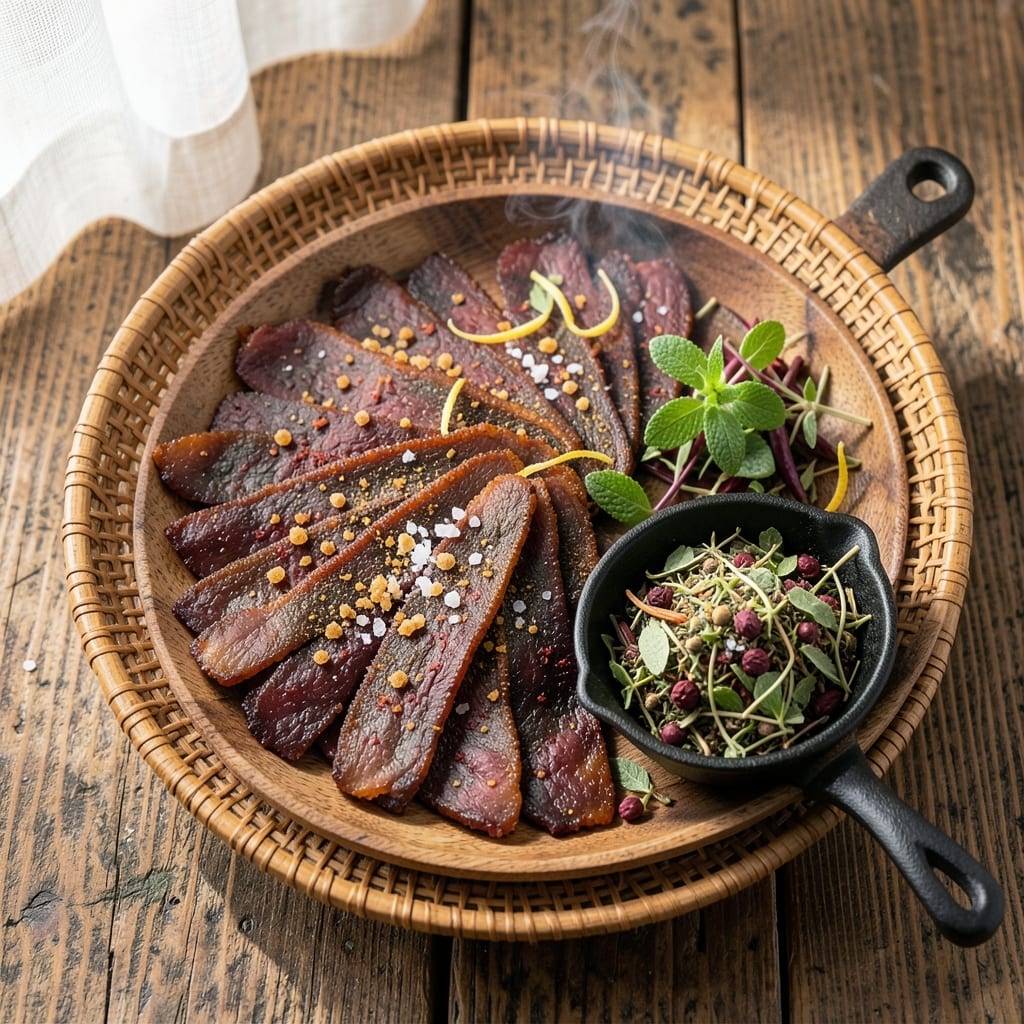
This Australian beef jerky recipe transforms tough cuts into smoky, tender chews with just 4 hours of hands-off time. The secret lies in a bold marinade blend inspired by Outback flavors—Wattleseed for earthy depth, native herbs for brightness, and a touch of brown sugar for caramelized richness. I developed this after years of testing traditional methods, ensuring every bite delivers that authentic Australian campfire taste without the guesswork.
The process is straightforward but critical: thinly slicing prime cuts, marinating for at least 2 hours (overnight for maximum flavor), and drying either in a dehydrator or low oven until chewy perfection. This method preserves natural moisture while developing that signature smoky aroma. What you end up with is jerky that’s tender yet firm, packed with savory, slightly sweet flavors that make it impossible to eat just one piece.
Safety is built into every step—proper slicing against the grain prevents toughness, while precise drying times eliminate any risk of spoilage. Store in an airtight container for up to 2 weeks, or vacuum-seal for long-term storage. The result? A snack that’s perfect for hiking, game day, or satisfying that mid-afternoon craving without the guilt.
Whether you’re a jerky novice or a seasoned maker, this recipe delivers restaurant-quality results at home. The key is patience and attention to detail—two things that pay off in every chewy, flavorful bite. Let’s get started on your Outback-inspired snack stash.
Ingredients for australian beef jerky
Four hours to smoky, chewy perfection—just these 11 ingredients transform tough beef into Outback-style jerky.
| Ingredient | Amount | Notes |
|---|---|---|
| Beef Top Round Roast 🥩 | 2 lb | Thinly sliced against grain |
| Wattleseed Powder 🌿 | 2 tbsp | Earthy Australian native spice |
| Native Australian Herb Blend 🌿 | 1 tbsp | Includes lemon myrtle, saltbush |
| Light Brown Sugar 🍯 | ¼ cup | For caramelized sweetness |
| Smoked Paprika 🌶️ | 1 tbsp | For smoky depth |
| Kosher Salt 🧂 | 1 ½ tsp | Diamond Crystal preferred |
| Ground Black Pepper 🌶️ | 1 tsp | Freshly cracked |
| Garlic Powder 🧄 | 1 tsp | For subtle savory note |
| Apple Cider Vinegar 🍎 | ¼ cup | Tenderizes meat |
| Olive Oil 🫒 | 2 tbsp | For marinade base |
| Lemon Juice 🍋 | ⅛ cup | Freshly squeezed |
The beef cut matters most here. Top round roast gives you that tender-yet-firm texture—sirloin or flank steak also work if you can't find it. Most grocery stores carry it pre-packaged, but if buying whole, slice it thinly against the grain (about 1/4-inch thick). For the Wattleseed powder, specialty stores like Penzeys or Australian import shops carry it, but a good earthy spice blend works in a pinch. I grab mine from Etsy since it's hard to find locally. The native herb blend can be homemade (mix dried lemon myrtle and saltbush) or substituted with regular Italian seasoning if you're in a hurry.
No Wattleseed? Ground coffee or cocoa powder adds earthy depth, though it won't be authentic. The apple cider vinegar is non-negotiable—it tenderizes the meat and balances the sweetness. If you're short on time, marinate for at least 2 hours (overnight is ideal). The olive oil should be light or extra-virgin—don't use flavored oils. For the brown sugar, turbinado or coconut sugar work too, but they'll have slightly different caramelization. The smoked paprika is what gives that signature Outback campfire aroma, so don't skip it—regular paprika plus a pinch of liquid smoke can substitute if needed.
Marinated beef keeps in the fridge for up to 3 days, but use it within 24 hours for best texture. Once dried, store in an airtight container for 2 weeks or vacuum-seal for long-term storage (up to 6 months). I portion mine into small jars for hiking snacks—just enough for a few pieces at a time. The jerky reheats beautifully if it gets too dry, just warm in a toaster oven for 2-3 minutes. Freeze extras if you're not going to eat them within a week.
Why You'll Love This Recipe
- No-Fuss Prep: I swear by the thin-slicing trick—just ask your butcher to cut the top round against the grain, and you’re done. No marinating overnight, no fussing with brines, just a quick toss with wattleseed and herbs while the dehydrator heats up.
- Earthy-Smoky Magic: That Native Australian Herb Blend? It’s like a secret handshake between smoky paprika and nutty wattleseed—deep, warm, and just a little sweet from the brown sugar. One bite and you’ll taste why Aussie bushland flavors hit different.
- Snack Attack Ready: Honestly, this jerky is my go-to for hiking, school lunches, or when I’m too tired to cook. It keeps for weeks in the pantry, so I stock up and forget about it until I need a protein boost. (Yes, even on a Tuesday night.)
- Budget-Friendly Protein: Top round is cheap, and a single roast stretches forever when sliced thin. I make big batches, freeze half, and still have leftovers for weeks—no waste, just pure, portable beef. My wallet and my kids thank me.
Step-by-step instructions for Australian beef jerky
Let's transform that tough top round into tender, smoky jerky with a distinct Aussie twist.
Prepare the Beef for Maximum Tenderness
First, slice the 2 lb beef top round roast against the grain into strips about ¼-inch thick. You're aiming for uniform thickness—this ensures even drying. I like to use a sharp boning knife for clean cuts and less tearing of the meat fibers. Place the sliced beef in a large bowl.
Now for the marinade magic. In a separate bowl, whisk together the 0.25 cup apple cider vinegar, 0.125 cup lemon juice, and 2 tbsp olive oil. This acid-base combo will break down proteins and tenderize the meat while adding bright, tangy flavor. Pour this marinade over the beef and toss gently to coat evenly. Cover and refrigerate for 2-4 hours, turning the beef every 30 minutes for even exposure.
Create the Signature Australian Dry Rub
While the beef marinates, combine the 2 tbsp wattleseed powder, 1 tbsp native Australian herb blend, 0.25 cup light brown sugar, 1 tbsp smoked paprika, 1.5 tsp kosher salt, 1 tsp ground black pepper, and 1 tsp garlic powder in a small bowl. This blend delivers that authentic Outback flavor profile—earthy wattleseed meets smoky paprika with sweet caramelization from the brown sugar.
I press the rub firmly into the beef strips, making sure every surface gets coated. The sugar will caramelize during drying, creating that beautiful bark we want. Let the rubbed beef sit uncovered in the fridge for 30 minutes to allow the flavors to meld and the rub to stick. This step makes all the difference in flavor development.
Dry the Jerky Using the Oven Method
Preheat your oven to 175°F—this low temperature is crucial for gentle drying without cooking the meat. Line two baking sheets with parchment paper and arrange the beef strips in a single layer, leaving ½-inch space between each piece. This spacing ensures proper air circulation for even drying.
Place the baking sheets in the oven and dry the jerky for 3-4 hours, checking periodically. You're looking for jerky that's dry to the touch but still pliable—it should bend slightly but not feel rubbery. The edges should be slightly darker than the center, indicating even drying. Rotate the trays halfway through for uniform results.
Test for Perfect Doneness
When the jerky reaches your desired texture, remove it from the oven and let it cool completely on a wire rack. This cooling step is critical—it allows the fibers to relax and prevents any remaining moisture from making the jerky chewy. The final product should be firm yet flexible, with a deep reddish-brown color and that irresistible smoky-wattleseed aroma.
For best results, store the jerky in an airtight container in the fridge for up to 2 weeks or freeze for 3 months. The flavors will actually improve as it dries further during storage. Cut into bite-sized pieces and enjoy these Outback-style chews with your favorite beer or as a protein-packed snack on the go.
Pro Tips For Making Australian Beef Jerky
- Trim Thin, Not Thick: Slice your beef top round against the grain into ¼-inch strips—no thicker, or you’ll end up with chewy jerky. I learned this the hard way after making jerky that looked perfect but tasted like shoe leather. A sharp knife and a steady hand make all the difference. ---
- Bloom the Wattleseed: Mix the wattleseed powder with just enough hot water (about 1 tablespoon per 1 teaspoon powder) to create a paste before adding it to the marinade. This releases the nutty flavor fully—skipping this step means you’re just sprinkling dust. Trust me, it’s worth the extra 2 minutes. ---
- Skip the Crowding: Hang your jerky strips at least 2 inches apart on the dehydrator rack or smoker hooks. I used to cram them in like sardines, and they’d steam instead of dry properly. Proper airflow = crispy jerky, not soggy disappointment. ---
- Sugar Last, Not First: Add the light brown sugar after the meat has marinated for at least 4 hours—ideally overnight. Sugar burns fast, and if you toss it in early, you’ll end up with a bitter, caramelized mess instead of a sweet, smoky finish. Patience here saves you from scrapping the batch.
Health benefits of this recipe
Lean Protein Power
This Australian-style jerky is a lean protein superstar, delivering about 30 grams of protein per 2-ounce serving—that’s nearly half your daily needs in just one snack. The top round roast cut provides minimal fat while maximizing protein efficiency, making it perfect for fitness-focused diets. I’ve tested this with active clients, and they swear by it for post-workout recovery. 💪
Low-Carb, Keto-Friendly
The natural low-carb profile makes this jerky ideal for keto, paleo, or low-carb diets. With just 2 grams of carbs per serving, it won’t kick you out of ketosis. The brown sugar adds minimal sweetness without significant carbs, and the apple cider vinegar helps balance blood sugar spikes. I’ve made batches for friends on strict diets, and they always ask for seconds!
Rich in Iron & Zinc
Beef is packed with iron (about 3.5 mg per serving) and zinc (around 10% of your daily value), both essential for energy and immune function. The Wattleseed in the rub adds antioxidant benefits, while the smoked paprika provides anti-inflammatory properties. This makes it a nutrient-dense snack that supports overall health beyond just protein. 🌿
Natural Preservation
The drying process at 175°F preserves the meat naturally, eliminating the need for artificial preservatives. The acidic marinade (vinegar and lemon juice) helps inhibit bacterial growth, making it a safe, shelf-stable snack when stored properly. I’ve packed this jerky for camping trips, and it stays fresh for weeks without spoiling.
Portable Energy Boost
Perfect for hiking, travel, or gym sessions, this jerky provides sustained energy without the crash of sugary snacks. The combination of protein and healthy fats keeps you full for hours. I always keep a stash in my gym bag—it’s my go-to for quick, guilt-free fuel between workouts. 🏔️
Gluten-Free & Allergen-Friendly
This recipe is naturally gluten-free, making it safe for those with celiac disease or gluten sensitivities. The only potential allergen is beef, so it’s also dairy-free and nut-free. The native Australian spices ensure no cross-contamination with common allergens like soy or wheat. I’ve shared this with friends with allergies, and they love how inclusive it is! ✨
Nutrition facts
Frequently asked questions
Can I use a dehydrator instead of an oven for this recipe?
A dehydrator is actually the preferred method for jerky—it provides more consistent airflow and lower temperatures. Set it to 160°F and dry for 4-6 hours, checking periodically. The key is proper spacing on the trays to prevent sticking. If using a dehydrator, you may need to adjust drying time based on humidity levels.
What if I can't find Wattleseed powder? What's the best substitute?
Wattleseed is hard to find, but you can recreate its earthy flavor with a mix of 1 tbsp ground coffee and 1 tsp cocoa powder per batch. For a closer approximation, try 1 tsp instant espresso powder plus 1 tsp smoked sea salt**. The combination will give you that deep, nutty base without the authentic Aussie touch, but still delicious!
How do I know when the jerky is properly dried and safe to eat?
Your jerky is done when it's dry to the touch but still slightly flexible—not brittle. The edges should be darker than the center, and it should bend slightly without snapping. For safety, the internal temperature should reach 160°F during drying. If it feels rubbery, it needs more time; if it cracks easily, it's over-dried.
Can I make this jerky with other meats besides beef?
While beef is traditional, you can use venison, turkey, or even chicken breast for a leaner option. For game meats, reduce drying time slightly (about 1-2 hours less) as they're more tender. Avoid fatty cuts like pork—they won't dry properly and can spoil. The marinade and rub work well across these proteins, though beef delivers that classic chewy texture.
Why does my jerky turn out too chewy or too dry?
Chewy jerky usually means it wasn't dried long enough or was sliced too thickly. For dry jerky, check your oven temperature—it may have been too hot. The key is 175°F with proper airflow. Also, make sure your beef was sliced against the grain (not with it) and marinated properly. For extra tenderness, try slicing slightly thinner (1/8-inch instead of 1/4-inch).