
Main Courses
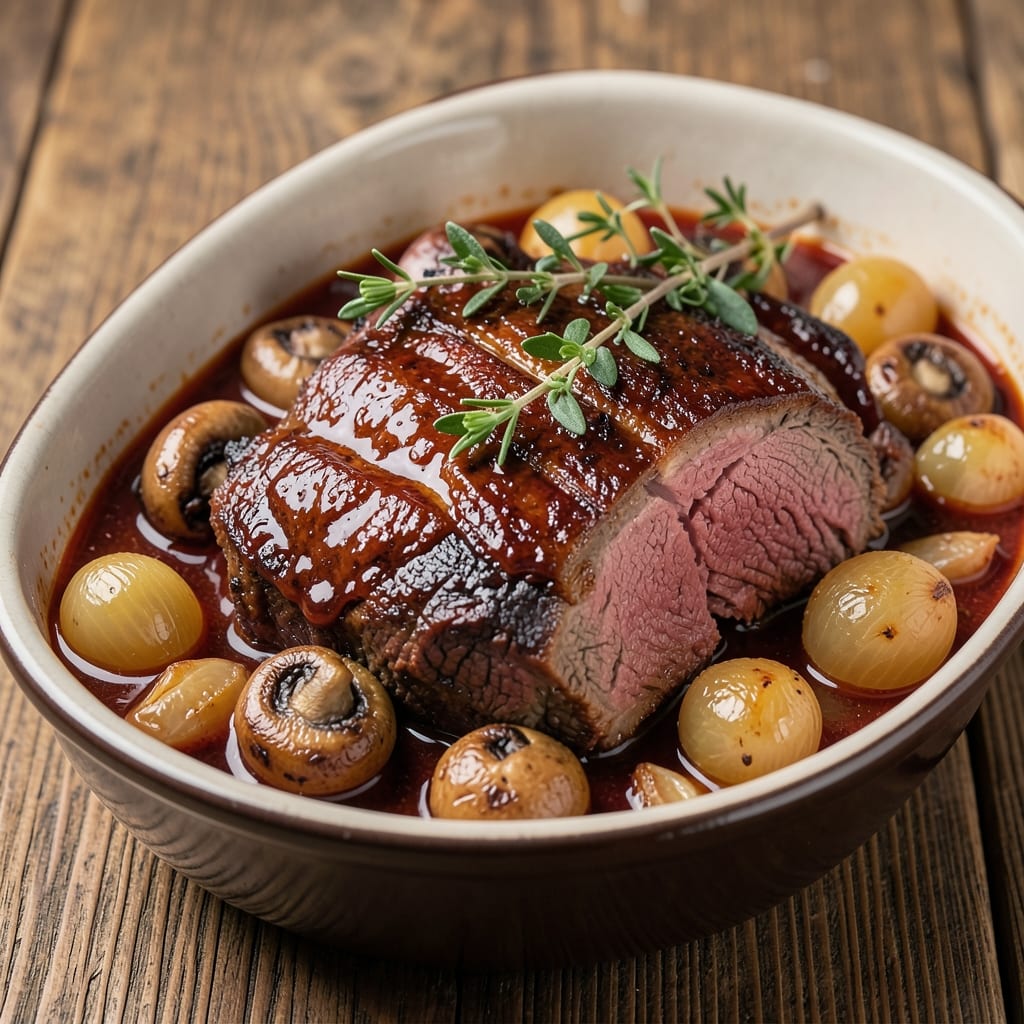
Auguste Escoffier’s beef bourguignon recipe transforms humble beef and wine into a restaurant-worthy masterpiece. 🍷 This classic French dish showcases the legendary chef’s precision—searing beef to a golden crust, deglazing with red wine, and slow-braising until tender. The result? Rich, wine-infused sauce clinging to perfectly caramelized mushrooms and melt-in-your-mouth beef.
What sets this recipe apart is its balance of technique and simplicity. Escoffier’s influence on French cuisine lies in his ability to elevate everyday ingredients through proper cooking methods. Here, you’ll master searing, deglazing, and slow cooking—each step essential for achieving that deep, complex flavor that defines bourguignon. The red wine reduction isn’t just a sauce; it’s the heart of the dish, where aromatics and acidity meld into something extraordinary.
By the time you serve this dish, your kitchen will smell like a Parisian bistro, and every bite will reveal layers of caramelized mushrooms, tender beef, and velvety wine sauce. Pair it with creamy mashed potatoes or crusty baguette to soak up every last drop. This isn’t just a recipe—it’s a tribute to Escoffier’s legacy, brought to life in your own kitchen.
The beauty of bourguignon lies in its versatility. Make a big batch for a cozy family dinner or impress guests at a dinner party. Leftovers taste even better the next day, as the flavors deepen. Let’s get started on this timeless classic—where tradition meets modern technique.
Ingredients for auguste escoffier beef bourguignon
Sixteen ingredients transform into Escoffier's legendary wine-braised beef masterpiece.
| Ingredient | Amount | Notes |
|---|---|---|
| Beef Chuck Roast 🥩 | 3 lb | Trimmed of excess fat, cut into 1.5-inch cubes |
| Dry Red Wine 🍷 | 2 cups | Bold variety like Cabernet Sauvignon or Merlot |
| Pearl Onions 🧅 | 1 ½ lb | Whole, peeled, or frozen baby onions |
| Cremini Mushrooms 🍄 | 16 oz | Sliced 1/4-inch thick, wiped clean |
| Garlic Cloves 🧄 | 6 cloves | Minced, skin left on for color |
| Fresh Thyme 🌿 | 2 sprigs | Or 2 tsp dried thyme, leaves only |
| Fresh Rosemary 🌿 | 1 sprig | Wooden spoon for crushing, leaves only |
| Tomato Paste 🍅 | 2 tbsp | High-quality, no sugar added |
| Beef Stock 💧 | 2 cups | Homemade or high-quality store-bought |
| All-Purpose Flour 🌾 | 2 tbsp | For thickening, sifted |
| Unsalted Butter 🧈 | 4 tbsp | Cold, cubed for finishing |
| Kosher Salt 🧂 | 2 tsp | Diamond Crystal preferred |
| Ground Black Pepper 🌶️ | 1 tsp | Freshly ground, coarse |
| Olive Oil 🫒 | 2 tbsp | High smoke point for searing |
The beef selection is non-negotiable for authentic Escoffier technique. Chuck roast delivers the ideal marbling and connective tissue for slow braising, while sirloin or ribeye will yield a tougher result. For the wine, French Bordeaux or California Cabernet Sauvignon from a reputable wine shop (like BevMo or Total Wine) ensures proper acidity and depth. If using frozen pearl onions, thaw and pat completely dry to prevent steaming during cooking. The mushrooms should be firm and dry—no slimy specimens. For herbs, fresh is essential; dried thyme and rosemary lack the aromatic complexity required for this dish.
No red wine? Substitute with beef stock and 1 tbsp balsamic vinegar for acidity, though the depth will differ. Pearl onions can be replaced with shallots or yellow onions, but they won't caramelize as beautifully. For mushrooms, shiitake or oyster mushrooms add earthy notes, though cremini remain the traditional choice. The tomato paste is critical for umami—San Marzano is ideal, but any high-quality brand works. If you're short on time, pre-minced garlic from a jar suffices, though fresh is preferred. For the flour, all-purpose is standard, but bread flour adds a subtle chewiness to the sauce.
This dish rewards patience—braising for 3-4 hours develops the richest flavors. Store leftovers in an airtight container for up to 5 days, though they're best enjoyed within 3 days. For freezing, portion into individual servings and thaw overnight in the refrigerator. The wine sauce thickens as it cools, so reheat gently with a splash of stock if needed. Serve with crusty baguette or buttery mashed potatoes to complement the velvety texture. The aroma alone will transport you to a Parisian bistro—worth every minute of preparation.
Why You'll Love This Recipe
- One-Pan Magic: I swear by this recipe for lazy nights—the beef chuck roast browns right in the same pot where it finishes, and the onions and mushrooms caramelize into sweet, jammy bits without any extra pans. Honestly, the only cleanup is the wine glass I’ll inevitably spill while deglazing.
- Wine-Infused Richness: That dry red wine isn’t just for show—it transforms into a deep, velvety sauce that clings to every bite, balancing the beef’s tenderness with earthy mushrooms and the bright punch of garlic. Between us, the first bite makes you forget it’s a weeknight dish.
- Leftovers That Shine: This isn’t one of those meals that tastes better fresh—if anything, it gets better the next day as the flavors meld. I freeze portions too; reheating with a splash of water makes it taste like you slaved over it all over again. (Yes, even on a Tuesday night.)
- Budget-Friendly Luxury: A chuck roast stretches farther than you’d think, and the onions/mushrooms add depth without breaking the bank. I’ll be real: it’s the kind of dish that makes a $15 cut of meat feel like a splurge, but without the restaurant markup. Plus, the wine you use? That’s the good stuff you already own.
Step-by-step instructions for auguste Escoffier's beef bourguignon
Master this classic French technique for tender beef and velvety wine reduction.
🔥 Step 1: Sear the Beef Chuck Roast for Depth of Flavor
Heat the 2 tablespoons olive oil in a heavy Dutch oven over medium-high heat until shimmering. Working in batches to avoid crowding, sear the 3 lb beef chuck roast (cut into 1.5-inch cubes) on all sides until deeply browned, about 3-4 minutes per side. This caramelization forms the flavor foundation for your bourguignon.
As you sear, resist the urge to move the meat constantly—let it develop a rich crust. Transfer the browned beef to a plate and set aside. The remaining browned bits (fond) in your Dutch oven will later dissolve into the wine, creating layers of complex flavor.
👨🍳 Step 2: Build the Aromatic Base with Pearl Onions and Mushrooms
In the same Dutch oven, reduce heat to medium and add the 1.5 lb pearl onions (halved if whole). Cook for 8-10 minutes, stirring occasionally, until they begin to soften and develop a golden hue. Remove onions and set aside with the beef.
Add the 16 oz sliced cremini mushrooms and cook for 5-6 minutes until they release their moisture and begin to brown. Stir in the 6 cloves minced garlic cloves (with skins) and cook for 30 seconds until fragrant. The garlic skins will infuse color into your sauce later.
🍳 Step 3: Deglaze with Wine and Reduce to Intensity
Pour in the 2 cups dry red wine, scraping up all the browned bits from the bottom of the Dutch oven with a wooden spoon. Increase heat to high and bring to a boil, then reduce to medium-high and simmer for 8-10 minutes until the wine reduces by half and the alcohol aroma dissipates.
Stir in the 2 tablespoons tomato paste and cook for 2 minutes until it dissolves completely. This step deepens the sauce's richness and balances the acidity. The wine should now coat the back of a spoon with a velvety consistency.
🥘 Step 4: Thicken the Sauce with Flour and Stock
Sprinkle the 2 tablespoons all-purpose flour over the wine mixture and whisk vigorously to combine. Cook for 1-2 minutes until the flour is fully incorporated and the sauce begins to thicken. Gradually whisk in the 2 cups beef stock, then return the beef and onions to the pot.
Add the 2 sprigs fresh thyme and 1 sprig fresh rosemary (crushed with a wooden spoon), 2 teaspoons kosher salt, and 1 teaspoon ground black pepper. Bring to a gentle simmer, then reduce heat to low, cover partially, and let cook for 2-2.5 hours until the beef is fork-tender and the sauce has thickened to a luxurious consistency.
⏰ Step 5: Finish with Butter and Rest Before Serving
Remove the thyme and rosemary sprigs. Increase heat to medium and stir in the 4 tablespoons cold unsalted butter, one tablespoon at a time, until fully melted and incorporated. This final step creates a silky, glossy finish that elevates the dish to restaurant-quality.
Let the bourguignon rest for 15-20 minutes before serving. This allows the flavors to meld and the sauce to thicken further. Serve with crusty bread or mashed potatoes to soak up every last drop of that wine-reduced richness.
Pro Tips For Making Auguste Escoffier Beef Bourguignon
- SEAR THE ROAST HARD: I learned this the hard way—skipping a deep sear means your bourguignon will taste more like stew than Escoffier’s masterpiece. Use a heavy pot (Dutch oven) on maximum heat for 4-5 minutes per side until the chuck roast is dark brown, almost black in spots. That crust locks in flavor and prevents the meat from turning mushy later.
- PEEL ONIONS AFTER COOKING: Pearl onions are a pain to peel raw, and over-peeling them makes them look sad. Toss them whole into the pot with the wine and simmer until tender (about 15 minutes), then peel them under running water—skin slides right off. No more tiny cuts or wasted effort.
- DEGLAZE WITH WINE, THEN STOCK: After searing the beef, don’t just dump the wine in—first scrape up those browned bits with a wooden spoon, then pour in the wine and let it bubble hard for 2 minutes. Add beef stock next; this two-step process builds depth. Skipping it leaves your sauce thin and flavorless.
- TRIM MUSHROOMS LAST MINUTE: Slice cremini mushrooms just before adding them to the pot—they soak up liquid like sponges if left sitting. A quick wipe with a damp paper towel keeps them from turning soggy, and their texture stays firm. (Yes, even if you’re impatient like me.)
Common mistakes when making your auguste escoffier beef bourguignon
Overcrowding the Pan
One of the most common mistakes is overcrowding the Dutch oven during searing. When you pack too many beef cubes in at once, they'll steam instead of sear, creating a pale, watery result instead of the rich, caramelized crust Escoffier's technique demands. Work in batches of 2-3 pieces at a time, giving each piece space to develop that golden-brown crust. 🔥
Skipping the Wine Reduction
Many home cooks rush the wine reduction step, but this is where the magic happens. If you don't reduce the wine by at least half (8-10 minutes of simmering), you'll miss the opportunity to concentrate the flavors and eliminate the harsh alcohol notes. The reduced wine forms the velvety base of your sauce—don't skip this crucial step!
Using Low-Quality Wine
Some recipes suggest using any red wine, but for authentic Escoffier-style bourguignon, the wine quality matters. Avoid cheap table wines or cooking wines—they lack the depth and acidity needed. Opt for a bold, dry red like Cabernet Sauvignon or Merlot from a reputable wine shop. The better the wine, the more complex your sauce will be.
Not Deglazing Properly
After searing the beef, the browned bits (fond) stuck to your Dutch oven are flavor gold. If you don't scrape them up with a wooden spoon while deglazing with wine, you're losing layers of flavor. Use a wooden spoon (not metal) to gently scrape and dissolve these bits into the wine. This step is essential for building depth in your sauce.
Underestimating Braising Time
Patience is key with bourguignon. If you cut the braising time short (2-2.5 hours), the beef won't become tender enough. The connective tissue needs time to break down, and the flavors need to meld. Check for doneness by inserting a fork—it should slide in easily. If your beef isn't tender, return it to the pot and braise for another 30-45 minutes.
Adding Butter Too Early
Many recipes call for adding butter at the end, but timing matters. If you add it too early, the heat will cause the butter to separate, creating a grainy sauce. Instead, wait until the very end, when the sauce is hot but not boiling. Add the 4 tablespoons cold butter one tablespoon at a time, stirring until fully melted. This creates a silky, glossy finish that makes all the difference. ✨
Nutrition facts
Frequently asked questions
Why does Escoffier's beef bourguignon require such a long braising time?
The 2-2.5 hour braising time transforms tough beef chuck into melt-in-your-mouth tenderness. This slow cooking breaks down collagen in the meat while allowing the wine and aromatics to meld into a complex sauce. Escoffier's method prioritizes texture and depth of flavor over speed—patience is key for that restaurant-quality result.
Can I use a different cut of beef for this recipe?
While chuck roast is traditional, you could use stew beef or brisket for similar results. Avoid lean cuts like sirloin—they lack the connective tissue needed for proper braising. If substituting, increase braising time by 30-45 minutes to ensure tenderness.
How do I know when the wine reduction is complete?
The wine is ready when it's reduced by half (1 cup remaining) and the alcohol aroma has dissipated. It should coat the back of a spoon with a syrupy consistency. If it's too thin, reduce for another 3-5 minutes—this is where the sauce's depth comes from.
What's the best way to reheat leftovers?
Reheat gently in a skillet with a splash of beef stock or water to prevent drying. Cover and warm on low heat for 10-15 minutes, stirring occasionally. The sauce will thicken as it cools, so add a little liquid if needed. Leftovers actually improve in flavor—perfect for next-day lunches!
Why does the recipe call for garlic skins?
The skins add subtle color and flavor to the sauce without overpowering it. They infuse a delicate pink hue and earthy notes that complement the wine reduction. If you remove them, the sauce will still be delicious—just slightly less visually striking.