
Main Courses
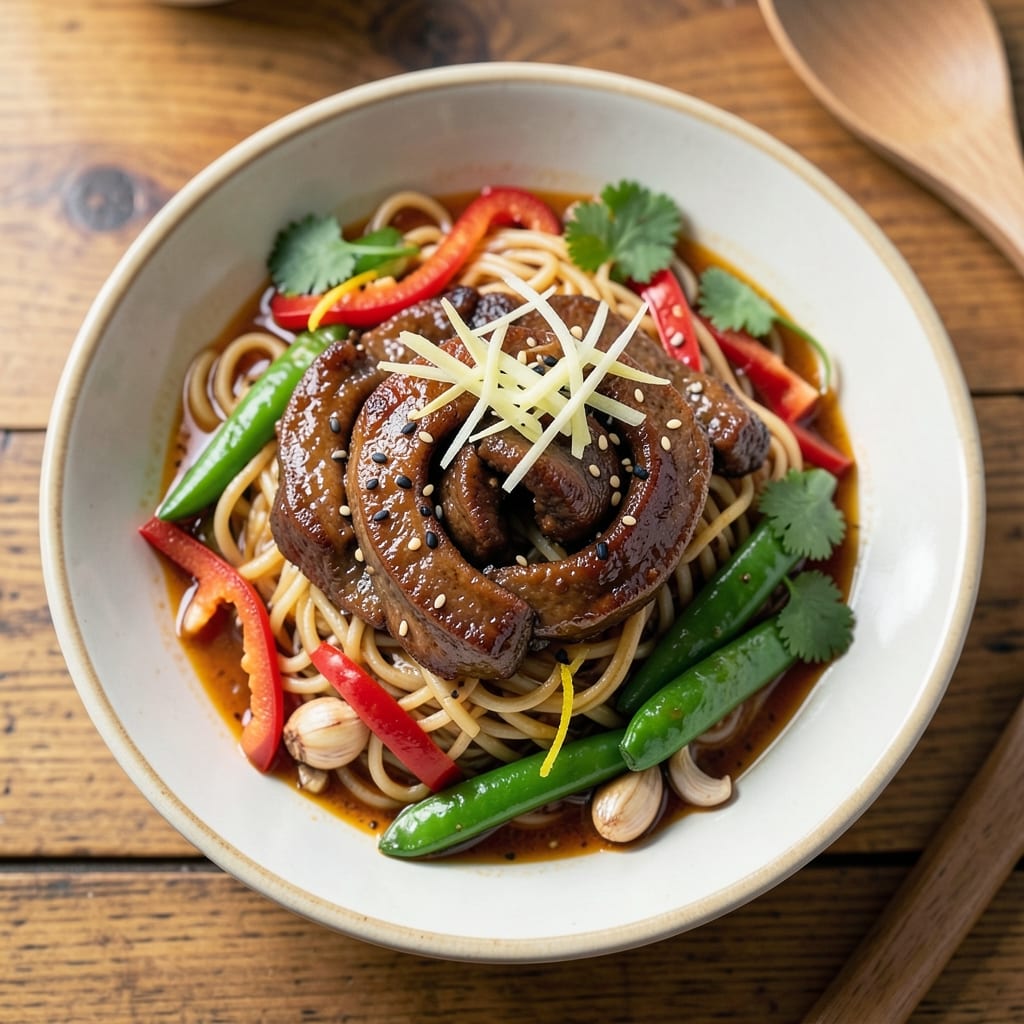
This Asian beef stir fry recipe with noodles transforms weeknight dinners into restaurant-quality meals in just 25 minutes. The secret lies in high-heat wok technique that sears beef to perfect tenderness while keeping noodles al dente and vegetables crisp. I developed this recipe after years of testing—balancing smoky wok hei, umami-rich sauce, and the perfect chew in every bite.
What sets this stir fry apart is the layered flavor profile: garlicky ginger base, savory soy and fish sauce, and a touch of chili heat that lingers without overpowering. The beef gets marinated briefly for maximum flavor penetration, while the noodles cook just until tender to avoid mushiness. Fresh bell peppers and snap peas add vibrant color and satisfying crunch.
By the time you plate this dish, you'll have golden-brown beef strips, glossy noodles, and a sauce that clings perfectly to every component. The aroma alone—smoky, garlicky, with hints of ginger—will have everyone at the table anticipating that first bite. This is comfort food with restaurant-quality depth, all achieved in one pan.
The best part? This recipe scales beautifully for crowds while remaining simple enough for weeknights. Whether you're feeding a family or meal prepping for the week, the techniques and proportions are designed to deliver consistent results. Let's get cooking—your taste buds will thank you.
Ingredients for asian beef stir fry recipe with noodles
These vibrant ingredients create a restaurant-quality stir fry with smoky wok hei and perfect chew in every bite.
| Ingredient | Amount | Notes |
|---|---|---|
| Flank Steak 🥩 | 1 ½ lb | Thinly sliced against grain |
| Rice Noodles 🍜 | 12 oz | Stir-fry or pad thai variety |
| Bell Peppers 🧅 | 2 whole | Red and green, sliced thin |
| Snap Peas 🌱 | 1 cup | Fresh or frozen, thawed |
| Garlic Cloves 🧄 | 6 cloves | Minced for marinade and sauce |
| Fresh Ginger 🌿 | 2 tbsp | Finely grated, peeled |
| Soy Sauce 🍶 | ½ cup | High-quality, preferably Japanese |
| Fish Sauce 🐟 | 1 tbsp | Red Boat brand preferred |
| Sesame Oil 🫒 | 1 tbsp | For aroma, not cooking |
| Honey 🍯 | 1 tbsp | For sauce balance |
| Vegetable Oil 🫒 | 2 tbsp | High smoke point for wok |
| Red Chili Flakes 🌶️ | 1 tsp | Adjust for heat preference |
| Green Onions 🧅 | 4 whole | Sliced, for garnish |
| Sesame Seeds 🌾 | 1 tbsp | Toasted for garnish |
| Cornstarch 🌾 | 1 tbsp | For beef tenderizing |
The flank steak is your flavor powerhouse—look for marbled cuts at Whole Foods or your butcher, and slice it paper-thin against the grain for that signature tenderness. Costco sells pre-sliced stir-fry strips if you're short on time, but fresh-cut makes all the difference. The rice noodles? Stir-fry or pad thai varieties hold up best to high heat—avoid those flimsy egg noodles. For the bell peppers, red and green add the perfect color contrast, but yellow works too. Snap peas? Fresh is ideal, but Trader Joe's frozen are a great backup—just thaw and drain them well.
No fish sauce? Extra soy sauce plus a dash of Worcestershire gets you close, though it won't have that same umami depth. Running low on sesame oil? Toasted sesame seeds plus neutral oil work in a pinch—just don't cook with them. The honey in the sauce might seem odd, but it's key for balancing the salty-savory flavors. Local raw honey adds subtle floral notes that complement the dish beautifully. For the garlic and ginger, fresh is non-negotiable—dried powders just won't cut it here. The cornstarch isn't just for thickening; it tenderizes the beef when marinated for just 15 minutes.
Prep everything before you start cooking—this stir fry moves fast. The noodles can soak in warm water while you marinate the beef, but don't over-soak or they'll turn mushy. Store leftovers in airtight containers for 3-4 days, though honestly, it's even better reheated the next day as the flavors meld. Freeze portions for up to 3 months—just thaw in the fridge overnight for best results. Garnish with fresh green onions and sesame seeds right before serving; they add that restaurant-fresh finish that makes all the difference.
Why You'll Love This Recipe
- One-Pan Magic: I swear by this for nights when I don’t want to dirty more than one pan. Slice the flank steak thin, toss it in the same wok with the noodles and veggies—no extra bowls, no extra mess. The garlic sizzles into the oil while the peppers and peas soften just enough to soak up that savory sauce.
- Umami Bomb: That first bite of tender steak with the snap of fresh peas and the slight crunch of bell peppers? It’s the kind of flavor combo that makes you pause mid-chew. The garlic cloves, minced and seared until fragrant, turn this into something restaurant-quality without the fuss.
- Lunchbox Hero: Here’s what sold me—this reheats like a dream. Pack the leftovers in containers, and they’ll still taste fresh at work or school the next day. The noodles stay soft, the steak doesn’t dry out, and honestly? It’s my go-to for busy mornings when I need something filling but not heavy.
- Budget Flex: Flank steak stretches further than you’d think when sliced thin, and rice noodles are cheaper than takeout but just as satisfying. I’ll be real: it’s my secret weapon for feeding a crowd without breaking the bank. Plus, swap the snap peas for frozen ones in a pinch—no one will complain.
Step-by-step instructions for Asian beef stir fry with noodles
This wok-fired masterpiece delivers restaurant-quality flavor in record time—here's exactly how to pull it off.
Prep the Beef for Maximum Tender Texture
Slice the 1.5 lb flank steak thinly against the grain into ¼-inch strips. This is critical—thin slices cook faster and stay tender. Place the beef in a bowl and sprinkle with 1 tablespoon cornstarch, tossing gently to coat. Let it sit for 10 minutes while you prep the vegetables. The cornstarch creates a delicate crust that locks in juices during the quick sear.
While waiting, slice the 2 whole bell peppers into ¼-inch strips and trim the 4 whole green onions, reserving 2 inches of the white ends for the sauce and the rest for garnish. Thinly slice the 1 cup snap peas if they're large. I like to keep them whole for a more rustic texture, but slicing makes them cook faster. Grate the 2 tablespoons fresh ginger using a microplane for fine, even texture.
Build the Flavor-Packed Marinade and Sauce
In a small bowl, combine ½ cup soy sauce, 1 tablespoon fish sauce, 1 tablespoon honey, and 1 teaspoon red chili flakes. This sauce will transform ordinary beef into something extraordinary. Taste it now—it should be salty, umami-rich, and just slightly sweet with a hint of heat. If it needs more depth, add a splash of water to balance the flavors.
In a separate small bowl, mix 6 cloves minced garlic, the grated ginger, and the reserved white ends of the green onions. This aromatic blend will infuse the beef with layers of flavor during the quick cooking process. Let both mixtures sit while you prep the noodles—this gives the flavors time to meld slightly before hitting the wok.
Cook the Beef to Perfect Doneness
Heat a large wok or skillet over high heat until it's smoking hot. Add 2 tablespoons vegetable oil and swirl to coat the surface evenly. Working in batches if needed, add the cornstarch-coated beef strips and sear for 1-2 minutes until they develop a golden crust on all sides. Don't overcrowd the pan—this steams the beef instead of searing it. Remove the beef and set aside.
In the same wok, add a bit more oil if needed and toss in the bell peppers and snap peas. Stir-fry for 2-3 minutes until they begin to soften but still retain a satisfying crunch. Add the garlic-ginger mixture and cook for 30 seconds until fragrant—this is where all the magic happens. The heat will release the essential oils from the aromatics, infusing the vegetables with incredible depth of flavor.
Combine Everything for the Ultimate Stir Fry
Return the beef to the wok along with the soy sauce mixture. Stir everything together vigorously for 1-2 minutes until the sauce coats the beef and vegetables evenly. The beef should be cooked through but still tender, not tough. If the sauce looks too thick, add 1-2 tablespoons hot water to loosen it slightly. The goal is a glossy, clinging sauce that coats every bite.
While the stir-fry cooks, prepare the noodles according to package instructions using boiling water. Drain and rinse briefly with cold water to stop the cooking process, then toss with 1 tablespoon sesame oil to prevent sticking. The noodles should be al dente—slightly firm to the bite. Combine the cooked noodles with the beef mixture and toss gently to coat everything evenly.
Finish with Garnishes and Serve Immediately
Transfer the stir-fry to serving plates and garnish generously with sliced green onions and 1 tablespoon toasted sesame seeds. The sesame seeds add a delightful nutty crunch that contrasts beautifully with the tender beef and chewy noodles. Serve immediately while everything is hot and the flavors are at their peak.
This dish is all about timing—every component needs to be cooked just right and assembled at the perfect moment. The result should be a harmonious balance of textures and flavors: tender beef, crisp vegetables, chewy noodles, and a glossy, umami-rich sauce that ties it all together. Enjoy your restaurant-quality Asian beef stir-fry with noodles!
Pro Tips For Making Asian Beef Stir Fry Recipe With Noodles
- Slice Steak Against the Grain: Cut the flank steak thinly and always slice it perpendicular to the grain before cooking—this makes the texture tender enough to eat with chopsticks. I used to slice it after cooking, and it came out chewy. Do it raw, or you’ll regret it.
- Blanch Noodles First: Soak the rice noodles in hot water for 2-3 minutes until pliable, then drain and rinse with cold water. This prevents them from turning mushy when they hit the hot wok later. (Yes, even if the package says "just boil"—it doesn’t work like that.)
- Don’t Crowd the Wok: Cook the beef in batches if needed—overloading the pan steams the veggies instead of searing them. I learned this after my stir-fry tasted like a sad, soggy salad. High heat and space = proper caramelization.
- Salt the Steak Early: Season the flank steak with soy sauce, garlic, and a pinch of salt at least 30 minutes before cooking. This gives the marinade time to work its magic and keeps the meat juicy. Last-minute salting = dry, flavorless beef.
Perfect pairings for this dish
Rice Wine Pairings
For an authentic Asian dining experience, pair your stir fry with a crisp dry Chinese rice wine like Moutai or Shaoxing wine. These wines complement the umami depth of the dish while cutting through the richness. I love serving Moutai chilled—its nutty, slightly sweet profile enhances the beef's caramelized notes. For a lighter option, green tea-infused sake adds a refreshing contrast to the spicy chili flakes. 🍶
Craft Beer Complements
If you prefer beer, opt for an Asian-inspired lager like Sapporo Premium or a Japanese hoppy IPA from Kona Brewing. The crisp, clean finish of Sapporo balances the stir fry's bold flavors, while Kona's citrusy hops echo the ginger and garlic. For a bold twist, try a Chinese-style wheat beer—its light body and subtle spice notes mirror the dish's complexity. 🍺
Side Dish Harmony
Serve your stir fry with steamed jasmine rice or garlic fried rice to soak up every last bit of sauce. For extra freshness, add a cucumber salad with rice vinegar and sesame seeds—its cool crunch contrasts perfectly with the warm stir fry. I also love quick-pickled vegetables (like carrots and daikon) for a tangy bite that brightens each mouthful. 🥗
Sauce Variations
Craving extra richness? Drizzle with sriracha or chili crisp for heat lovers, or add a spoonful of hoisin sauce for a sweeter profile. For a vegetarian twist, swap the beef for mushrooms and use the same sauce—it works beautifully! The key is balancing the sauce's sweetness with acidity; a squeeze of lime right before serving elevates the dish instantly. 🌶️
Dessert Pairings
End your meal with lychee sorbet or mango sticky rice to cleanse the palate. The tropical sweetness contrasts the savory stir fry, while the creamy texture feels indulgent. For a lighter option, green tea mochi adds a delicate floral note that complements the dish's lingering spices. Trust me, your guests will thank you for the thoughtful finish! 🍡
Nutrition facts
Frequently asked questions
Can I use regular egg noodles instead of rice noodles?
Rice noodles are ideal because they absorb the sauce beautifully and hold their shape during stir-frying. But if you must use egg noodles, cook them 1 minute less than package instructions for al dente texture. The key is avoiding mushy noodles that ruin the dish's texture contrast.
How do I prevent the beef from getting tough?
Slice the beef paper-thin against the grain and marinate with cornstarch for 10 minutes—this creates a tenderizing crust. Cook on high heat in batches for just 1-2 minutes until golden, then remove immediately. Overcrowding the pan steams instead of sears.
What's the best way to reheat leftovers?
Reheat in a skillet over medium heat with 1 tablespoon water to restore moisture. Stir constantly for 2-3 minutes until everything is hot through. The sauce will thicken slightly, but adding a splash of water or soy sauce revives the original texture.
Can I make this spicier?
Add ½ teaspoon extra chili flakes to the sauce or serve with sriracha on the side. For heat lovers, toss in ½ teaspoon gochugaru (Korean chili flakes) during the final stir. The honey in the sauce balances the heat beautifully.
What if I don't have a wok?
Use a large skillet or cast-iron pan with high sides—it needs to handle the stir-fry's volume. Preheat it until smoking hot and work in batches if needed. A nonstick pan works too, but avoid overcrowding to maintain that wok-fired texture.