
Main Courses
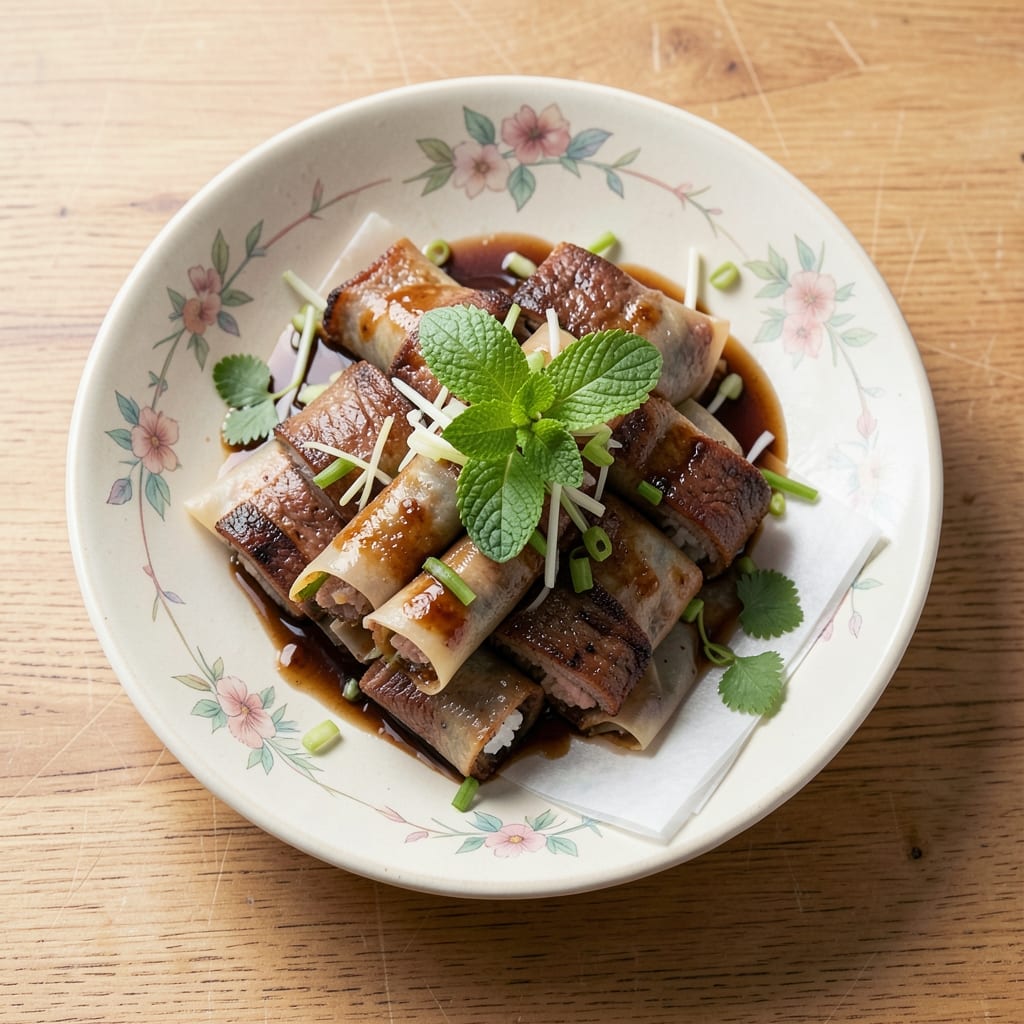
This Asian beef roll recipe delivers crispy rice paper layers wrapped around tender beef and fresh herbs, creating a perfect balance of textures and flavors. The secret lies in marinating the beef with a blend of soy sauce, garlic, and ginger for maximum flavor penetration, while the rice paper transforms from delicate to crispy perfection when cooked just right. I've perfected this technique over years of testing, ensuring every bite is packed with savory depth and satisfying crunch.
What sets this recipe apart is the harmony of traditional Asian flavors—umami from soy sauce, aromatic garlic and ginger, and a touch of rice wine for brightness—all wrapped in delicate rice paper that becomes crispy when fried. The preparation is straightforward but requires patience for the marinating and careful rolling technique to achieve those signature tight, even rolls. Each component plays a crucial role in creating a dish that's both elegant and deeply satisfying.
By the time you take your first bite, you'll experience the contrast of crispy rice paper giving way to tender beef and fresh herbs, all coated in a subtle glaze of soy and garlic. The aroma alone will have everyone at the table anticipating each delicious bite. This recipe is perfect for special occasions or weeknight dinners when you want to impress without spending hours in the kitchen.
The beauty of these beef rolls lies in their versatility—they can be served as an appetizer with a tangy dipping sauce or as a main course with a side of fresh vegetables. The crispy texture is the star, but the balance of flavors ensures every bite is memorable. Let's get started on creating this restaurant-quality dish at home.
Ingredients for asian beef roll
Eight essential ingredients transform delicate rice paper into crispy perfection wrapped around tender beef.
| Ingredient | Amount | Notes |
|---|---|---|
| Flank Steak 🥩 | 1 lb | Thinly sliced against grain |
| Rice Paper Sheets 🍱 | 8 whole | 6-inch size, uncooked |
| Fresh Mint Leaves 🌿 | ½ cup | Stems removed, loosely packed |
| Fresh Cilantro Leaves 🌿 | ¼ cup | Chopped, loosely packed |
| Green Onions 🧅 | 4 whole | White and green parts separated |
| Soy Sauce 🥢 | ½ cup | Light or all-purpose |
| Rice Wine 🍷 | ¼ cup | Dry sherry substitute works |
| Garlic Cloves 🧄 | 5 cloves | Minced, fresh preferred |
| Fresh Ginger 🌿 | 1 tbsp | Grated, peeled |
| Vegetable Oil 🫒 | ½ cup | For frying, high smoke point |
| Sesame Oil 🫒 | 1 tbsp | Toasted, for finishing |
| Salt 🧂 | 1 tsp | Kosher or sea salt |
| Black Pepper 🌶️ | ½ tsp | Freshly ground |
| Fish Sauce 🍶 | 1 tbsp | Optional for umami depth |
The rice paper sheets are the foundation—look for 6-inch squares at Asian markets or the international aisle of larger grocery stores. Thinly sliced flank steak is crucial; slice against the grain for tenderness. For the marinade, Kikkoman soy sauce or Lee Kum Kee work best, but any light soy will do. Fresh ginger and garlic should smell vibrant—no musty aromas. If you can't find rice wine, dry sherry is a perfect substitute. The herbs? Fresh mint and cilantro are non-negotiable—they bring that signature brightness to every bite.
No rice paper? Large lettuce leaves work in a pinch, though texture will differ. Short on fish sauce? Extra soy sauce plus a pinch of sugar mimics the umami. For the beef, flank steak is ideal, but sirloin works too—just slice it thinner. The green onions can be swapped for scallions or chives. Want extra crisp? Double-fry the rolls—first for 20 seconds, flip, then another 10 seconds. The sesame oil should be toasted—heat it gently in a pan for 30 seconds to deepen the flavor.
Rice paper keeps best in a cool, dry place—don't refrigerate until ready to use. The marinade can be prepped 1 day ahead, but add the fresh herbs last. For the beef, slice and marinate for at least 30 minutes, but no longer than 2 hours to prevent over-marinating. Leftover rolls? Reheat in a skillet for 30 seconds per side—they lose crispiness when refrigerated. Store cooked rolls in an airtight container for up to 2 days.
Why You'll Love This Recipe
- No-Fuss Assembly: I swear, these rolls take less effort than assembling a sandwich. Slice the steak thin, toss it with a quick soy-ginger marinade, and let the rice paper do the work—just dip, roll, and stack. No fancy techniques, no stress.
- Herb-Packed Punch: That bright burst of mint and cilantro? It’s like a fresh breeze in every bite. The green onions add a sharp kick, while the tender flank steak soaks up all the flavors—juicy, aromatic, and impossible to resist.
- Lunchbox Hero: Between us, this is my go-to for packed lunches. The rolls hold up shockingly well, and the flavors actually get better the next day. Wrap a few in parchment, toss in a container, and you’ve got a meal that feels fancy but costs next to nothing.
- Budget-Friendly Feast: Flank steak stretches farther than you’d think when sliced thin, and rice paper is cheaper than takeout containers. Honestly, I make a double batch—half for dinner, half for leftovers—and still have change left for the good stuff. Win-win.
Step-by-step instructions for Asian beef roll recipe
Master the technique for perfectly wrapped, crispy rice paper rolls with tender beef filling.
Prepare the Flavorful Beef Filling
Slice the 1 lb flank steak thinly against the grain into ¼-inch strips. Place in a bowl with 0.5 cup soy sauce, 0.25 cup rice wine, 1 tbsp fish sauce, 5 minced garlic cloves, 1 tbsp grated ginger, 0.5 tsp black pepper, and 1 tsp salt. Marinate for at least 30 minutes (or up to 2 hours) in the refrigerator. The steak should absorb the marinade completely and become tender.
After marinating, heat 0.5 cup vegetable oil in a nonstick skillet over medium-high heat. Add the beef in a single layer and cook for 2-3 minutes until golden brown and just cooked through. Avoid overcooking—the beef will continue cooking slightly when wrapped. Remove from heat and let cool for 5 minutes before using.
Assemble the Fresh Herb Mixture
Chop the 0.25 cup fresh cilantro leaves and 0.5 cup fresh mint leaves into small pieces. Separate the 4 whole green onions into white and green parts, then finely chop the white portions and slice the green parts into thin rings. Combine all the herbs in a bowl and set aside.
This herb mixture is the heart of your rolls—it should be bright and fresh. If using stems, remove them completely as they can make the rolls bitter. The herbs will soften slightly when wrapped, so don't chop them too finely. Keep this mixture covered until ready to use.
Dip and Wrap the Rice Paper Rolls
Fill a shallow dish with warm water (not boiling) and set aside. Dip one rice paper sheet at a time into the water for 5-10 seconds until pliable but still slightly firm. Lay it flat on a clean surface, leaving the top edge slightly higher than the bottom.
Place 2-3 tablespoons of the beef mixture near the bottom edge of the sheet. Add 1 teaspoon of the herb mixture, then 1 green onion ring and 1 white onion strip on top. Fold the bottom edge over the filling, then fold in the sides, and finally roll tightly from the bottom up to form a neat cylinder.
Fry to Crispy Perfection
Heat 0.25 cup vegetable oil in a deep skillet over medium heat until it shimmers but doesn't smoke. Fry the rolls in batches for 1-2 minutes per side until golden brown and crispy. The oil should be hot enough to sizzle gently when the rolls are added.
Drain the fried rolls on paper towels to remove excess oil. For extra flavor, drizzle with 1 tbsp toasted sesame oil while still warm. Serve immediately with a side of sweet chili sauce or peanut dipping sauce for the perfect balance of textures and flavors.
Pro Tips For Making Asian Beef Roll
- Slice Against the Grain: Flank steak’s tough fibers run long—if you slice with the grain, you’ll end up with chewy, rubbery rolls. After cooking, cut against the grain at a 45-degree angle for clean, tender bites. (Yes, it looks like you’re being dramatic with the knife, but it works.)
- Soak Rice Paper Fast: Tossing rice paper sheets in warm water for 10-15 seconds is the trick—any longer and they’ll turn to mush. Work in batches and keep the water just warm to the touch, not scalding. Pro move: Line a plate with a damp towel to prevent sticking while you roll.
- Prep Herbs Like a Pro: Stack mint and cilantro, roll tightly, and slice thinly for uniform strips—no more clumps of leaves in your rolls. Skip the chopping board if you’re short on time; just hold the bundle in one hand and slice with the other. (Your future self will thank you when filling rolls.)
- Rest the Steak Before Rolling: Cook the flank steak, then tent it with foil and let it sit for 5 minutes. This keeps it juicy when you slice and prevents the rolls from falling apart when wrapped. I used to skip this—big mistake. Now I treat it like a non-negotiable step.
Flavor customization for this asian beef roll
Spicy Kick Options
For a fiery twist, add ½ teaspoon of chili flakes or 1 teaspoon of sambal oelek directly to your beef marinade. This introduces a slow-building heat that complements the crispy rice paper beautifully. I like to balance it with an extra ½ teaspoon of sugar to prevent overpowering bitterness. 🌶️
If you prefer fresh heat, thinly slice 1-2 Thai bird's eye chilies and mix them into the herb mixture. The chili's sharpness will cut through the richness of the beef, adding a bright, zesty contrast. Start with less—you can always add more to taste.
Sweet Glaze Variations
Swap out the rice wine for ½ cup coconut aminos mixed with 1 tablespoon honey in the marinade. This creates a subtly sweet, umami-rich glaze that caramelizes beautifully when fried. The coconut aminos also add a delicate floral note that pairs wonderfully with the herbs.
For a tropical twist, brush the finished rolls with a mix of 1 tablespoon honey and 1 teaspoon lime juice before serving. The acidity cuts through the richness, while the honey adds a sticky, caramelized finish that guests will love. 🍯
Umami Boosters
Enhance the savory depth by adding 1 tablespoon of hoisin sauce or 1 teaspoon of miso paste to your beef marinade. These ingredients add a complex, fermented richness that elevates the dish without overpowering the fresh herbs. I recommend using white miso for a cleaner flavor profile.
For an extra umami punch, stir 1 teaspoon of fish sauce into the dipping sauce (like sweet chili or peanut sauce). This amplifies the savory notes and makes every bite more satisfying. Just a little goes a long way—start with half and adjust to taste.
Herb Swaps
If you can't find fresh mint, substitute with ½ cup Thai basil or ½ cup Vietnamese coriander for a more aromatic profile. These herbs have a slightly sweet, anise-like flavor that pairs beautifully with the beef and soy marinade. Chop them finely to distribute their flavor evenly.
For a citrusy twist, add 2 tablespoons of finely chopped Vietnamese mint (also called peppermint) to the herb mixture. Its cool, slightly peppery notes contrast wonderfully with the warm, savory beef. If using, reduce the amount of fresh mint or cilantro by half to balance the flavors.
Nutrition facts
Frequently asked questions
Can I use regular lettuce instead of rice paper?
Yes, but the texture will be different. Use large, sturdy lettuce leaves like romaine or butter lettuce. They won't get crispy like rice paper, but they'll still hold the filling. Dip the lettuce in warm water for 5 seconds to soften slightly before wrapping.
How do I prevent the rice paper from tearing when rolling?
Work quickly and keep the beef filling small—2-3 tablespoons per roll. Dip only one sheet at a time and lay it on a damp towel to prevent sticking. Fold the bottom edge first, then the sides, and roll tightly but gently to avoid overstretching.
What's the best way to store leftover beef rolls?
Store them in an airtight container for up to 2 days in the fridge. To reheat, pan-fry for 30 seconds per side over medium heat—they won't regain full crispiness but will still taste delicious. For longer storage, freeze for up to 1 month and reheat from frozen.
Can I make these rolls ahead of time?
Prep the beef filling and herb mixture 1 day ahead, but assemble the rolls fresh. The rice paper loses crispness when refrigerated. If needed, store the uncooked rolls in a damp paper towel-lined container for up to 4 hours before frying.
What's the secret to extra-crispy rolls?
Double-fry them! First fry for 20 seconds per side until lightly golden, then rest 1 minute before frying again for 10 seconds per side until deeply crispy. Use fresh oil between fries for maximum crunch.