
Soups & Stews
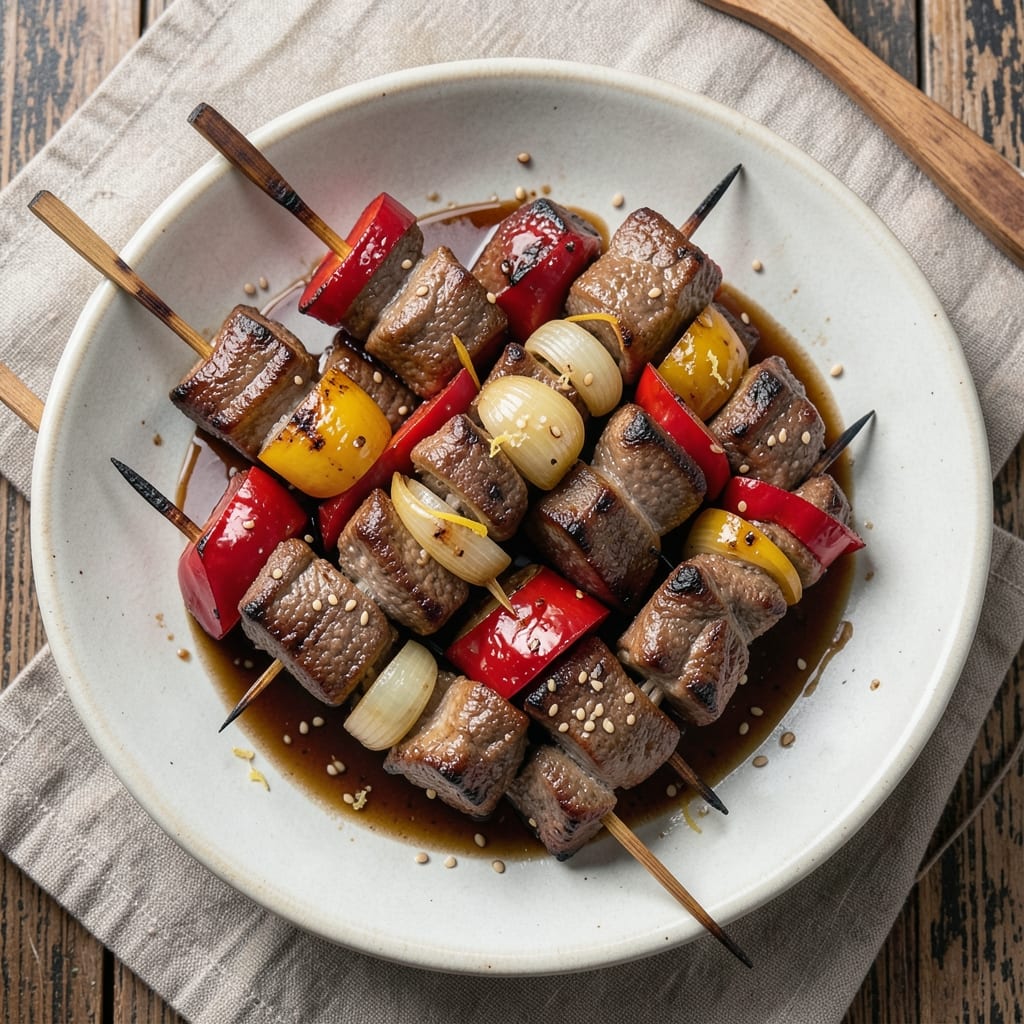
This Asian beef kabobs recipe delivers smoky, tender beef skewers with a bright tangy glaze that balances sweet, salty, and umami flavors perfectly. The secret lies in marinating the beef with traditional Asian ingredients—soy sauce, ginger, garlic, and sesame oil—before grilling to caramelized perfection on skewers. Whether you're using a grill, broiler, or stovetop, this method ensures juicy, flavorful bites every time.
The marinade transforms simple beef into restaurant-quality skewers, while the soy-lime glaze adds a zesty finish that cuts through the richness. Skewering the beef properly (with wooden or metal skewers) is key—alternating with bell peppers or onions adds color and texture. The recipe is designed for adaptability, so you can adjust the heat level or swap ingredients based on what you have on hand.
By the end, you’ll have smoky-grilled kabobs with a glossy glaze that’s sticky-sweet and slightly tangy, perfect for serving over steamed rice or with a side of stir-fried vegetables. The aroma alone will have everyone gathering around the table, and the flavors are bold enough to stand alone or pair with a light Asian slaw for freshness.
This recipe is ideal for weeknight dinners, summer BBQs, or even meal prep—just store the marinated beef in the fridge for up to 24 hours before cooking. The instructions are straightforward, so even beginners can achieve professional results with minimal effort. Let’s get started!
Ingredients for asian beef kabobs
Traditional Asian flavors meet smoky grilled perfection in these tender skewers.
| Ingredient | Amount | Notes |
|---|---|---|
| Flank Steak 🥩 | 1 ½ lb | Thinly sliced against grain |
| Red Bell Peppers 🌶️ | 2 whole | Cut into 1-inch chunks |
| Yellow Onions 🧅 | 1 whole | Cut into large chunks |
| Wooden Skewers 🪵 | 12 whole | Soaked in water 30 mins |
| Soy Sauce 🍶 | ½ cup | Kikkoman preferred |
| Sesame Oil 🫒 | 1 tbsp | Toasted sesame flavor |
| Fresh Ginger 🌿 | 2 tbsp | Grated, aromatic |
| Garlic Cloves 🧄 | 4 cloves | Minced, pungent |
| Brown Sugar 🍯 | 2 tbsp | Light or dark |
| Lime Juice 🍋 | ¼ cup | Freshly squeezed |
| Honey 🍯 | 1 tbsp | Wildflower preferred |
| Sesame Seeds 🌾 | 1 tbsp | Toasted for garnish |
| Vegetable Oil 🫒 | 2 tbsp | High smoke point |
| Salt 🧂 | 1 tsp | Diamond Crystal kosher |
| Black Pepper 🌶️ | ½ tsp | Freshly cracked |
The flank steak is non-negotiable here—its lean yet tender texture holds up beautifully to marinating and grilling. Look for USDA Choice or Prime at your local butcher or Costco for the best quality. The grain direction matters: always slice against the grain for maximum tenderness. For the bell peppers and onions, organic from Trader Joe's or your local farmers market ensures vibrant color and sweetness. If you're short on time, pre-cut veggies from the grocery store work fine, though they lack the freshness of whole produce. The wooden skewers should be soaked for at least 30 minutes to prevent burning—skip this step and they'll char before the food cooks through.
No soy sauce? Tamari or coconut aminos work as gluten-free alternatives, though the flavor profile shifts slightly. The sesame oil should be toasted—not the cheap, flavorless kind from the back of the pantry. For a deeper ginger flavor, blend fresh ginger with a splash of water instead of grating it. Substituting maple syrup for honey keeps it vegan, though the caramelization will differ slightly. The lime juice must be fresh—bottled versions lack the bright acidity needed to balance the richness. If you're missing brown sugar, white sugar plus a pinch of molasses mimics the depth, though the color will be lighter. For extra umami, add 1 tsp fish sauce (ensure it's vegan if needed) or mushroom powder to the marinade.
Marinated beef keeps up to 24 hours in the fridge, though flavor deepens after 4-6 hours. The skewers themselves can be prepped a day ahead—just store them on a tray lined with parchment paper to prevent sticking. For meal prep, grill a full batch and refrigerate in airtight containers for 3-4 days. To reheat, broil for 3-4 minutes or warm in a skillet over medium heat with a splash of water. The glaze thickens as it cools, so reheat gently to restore its glossy consistency. Leftover marinade? Use it as a dipping sauce or stir-fry base—just simmer to reduce slightly for deeper flavor.
Why You'll Love This Recipe
- No-Fuss Skewering: I swear by these kabobs because the prep is ridiculously simple—just slice the steak against the grain, chop the peppers and onions into big chunks, and thread them onto soaked skewers. No fancy techniques, no stress.
- Umami Bomb: That soy sauce marinade? It’s where the magic happens—deep, savory, with just a hint of sweetness from the caramelized onions. The steak gets tender and sticky, and the peppers add a bright crunch that cuts through every bite.
- Weeknight or Weekend: Make a big batch on Sunday and use them for lunchboxes, dinner, or even a charcuterie board. They’re just as good cold as they are grilled, so they’re my go-to for easy meals that don’t skimp on flavor.
- Budget-Friendly Feast: Flank steak stretches farther than you’d think, and the veggies bulk it up without breaking the bank. Leftovers? Reheat them in a pan or toss into fried rice—no waste, all win.
Step-by-step instructions for Asian beef kabobs
Master these techniques for perfectly balanced skewers with tender beef and charred vegetables.
Prepare the Beef and Vegetables
Slice the 1.5 lb flank steak thinly against the grain into ½-inch strips. This cut ensures tender bites that cook quickly on the skewers. Pat the beef dry with paper towels to promote better searing and marinade absorption.
Cut the 2 whole red bell peppers into 1-inch chunks and the 1 whole yellow onion into large chunks. Avoid overcrowding the skewers later—keep the vegetable pieces uniform in size so they cook evenly. Soak the 12 wooden skewers in water for at least 30 minutes to prevent burning during grilling.
Marinate the Beef
In a large bowl, combine the sliced flank steak with 0.5 cup soy sauce, 1 tbsp sesame oil, 2 tbsp grated fresh ginger, 4 minced garlic cloves, 1 tsp salt, and 0.5 tsp black pepper. Mix gently but thoroughly to coat the beef evenly. Let it marinate for at least 30 minutes at room temperature—this ensures maximum flavor penetration.
For best results, marinate no longer than 2 hours. Over-marinating can make the beef mushy. If using the marinade for brushing later, reserve ¼ cup before discarding the rest after marinating.
Assemble the Kabobs
Thread the marinated beef and vegetables alternately onto the soaked skewers, starting and ending with beef. This arrangement ensures even cooking and prevents the vegetables from burning before the beef is done. Leave about ½-inch space between each piece to allow for expansion.
Work quickly to assemble all 12 skewers. If you notice any gaps between ingredients, gently press them together. Avoid overcrowding—this prevents proper heat circulation and leads to uneven cooking.
Grill to Perfect Doneness
Heat a grill or grill pan over medium-high heat until it's hot enough to sear the beef immediately upon contact. Brush the grill grates with 2 tbsp vegetable oil to prevent sticking. Grill the kabobs for 3-4 minutes per side, turning occasionally, until the beef reaches an internal temperature of 145°F and shows grill marks.
For extra flavor, baste the kabobs with the reserved marinade during the last minute of grilling. Watch closely—the vegetables should be tender and slightly charred while the beef remains juicy. Remove from heat and let rest for 5 minutes before serving.
Finish with Glaze and Garnish
In a small saucepan, combine 0.5 cup soy sauce, 2 tbsp brown sugar, 0.25 cup lime juice, 1 tbsp honey, and 1 tbsp sesame oil. Bring to a simmer over medium heat and cook for 3-4 minutes until slightly thickened. Brush this tangy glaze over the hot kabobs just before serving.
Sprinkle each skewer with 1 tbsp toasted sesame seeds for texture and aroma. Serve immediately with steamed rice and a side of cucumber salad to balance the rich flavors. The combination of smoky grill marks, tender beef, and sweet-tangy glaze makes these kabobs unforgettable.
Pro Tips For Making Asian Beef Kabobs
- MARINATE THE STEAK LONGER: Flank steak needs time—at least 2 hours, ideally overnight. I used to rush it and end up with tough, flavorless bites. Toss it in soy sauce, a splash of sesame oil, and a bit of garlic, then let it sit uncovered in the fridge. The acid breaks down the fibers, and the soy clings better.
- CUT ONIONS THINLY: Slice those yellow onions paper-thin—about 1/8-inch. Thicker slices burn before they soften, and you’ll end up with a sad, chewy mess. Use a sharp knife or mandoline if you’re impatient (yes, even if you’re impatient like me). They’ll caramelize beautifully and add sweetness to every bite.
- SOAK SKEWERS IN WATER: Skip the dry skewers—soak wooden ones in water for 30 minutes before threading. I learned this the hard way when my first batch split mid-grill, sending beef and peppers flying. Wet skewers hold up better and won’t turn your kabobs into a charred disaster.
- GRILL IN STAGES: Start over high heat to sear the beef—just 2-3 minutes per side—then move to indirect heat or lower the flame. This locks in juices instead of turning your steak into leather. Peppers and onions can handle the residual heat while the beef rests, so no need to babysit.
Creative variations of these flavors
Thai-Inspired Chili-Lime
Swap the soy-lime glaze for a Thai-inspired version by adding 1 tbsp fish sauce (or 1 tsp vegan fish sauce) and 1 tbsp chili paste to the marinade. For the glaze, replace brown sugar with 2 tbsp palm sugar and add 1 tsp grated lime zest plus 1 minced Thai chili. The result is a fiery, aromatic twist with bright citrus notes. 🌶️
Japanese Teriyaki Style
For a Japanese-inspired take, use mirin instead of honey in the glaze—substitute 1 tbsp mirin for the honey and 1 tbsp sake for the lime juice. Add 1 tsp grated daikon radish to the marinade for a subtle sweetness and earthiness. Serve with steamed jasmine rice and pickled ginger for an authentic experience.
Korean Bulgogi Fusion
Transform these kabobs into Korean bulgogi-style by marinating the beef in 0.5 cup soy sauce, 2 tbsp brown sugar, 1 tbsp gochujang (Korean chili paste), 1 tbsp sesame oil, and 1 tbsp grated pear (for tenderness). Cook the skewers on a grill pan for a smoky flavor, then finish with a glaze of soy sauce, honey, and sesame seeds. Garnish with thinly sliced green onions.
Sweet Chili-Garlic
Add a sweet and spicy kick by mixing 2 tbsp sweet chili sauce (like Mae Ploy) into the marinade. For the glaze, combine 0.25 cup sweet chili sauce, 1 tbsp soy sauce, and 1 tsp rice vinegar. Grill the kabobs until caramelized, then drizzle with the glaze. Top with crushed peanuts and cilantro for crunch and freshness.
Spicy Mango-Habanero
For a tropical twist, blend 0.25 cup mango purée and 1 habanero pepper (seeds removed for less heat) into the glaze. Add 1 tsp lime zest and 1 tsp cumin to the marinade. The sweetness of the mango balances the habanero’s heat, creating a vibrant, fruity finish. Serve with coconut rice for a fusion-inspired meal.
Honey-Garlic with Chili Crunch
Boost the glaze with 1 tbsp honey, 1 tbsp garlic, and 1 tsp crushed red pepper flakes. For extra crunch, toss the cooked kabobs in 1 tbsp toasted sesame seeds and 1 tbsp chopped peanuts. This variation delivers a sweet-spicy-savory profile that’s perfect for those who love bold flavors. 🔥
Nutrition facts
Frequently asked questions
Can I use flank steak alternatives for these kabobs?
Yes! Flank steak is ideal for its tenderness, but you can swap it for skirt steak or sirloin—just slice against the grain. For leaner options, try chuck roast (marinate longer) or ground beef (form into small patties before skewering). Avoid tough cuts like top round unless you're willing to slow-cook them first.
How do I prevent wooden skewers from burning?
Soak skewers in water for at least 30 minutes before using to prevent flare-ups. For extra insurance, brush them lightly with oil after soaking. If you notice smoke, move the kabobs to a cooler part of the grill or reduce heat slightly. Metal skewers are a great alternative—they conduct heat evenly and won't burn.
What's the best way to reheat leftover kabobs?
Reheat in a skillet over medium heat for 2-3 minutes per side with a splash of water to keep them moist. For a smoky flavor, use a grill pan—just warm it first. Avoid microwaving, as it makes the beef dry. If reheating from cold, bring to room temperature first for even cooking.
Can I make this recipe without a grill?
Use a grill pan (oiled well) on the stovetop over medium-high heat for similar results. For a broiler method, preheat to high and place kabobs on a wire rack over a baking sheet. Watch closely—they'll cook faster than on a grill. A cast-iron skillet also works if you're cooking smaller batches.
How can I make these kabobs spicier?
Add 1 tsp gochujang or ½ tsp chili flakes to the marinade, or mix 1 tbsp sriracha into the glaze. For heat lovers, thread thinly sliced Thai chilies onto the skewers. Balance the spice with extra lime juice or a side of cooling cucumber salad** to refresh the palate.