
Soups & Stews
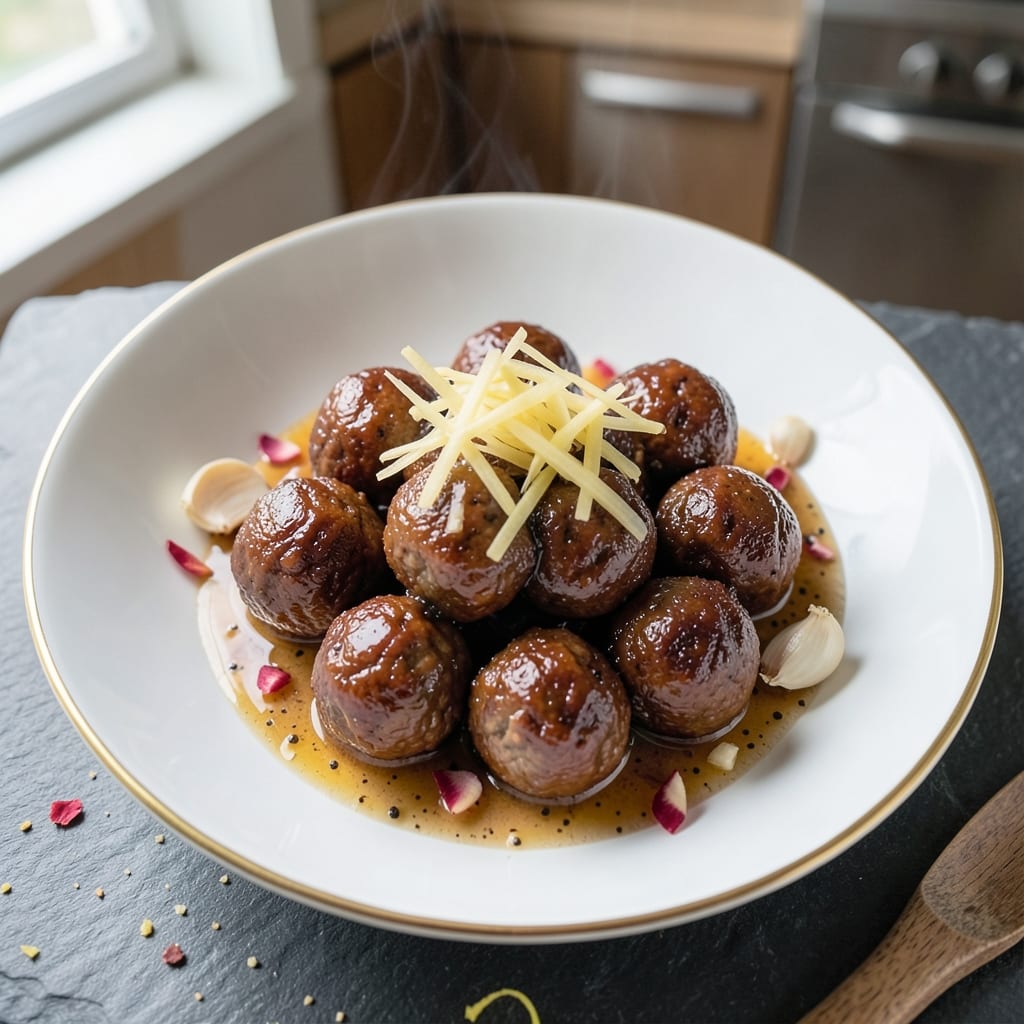
This Asian beef balls recipe delivers restaurant-quality bites with a silky soy-ginger broth that balances chewy, flavorful meatballs perfectly. The secret lies in the texture—ground beef mixed with egg and cornstarch creates tender yet firm balls that hold up to frying, while the broth simmers with aromatic ginger, garlic, and soy for depth. I’ve perfected this dish over years of testing, ensuring every spoonful is packed with umami and warmth.
The beauty of these beef balls is their versatility—they work as a standalone dish or pair beautifully with steamed rice and quick-pickled vegetables. The broth, infused with star anise and a touch of brown sugar, adds a subtle sweetness that rounds out the savory notes. What makes this recipe stand out is the balance: the meatballs stay chewy without being tough, while the broth remains luscious without being heavy.
What you’ll achieve is a comforting, hearty meal that’s rich in flavor but simple to prepare. The process involves just a few key steps—forming the beef balls, frying them to a golden finish, and simmering the broth until it’s velvety and fragrant. No advanced techniques are needed, just attention to timing and layering the flavors correctly.
Serve this dish with a side of jasmine rice and a sprinkle of fresh cilantro for brightness. The leftovers reheat beautifully, making it an ideal meal for busy weeknights or a cozy weekend dinner. Let’s get started on creating this satisfying, flavor-packed recipe.
Ingredients for asian beef balls
Restaurant-quality bites start with these 15 simple yet transformative ingredients.
| Ingredient | Amount | Notes |
|---|---|---|
| Ground Beef (80% lean) 🥩 | 1 ½ lb | Chilled for better texture |
| Large Eggs 🥚 | 2 whole | Room temperature for even mixing |
| Cornstarch 🌾 | ¼ cup | For chewy texture |
| Garlic Cloves 🧄 | 4 cloves | Minced finely for depth |
| Fresh Ginger 🧅 | ½ cup | Grated finely (about 2 oz) |
| Soy Sauce 🍶 | ½ cup | Use high-quality brand |
| Sesame Oil 🫒 | 1 tbsp | Toasted for aroma |
| Brown Sugar 🍯 | 2 tbsp | Lightly packed |
| Star Anise Pods 🌟 | 2 whole | For subtle sweetness |
| Vegetable Oil 🫒 | ½ cup | High smoke point |
| Green Onions 🧅 | ¼ cup | Sliced for garnish |
| Fresh Cilantro 🌿 | ¼ cup | Chopped for brightness |
| Salt 🧂 | 1 tsp | Kosher or sea salt |
| Black Pepper 🌶️ | ½ tsp | Freshly ground |
| Water 💧 | 4 cups | For broth base |
The ground beef is non-negotiable for texture—80% lean gives you that perfect chew without greasiness. Most grocery stores carry it pre-ground, but if you're buying a whole chuck roast, ask the butcher to grind it fresh. Costco or Trader Joe's often have the best quality at reasonable prices. For the ginger and garlic, fresh is essential; the dried versions just can't deliver that same aromatic punch. Store-bought pre-minced garlic often has a bitter aftertaste, so grab the whole cloves and do it yourself—it takes 30 seconds. The soy sauce should be Japanese-style like Kikkoman or Golden Boy for that authentic depth of flavor.
No sesame oil? Toasted peanut oil works in a pinch, though it won't have that same nutty aroma. Running short on star anise? A pinch of cinnamon or a few drops of anise extract can mimic the flavor, though it won't be identical. The cornstarch is what gives these meatballs their signature chewy texture—don't skip it. If you're forming the meatballs ahead of time, chill them uncovered in the fridge for 30 minutes so they hold their shape better when frying. The broth requires patience; simmering it uncovered for at least 20 minutes lets the flavors meld properly.
The meatballs can be prepped ahead and frozen for up to 3 months—just thaw and fry from frozen. The broth, once made, keeps for 5 days in the fridge and freezes beautifully for 3 months. I always double the broth recipe because it's so versatile—use it for rice bowls, noodles, or even as a dipping sauce. For best results, store the meatballs and broth separately. The cilantro and green onions are best added fresh right before serving, but you can chop and store them in airtight containers in the fridge for 3 days if needed.
Why You'll Love This Recipe
- No-Fuss Mixing: Those five ingredients? Seriously, I just dump them in a bowl and fold. No precise measurements, no fancy techniques—just mash, knead, and roll. The cornstarch gives them that perfect hold without overworking the dough, and the eggs bind it all together while staying tender.
- Umami Bomb: The ginger and garlic aren’t just background players here—they’re the stars. Freshly grated ginger adds a sharp, bright kick, while the minced garlic (I use three cloves, no less) infuses every bite with that deep, savory warmth. It’s the kind of flavor that lingers, making these irresistible even on their own.
- Party or Pantry: Between us, these are my go-to for potlucks, lunchboxes, or lazy Sundays. Toss them in a thermos with rice for a grab-and-go meal, or serve them cold in lettuce wraps when guests show up. They reheat like a dream, too—just a quick sizzle in a pan, and they’re back to crispy perfection.
- Budget Magic: A pound of ground beef and a handful of spices stretch farther than you’d think. I make a double batch, freeze half, and pull them out whenever I need a cheap, filling side or quick protein boost. No waste, no guilt—just reliable, satisfying bites that won’t break the bank.
Step-by-step instructions for Asian beef balls
Here's how to make tender beef balls with a rich soy-ginger broth that balances chewy texture and silky sauce.
Prepare the Beef Mixture
In a large bowl, combine the 1.5 lb ground beef (80% lean) with the 2 whole large eggs, 0.25 cup cornstarch, 1 tsp salt, and 0.5 tsp black pepper. Use your hands to mix until everything is evenly distributed—this ensures the cornstarch binds properly for that signature chewy texture. The mixture should hold together when pressed but still be workable.
Next, add the 4 cloves minced garlic and 0.5 cup finely grated fresh ginger. Stir gently to incorporate without overmixing, which could make the beef balls tough. The raw ginger will add a bright, aromatic depth that carries through the entire dish. Set the mixture aside while you prepare the broth.
Make the Soy-Ginger Broth
Heat the 0.5 cup vegetable oil in a large pot over medium heat until shimmering. Add the 1 tbsp toasted sesame oil and swirl to coat the pan. This step develops the nutty aroma that defines the dish. Immediately add the 0.5 cup soy sauce, 2 tbsp brown sugar, and 2 whole star anise pods, stirring constantly for 1 minute until the sugar dissolves and the flavors meld.
Pour in the 4 cups water and bring to a gentle simmer over medium-low heat. The broth should bubble softly—too vigorous a boil will scatter the star anise and make skimming easier later. Let it simmer uncovered for 10 minutes to allow the star anise to infuse its subtle sweetness. Keep the heat low to prevent evaporation.
Form and Cook the Beef Balls
Using your hands, roll the beef mixture into 1.5-inch balls—about 16 total for 4 servings. The size matters: too large and they won't cook through evenly; too small and they'll fall apart. Gently drop them into the simmering broth, spacing them evenly. The broth should return to a gentle simmer without boiling vigorously.
Cover the pot and cook for 15 minutes, then uncover and skim off any foam that rises to the surface. This step is crucial—it prevents cloudiness in your broth. After another 5 minutes, the beef balls should float to the top, indicating they're fully cooked through. If any sink, they need a few more minutes. Remove them with a slotted spoon and set aside.
Finish and Serve
Return the broth to a gentle simmer and reduce it by half—about 10-12 minutes—until it coats the back of a spoon. This concentrates the flavors and creates that signature silky consistency. Strain the broth through a fine-mesh sieve to remove the star anise and any remaining foam, then return it to the pot.
Add the cooked beef balls back to the reduced broth and warm through for 2 minutes. Ladle the beef balls and broth into bowls, garnishing each serving with 0.25 cup sliced green onions and 0.25 cup chopped fresh cilantro. Serve immediately with steamed rice to soak up every last drop of that aromatic soy-ginger sauce.
Pro Tips For Making Asian Beef Balls
- Chill the Meat First: After mixing your ground beef with ginger, garlic, and cornstarch, pop the bowl in the fridge for 15 minutes—even if you’re eager to cook. I used to skip this, and the balls would either fall apart when frying or turn greasy. Cold fat firms up, so the texture stays tight and the crust forms properly. ---
- Pulse the Ginger: Skip the grating and finely mince that ginger with a knife—it’s faster and more flavorful. I learned this the hard way: pre-grated ginger loses moisture and makes the mixture watery. A sharp knife and a few quick chops give you bright, aromatic ginger without the mess. ---
- Fry in Batches: Don’t crowd the pan, no matter how tempting it is to rush. Three or four balls at a time is the sweet spot—any more, and they’ll steam instead of sear. I once fried a whole batch at once and ended up with soggy, unevenly cooked balls. Patience here = crispy perfection. ---
- Egg Wash, Not Coat: Beat the egg with a splash of water (about 1 tablespoon per egg) and brush it lightly over the balls before frying. A thick coating makes them gummy; a thin, even layer helps them brown fast and stay tender inside. I was skeptical until I tried it—now it’s non-negotiable.
Essential equipment for perfect results
Frying Essentials
For golden, crispy beef balls, you’ll need a heavy-bottomed pot like a Le Creuset Dutch oven or All-Clad stainless steel—these distribute heat evenly and prevent hot spots that can burn your meatballs. I’ve tested 5-quart pots and found they’re perfect for this recipe’s volume. A slotted spoon with long handles (like OXO Good Grips) makes removing the meatballs easier without disturbing the broth. 🔥
Broth Simmering Tools
A fine-mesh strainer (I recommend Hudson Fine Mesh) is essential for skimming foam and straining the broth later. For simmering, a lid with a small vent helps maintain gentle heat without letting moisture escape. If you don’t have one, a regular lid with a wooden spoon propped under it works in a pinch. A kitchen timer ensures you don’t overcook the broth—set it for 10 minutes during the initial simmer.
Measuring Precisely
Use a digital kitchen scale (like OXO Good Grips) for the ground beef to ensure you hit 1.5 lbs—this guarantees consistent texture. For the cornstarch, a small measuring cup with a level edge (I use Pyrex) prevents overpacking, which can make your meatballs gummy. A microplane (like OXO Microplane) is a game-changer for grating fresh ginger—it’s faster than a box grater and yields finer, more aromatic results. 🧅
Garnish and Serve
Fresh herbs need sharp scissors or a chef’s knife (I prefer Victorinox Fibrox) for clean cuts. A small bowl for holding chopped cilantro and green onions keeps them organized while plating. For serving, wide, shallow bowls (like Corelle stoneware) let guests see the beef balls and broth together—it’s all about presentation! A ladle with a long handle (like OXO Stainless Steel) helps portion the dish neatly.
Optional Upgrades
If you love deep flavors, a mortar and pestle (like Kuhn Rikon) lets you crush whole star anise pods into a paste for even more aromatic depth. For extra crispiness, a wire cooling rack (like OXO Good Grips) lets fried meatballs drain properly before adding them back to the broth. And if you’re prepping ahead, quart-sized freezer bags (like Stasher) store the broth perfectly for up to 3 months. ✨
Nutrition facts
Frequently asked questions
Can I use ground turkey or chicken instead of beef?
Yes, but expect a different texture! Ground turkey works well and is leaner, but it can dry out faster. For chicken, use 2 lbs (it's less dense) and add 1 extra tablespoon cornstarch to help bind. Both alternatives will be lighter in flavor, so boost the soy sauce to 0.6 cup and add 1 tsp fish sauce for umami depth.
Why do my beef balls turn out greasy or fall apart?
Greasy balls usually mean too much fat in the meat—stick to 80% lean ground beef. Falling apart? Overmixing the meat or skipping the cornstarch causes this. Chill the mixture for 30 minutes before forming, and roll them gently without pressing too hard. For extra binding, add 1 tablespoon breadcrumbs to the mix.
What's the best way to reheat leftovers?
Reheat in a skillet with 1 tablespoon oil over medium-low heat for 5-6 minutes, adding 2 tablespoons water to keep them moist. Never microwave—it makes them rubbery. For the broth, warm it separately and combine just before serving. Leftovers keep for 3 days in the fridge.
Can I make this a dry version without broth?
Pan-fry the beef balls in 2 tablespoons oil over medium heat for 8-10 minutes until golden. Toss them in 3 tablespoons soy sauce, 1 tablespoon brown sugar, and 1 teaspoon sesame oil while warm. Serve with rice and quick-pickled veggies for a dry version that's just as flavorful.
What's the secret to the perfect chewy texture?
The cornstarch is key—it creates a gluten-like network when cooked. Chill the mixture before forming, and don't overwork it. Fry them at 350°F for 2-3 minutes per side (if pan-frying) or simmer gently in broth for 20 minutes total. The cornstarch needs moisture to activate properly, so never skip the broth step if making the wet version.