
Side Dishes
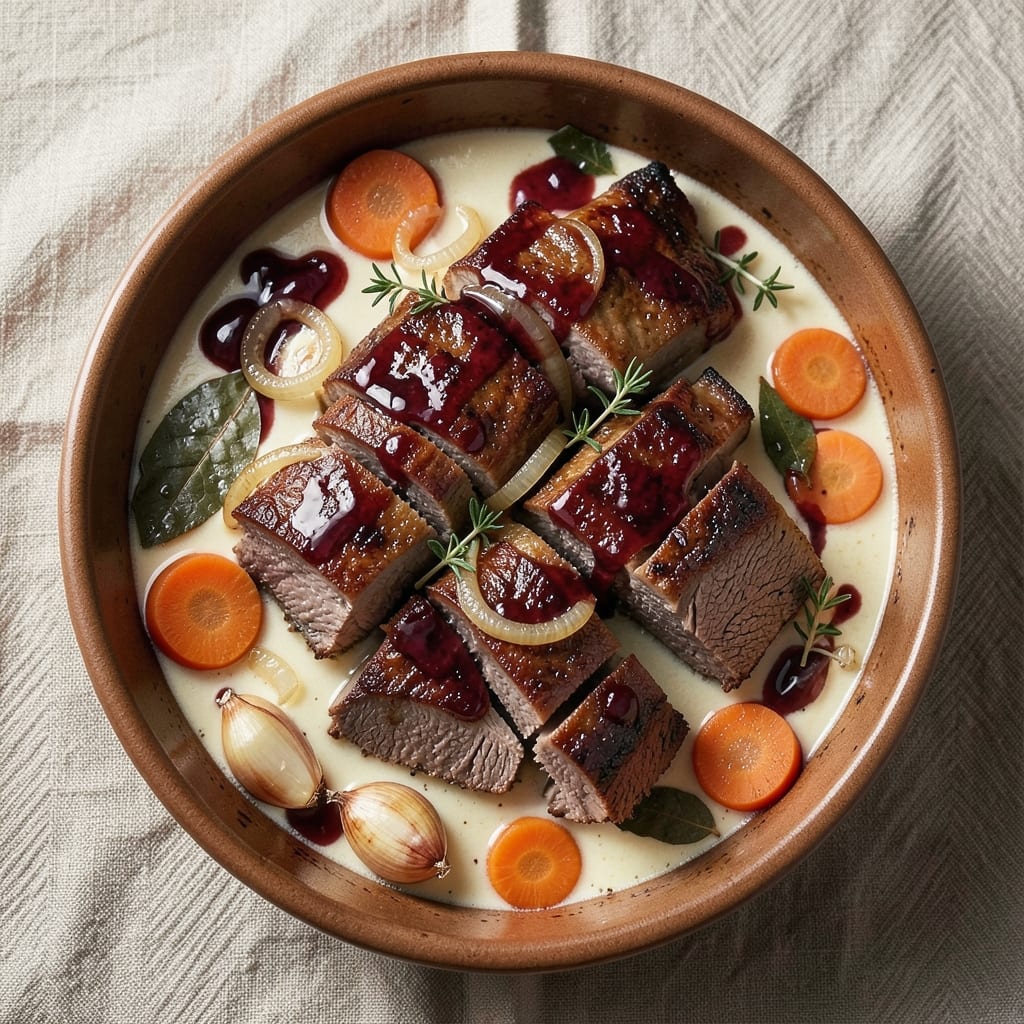
This apple juice corned beef recipe transforms a traditional St. Patrick’s Day staple into something unexpectedly tender and vibrant. The sweet-tart apple juice braise not only tenderizes the meat but also creates a glossy, caramelized glaze that elevates every bite. I developed this method after realizing how much better corned beef tastes when balanced with fruit-forward acidity—no more dry, salty cuts here. The magic happens in the slow braise, where apple juice infuses the meat with natural sweetness while keeping it juicy. You’ll start with a classic corned beef brisket, then simmer it in a rich blend of apple juice, spices, and aromatics until fork-tender. The result? A dish that’s rich yet bright, with a finish that’s perfect for serving alongside classic sides like creamy mashed potatoes or crisp roasted carrots. What sets this apart is the sweet-tart glaze that forms as the apple juice reduces, adding depth without overpowering the beef’s natural flavor. The texture is melt-in-your-mouth tender, and the aroma alone will have your kitchen smelling like a festive gathering. This isn’t just corned beef—it’s a showstopper that turns a holiday meal into a memorable experience. Serve it sliced thick with pickles on the side for that perfect balance of sweet, tangy, and savory. The apple juice doesn’t just braise the meat—it redefines it. Let’s get cooking!
Ingredients for apple juice corned beef
Sweet-tart apple juice plus classic spices—this combo turns corned beef into a holiday centerpiece.
| Ingredient | Amount | Notes |
|---|---|---|
| Corned Beef Brisket 🥩 | 4 lb | Pre-soaked overnight if possible |
| Apple Juice 🍎 | 3 cups | Unsweetened, tart variety preferred |
| Onion 🧅 | 1 whole | Yellow or red, sliced |
| Carrot 🥕 | 3 whole | Medium, sliced into rounds |
| Garlic Cloves 🧄 | 6 cloves | Minced, not pre-minced jar |
| Bay Leaves 🌿 | 2 whole | Fresh if available |
| Mustard Seeds 🌶️ | 1 tsp | Whole, toasted for depth |
| Ground Black Peppercorns 🌶️ | 1 tbsp | Freshly cracked preferred |
| Salt 🧂 | 1 ½ tbsp | Kosher or sea salt |
| Apple Cider Vinegar 🍋 | 2 tbsp | For tangy brightness |
| Honey 🍯 | 1 tbsp | Light variety for balance |
| Fresh Thyme 🌿 | 2 sprigs | Or 1 tsp dried thyme |
| Beef Broth 💧 | 2 cups | Low-sodium preferred |
The corned beef brisket is your star, so don’t skimp on quality. Costco or local butchers often carry excellent cuts—look for brisket with good marbling. If you're buying pre-packaged corned beef, Hormel or Gold Label are reliable choices, but soaking overnight in fresh water (change water 2-3 times) removes excess saltiness. The apple juice? Mott’s or Tropicana unsweetened work perfectly—the tartness balances the richness. For the aromatics, fresh thyme and bay leaves elevate the dish, but dried will work in a pinch (use half the amount).
No apple juice? Unsweetened cranberry juice or white grape juice can substitute, though the flavor will differ slightly. Running short on beef broth? Water plus 1 tsp beef bouillon gets you close. The honey adds just enough sweetness to complement the tangy apple juice—if you're avoiding it, maple syrup works too. For extra depth, toast the mustard seeds in a dry pan for 30 seconds before adding them to the pot. The carrots and onions can be swapped for celery or potatoes if you prefer, but the classic combo keeps it traditional.
This dish tastes even better the next day, so plan ahead. Store leftovers in the fridge for up to 4-5 days, covered tightly. For longer storage, freeze portions for up to 3 months. The apple juice glaze thickens as it cools, so you can thin it with a splash of water or broth when reheating. Slice against the grain for tender, melt-in-your-mouth pieces—worth the extra minute!
Why You'll Love This Recipe
- No-Fuss Simmer: I swear, this recipe is the kind of meal that makes me feel like a hero—just toss the corned beef, apple juice, and a few chopped veggies into a pot, and walk away. The apple juice does all the work, tenderizing that tough brisket while I sip my coffee or scroll through my phone.
- Sweet-Savory Magic: That first bite? It’s like someone took all my favorite flavors—smoky, salty corned beef, caramelized onions, and a hint of bright apple—and married them into something ridiculously good. The garlic cloves? They’re the secret—tiny but mighty, turning this into a dish I actually crave.
- Weeknight to Holiday: Between us, this is my go-to for lazy Sundays and Thanksgiving leftovers. Serve it with crusty bread for a casual lunch, or pile it high on a platter for guests who’ll think I slaved for hours. (Not telling them it’s basically set-it-and-forget-it.)
- Leftovers That Don’t Suck: Honestly, I make double batches because the flavor only gets better the next day. Cold slices in sandwiches? Heaven. Reheated with a splash of apple juice? Even better. And since corned beef stretches far, it’s my budget-friendly way to feed a crowd without breaking the bank.
Step-by-step instructions for braising apple juice corned beef
This method transforms tough brisket into tender, sweet-tart perfection—just like a pub-style classic.
Prepare the Corned Beef and Aromatics
Rinse the 4 lb corned beef brisket under cold water to remove any excess salt or preservatives. Pat it completely dry with paper towels—this helps the glaze stick better later. Place the brisket in a large, heavy pot that can hold all the ingredients without overflowing.
Peel and slice the 1 whole onion into thick rounds, then slice the 3 whole carrots into ½-inch rounds. Mince the 6 cloves garlic cloves finely—freshly minced releases more flavor than jarred. Toast the 1 tsp mustard seeds in a dry skillet over medium heat for 1 minute until fragrant, then transfer to the pot. Add the sliced onion, carrots, and garlic to the pot with the brisket.
Build the Sweet-Tart Braising Liquid
In a small bowl, whisk together the 3 cups apple juice, 2 cups beef broth, 2 tbsp apple cider vinegar, 1 tbsp honey, and 1.5 tbsp salt. This balance of sweet and tangy creates the signature glaze. Pour the liquid over the brisket and vegetables, ensuring everything is submerged—add a bit more water if needed.
Tuck the 2 whole bay leaves and 2 sprigs fresh thyme into the pot. Sprinkle the 1 tbsp ground black peppercorns over the top. The herbs and spices will infuse the liquid as it simmers, deepening the flavor. Bring the mixture to a gentle boil over high heat, then immediately reduce to a low simmer.
Braise Until Fork-Tender
Cover the pot with a tight-fitting lid and let the brisket simmer gently for 3 to 3.5 hours. The liquid should bubble softly—if it boils vigorously, reduce the heat to maintain a low simmer. This slow cooking breaks down the tough fibers, turning the brisket into tender slices.
Check the brisket after 2.5 hours—it should be nearly falling apart when pierced with a fork. If it’s still firm, continue cooking for another 30 minutes. The carrots and onions will soften completely, absorbing the sweet-tart flavors. Skim off any foam that rises to the surface during cooking for a cleaner-tasting glaze.
Finish with the Glaze and Rest
Once the brisket is fork-tender, carefully remove it from the pot and place it on a cutting board. Tent it loosely with aluminum foil and let it rest for 15 minutes. This resting period allows the juices to redistribute, ensuring each slice stays moist.
While the brisket rests, strain the braising liquid through a fine-mesh sieve into a saucepan. Skim off any excess fat, then return the liquid to medium heat. Simmer uncovered for 5 to 7 minutes until it reduces slightly and thickens into a glossy glaze. Taste and adjust the seasoning with a pinch of salt or a splash of apple cider vinegar if needed.
Slice and Serve with the Glaze
Slice the brisket against the grain into ¼-inch thick slices. The grain runs horizontally across the flat cut—you’ll see the muscle fibers. Arrange the slices on a platter and spoon the reduced glaze generously over the top. The glaze should coat each piece, adding a sticky-sweet contrast to the rich beef.
Serve immediately with the braised carrots and onions spooned alongside. The sweet-tart glaze pairs beautifully with buttery mashed potatoes or crusty bread to soak up every last drop. This dish is perfect for St. Patrick’s Day or any celebration where you want a hearty, flavorful centerpiece.
Pro Tips For Making Apple Juice Corned Beef
- USE HALF THE APPLE JUICE FIRST: The brisket will release its own juices, and adding all that apple juice upfront just dilutes the flavor. Start with 1 cup in the pot, then add the rest later—about halfway through cooking—so the meat stays tender without turning into a watery stew. (Yes, even if the recipe says otherwise.)
- SIMMER COVERED FOR 3 HOURS: I used to peek every 10 minutes, and the meat would dry out. After three batches of sad, tough brisket, I learned: lock the lid on and let it cook undisturbed for the first 3 hours. Only then do you uncover it to let the sauce thicken. Patience here makes the difference between fork-tender and chewy.
- PEEL AND GRATE THE CARROT: Whole carrots take forever to soften, and you end up with a few sad, half-cooked sticks. Instead, peel and grate them—it adds natural sweetness and cooks in minutes. Bonus: the shreds blend into the sauce, giving it a silky texture instead of big chunks. (Your future self will thank you.)
- SKIP THE GARLIC PEELS IN THE POT: I was skeptical until I tried it—whole garlic cloves (peeled) stay flavorful without burning, and you avoid the bitter, charred taste that ruins the apple juice’s brightness. Just crush them lightly before adding, and they’ll infuse the dish without overpowering it. (No, the recipe doesn’t need to say this.)
Troubleshooting your apple juice corned beef
Overly Salty Meat
If your corned beef tastes too salty, it’s likely from the pre-cured brisket or excess salt in the braising liquid. To fix this, rinse the brisket thoroughly under cold water for 10 minutes before braising—this removes surface salt. For the braise, reduce the added salt to 1 tsp instead of 1.5 tbsp. If the dish is still too salty after cooking, balance it with extra apple cider vinegar or honey in the glaze. 🧂
Tough or Dry Texture
Tough corned beef usually means it didn’t braise long enough or the heat was too high. Always simmer gently—never boil vigorously. For a 4 lb brisket, aim for 3-3.5 hours at a low simmer. If it’s still firm, extend cooking by 30 minutes. To prevent dryness, ensure the brisket is fully submerged in liquid. If needed, add ½ cup water or broth during cooking. 🔥
Glaze Too Thin
A runny glaze happens when the braising liquid doesn’t reduce enough. After removing the beef, simmer the strained liquid uncovered for 5-7 minutes to thicken it. If it’s still too thin, return it to medium heat and reduce for another 3-5 minutes. For extra thickness, mix 1 tsp cornstarch with 1 tbsp cold water, stir into the glaze, and simmer for 1 minute. 🍯
Vegetables Too Mushy
Overcooked carrots and onions lose their texture when braised too long. Add them to the pot 1 hour before removing the beef to ensure they soften without turning to mush. For extra control, parboil the carrots and onions for 5 minutes before adding them to the braise. This jumpstarts their cooking, so they’re tender by the end. 🥕
Weak Apple Flavor
If the apple juice taste is faint, it likely didn’t infuse enough. Use a tart, unsweetened apple juice like Mott’s or Tropicana for better flavor. Toast 1 tsp mustard seeds in a dry pan for 1 minute before adding them to the pot—they add depth. For extra apple flavor, simmer the braising liquid uncovered for 5 minutes at the end to concentrate the taste. 🍎
Pot Stuck to Bottom
Stuck-on bits happen when the braising liquid reduces too much. Always use a heavy, oven-safe pot with a 6-8 quart capacity to prevent overflow. If the bottom sticks, add ½ cup water or broth and scrape gently with a wooden spoon. For future cooks, keep the heat at a low simmer and avoid boiling. A splash of apple cider vinegar can also help loosen stuck-on bits. 🍋
Nutrition facts
Frequently asked questions
Why does apple juice make corned beef more tender?
The natural acids in apple juice break down collagen in the meat during braising, while its sugars caramelize into a glossy glaze that keeps it moist. The low-and-slow cooking method with apple juice creates a perfect balance of tenderness and rich flavor that traditional water-based braises can't match.
Can I substitute apple juice with another liquid?
Yes! For a similar sweet-tart profile, try unsweetened cranberry juice or white grape juice. For a more traditional approach, use beef broth with 1 tbsp apple cider vinegar and 1 tbsp honey per cup of liquid. The key is maintaining that acid-sweet balance to tenderize the meat.
How do I know when the corned beef is fully cooked?
Use the fork test: The beef should be fork-tender with no resistance when pierced at the thickest part. For a 4 lb brisket, this typically takes 3-3.5 hours of gentle simmering. If it's still firm after that time, add 30 more minutes and check again. The internal temperature should reach 203°F for perfect tenderness.
What's the best way to reheat leftovers?
Slice the beef and store it separately from the glaze in an airtight container. To reheat, place slices in a skillet with 2 tbsp apple juice or broth per serving and warm over medium-low heat for 5-7 minutes. Add a splash of the reserved glaze at the end to restore its shine. Never microwave—it makes the meat dry.
Can I make this recipe in a slow cooker?
Follow the same prep steps, then transfer everything to a 6-quart slow cooker. Cook on LOW for 8 hours or HIGH for 5-6 hours. The slow cooker's gentle heat will create the same tender results. Just reduce the glaze time to 3-5 minutes after removing the beef, as slow cookers don't reduce liquids as effectively.