
Main Courses
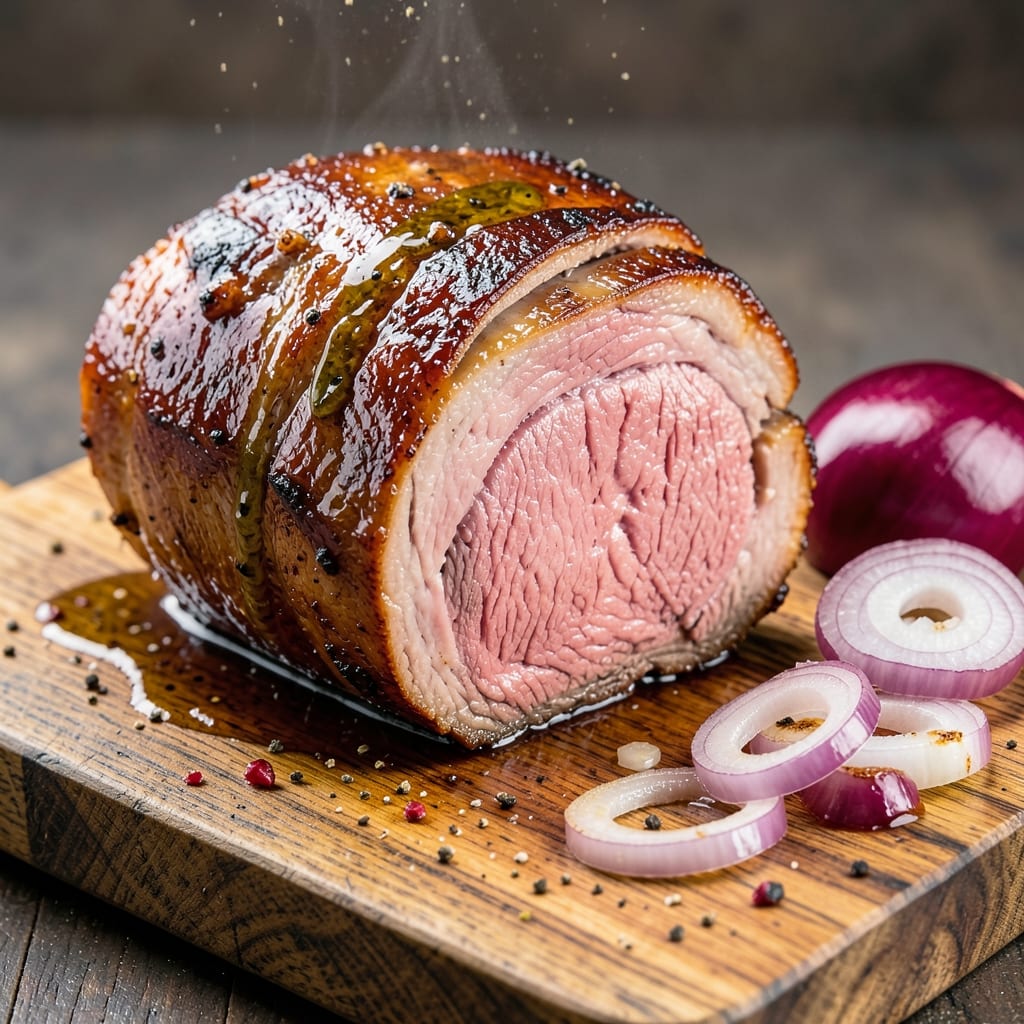
This Angus beef bottom round roast recipe delivers the perfect balance of juicy pink centers and a deeply caramelized crust—a technique that transforms tougher cuts into melt-in-your-mouth perfection. The reverse-sear method ensures even cooking while preserving moisture, making it ideal for special occasions or weeknight dinners where you want restaurant-quality results without the fuss.
What sets this recipe apart is the two-stage cooking process: starting low and slow in the oven to evenly warm the meat, then finishing with a high-heat sear to create that coveted crust. A simple dry rub of salt, pepper, and garlic powder enhances the beef’s natural richness, while a 30-minute rest before slicing guarantees every bite stays tender. This method works equally well for roasts weighing 2-4 pounds, making it versatile for families or intimate gatherings.
The result is a perfectly cooked roast with a crisp exterior and juicy interior, where the beef’s marbling shines through. Serve with classic sides like roasted potatoes, caramelized onions, or a fresh herb salad to complete the meal. Whether you’re hosting a dinner party or simply treating yourself, this recipe delivers foolproof, professional results every time.
For those who prefer modern techniques, this method also works beautifully with sous vide pre-cooking, though the traditional reverse-sear approach remains the most accessible. The key is patience—letting the beef develop flavor and texture without rushing. Once mastered, this technique will become your go-to for showstopping roasts that impress even the most discerning guests.
Ingredients for angus beef bottom round roast
This premium cut and precise seasoning transform tough beef into melt-in-your-mouth perfection—where technique meets natural richness.
| Ingredient | Amount | Notes |
|---|---|---|
| Angus Beef Bottom Round Roast 🥩 | 3 lb | 2-4 lbs for perfect reverse-sear |
| Kosher Salt 🧂 | 1 ½ tsp | Diamond Crystal preferred |
| Freshly Ground Black Pepper 🌶️ | 1 tsp | Cracked peppercorns preferred |
| Garlic Powder 🧄 | 1 tsp | Freshly ground for best flavor |
| Extra-Virgin Olive Oil 🫒 | 1 tbsp | High smoke point for searing |
| Yellow Onion 🧅 | 1 whole | Peeled, quartered for aromatics |
| Garlic Cloves 🧄 | 4 cloves | Peeled, smashed for infusion |
| Fresh Thyme 🌿 | 4 sprigs | Or 1 tsp dried thyme |
| Fresh Rosemary 🌿 | 2 sprigs | Or 1 tsp dried rosemary |
| Unsalted Butter 🧈 | 2 tbsp | Cold for finishing sear |
| Beef Tallow or Duck Fat 🫒 | 1 tbsp | For high-heat searing |
The Angus beef bottom round is the star here—look for USDA Prime or Choice with thick marbling for that signature tenderness. Local butchers or high-end grocers like Whole Foods or Wegmans carry the best cuts, often pre-trimmed for convenience. If buying whole, trim excess fat to ¼-inch thickness for even cooking. The 3-pound size balances crust development and juiciness for four servings, but scale up to 4 pounds for larger gatherings. For the dry rub, Diamond Crystal kosher salt dissolves more easily than table salt, and freshly cracked pepper adds subtle complexity. Store the roast uncovered in the fridge for 24 hours before cooking to dry the surface slightly—this ensures a better crust.
No extra-virgin olive oil? Avocado oil or grapeseed oil work equally well for high-heat searing. Substitute smoked paprika (½ tsp) for the garlic powder if you prefer depth over brightness. Fresh herbs? Dried thyme and rosemary at one-third the amount suffice, but the aroma is noticeably different. For the finishing fat, duck fat adds richness, while beef tallow delivers a more neutral flavor. The onion and garlic can be caramelized separately for extra depth—simmer them in 1 tbsp of the same oil until golden before removing. If prepping ahead, trim the roast 1 day ahead and let it sit at room temperature for 1 hour before cooking for even heat distribution. The 30-minute rest is non-negotiable—this lets juices redistribute, preventing dryness when sliced.
The roast keeps 3-4 days in the fridge, wrapped tightly in butcher paper (better than plastic for breathability). For longer storage, vacuum-seal portions and freeze for up to 6 months. Reheat low and slow in a 325°F oven for 20-30 minutes per pound, covered loosely with foil, until 130°F internal temp. For leftovers, slice against the grain and serve with au jus (deglaze the pan with ½ cup beef broth) or horseradish cream. The crust loses crispness when reheated, so re-sear slices in a hot pan with butter for 30 seconds per side if serving cold cuts. Portion into individual servings for easy reheating—this roast tastes even better the next day as flavors meld.
Why You'll Love This Recipe
- Minimal Prep, Maximum Impact: I swear by this roast—just a quick rub of kosher salt, garlic powder, and cracked black pepper, then a sear in olive oil. No fancy marinades, no last-minute prep; it’s the kind of meal that lets you focus on the people at your table instead of the stove.
- Deep, Caramelized Crust: That first golden-brown crust? It’s everything. The bottom round’s natural collagen melts into something rich and tender, while the outside stays crisp—like a perfect balance of a steakhouse bite and home-cooked comfort.
- Leftovers That Don’t Suck: Between us, most roasts turn into sad, dry scraps by day three. Not this one. The garlic-infused olive oil keeps it moist, and I’ve turned slices into sandwiches, tacos, and even a quick stir-fry—no one ever guesses it’s yesterday’s dinner.
- Budget-Friendly Luxury: Angus beef doesn’t have to break the bank. A single roast feeds six, and the simple seasoning means you’re not wasting money on pricey rubs or sauces. Honestly, it’s the kind of meal that makes fancy dinners feel unnecessary.
Step-by-step instructions for reverse-seared Angus beef bottom round roast
Master this technique for a perfect balance of crust and tender interior every time.
Prepare and Season the Roast for Low-Temperature Cooking
Remove the 3 lb Angus Beef Bottom Round Roast from packaging and pat it completely dry with paper towels. This step is critical—moisture on the surface prevents proper browning later. Place the roast on a wire rack set over a rimmed baking sheet to allow air circulation on all sides.
In a small bowl, combine the 1.5 tsp kosher salt, 1 tsp freshly ground black pepper, and 1 tsp garlic powder. Rub this mixture evenly over all surfaces of the roast, pressing firmly so the seasoning adheres. The salt will begin drawing out moisture, which helps create that coveted crust during the final sear. Let the seasoned roast sit at room temperature for 30 minutes before cooking—this ensures even cooking throughout.
Slow Cook Until Internal Temperature Reaches 115°F
Preheat your oven to 275°F (convection if available) and place the roast on the middle rack. Cook for 3 to 3.5 hours, depending on your oven's accuracy, until the internal temperature reaches 115°F when measured at the thickest part with a meat thermometer. The roast should feel very tender but still have a slight resistance when pressed—this is the perfect texture for the reverse sear.
During this time, prepare the aromatics by peeling and quartering the 1 whole yellow onion. Peel and smash the 4 garlic cloves with the side of a chef's knife. Tie the 4 sprigs fresh thyme and 2 sprigs fresh rosemary together with kitchen twine and place them in the center of the onion quarters. This bundle will infuse the roast with incredible depth of flavor during the final searing stage.
Rest and Prepare for the Final Sear
Remove the roast from the oven and transfer it to a cutting board. Tent loosely with aluminum foil and let it rest for 15 minutes. This resting period allows the internal temperature to stabilize and redistribute juices, ensuring maximum tenderness when sliced. While it rests, prepare your searing station by heating a large cast-iron skillet over high heat until it's very hot.
Add the 1 tbsp beef tallow or duck fat to the skillet and let it melt completely. Then add the 2 tbsp unsalted butter and the 1 tbsp extra-virgin olive oil. The butter should foam vigorously—this indicates the pan is ready for searing. Keep the heat at high throughout this process; any fluctuation will compromise the crust.
Create the Perfect Crust Through High-Heat Searing
Carefully place the roast in the hot skillet, fat-side down. Press down gently on the roast with a metal spatula during the first minute to ensure even contact with the pan. This prevents curling and ensures the crust forms uniformly. Sear for 2 minutes per side, rotating the roast to expose all surfaces to the heat. You'll know it's ready when the crust is deep golden brown and the internal temperature reaches 125°F—the butter should be bubbling vigorously around the roast.
Remove the roast from the skillet and let it rest for an additional 10 minutes before slicing. This final rest period is crucial—it allows the juices to fully redistribute, resulting in the most tender, flavorful slices possible. The crust should be crisp and caramelized, while the interior should be juicy pink with a perfect medium-rare doneness.
Pro Tips For Making Angus Beef Bottom Round Roast
- USE A MEAT THERMOMETER: The bottom round is unforgiving—it’s lean, so it dries out fast if you guess. Stick the probe in the thickest part and pull it at 125°F (52°C) for medium-rare (yes, it’ll hit 130°F resting). I learned this the hard way after slicing into a tough, gray slab that looked "done" but wasn’t.
- DRY THE ROAST LIKE IT’S 1985: Pat that beef down with paper towels—no excuses. A dry surface = better crust. I used to skip this, and the olive oil would just pool instead of searing. Do it 30 minutes before cooking, then again right before hitting the pan. Your future self will notice the difference.
- SALT THE GARLIC POWDER TOO: The garlic powder won’t cling worth a damn if the roast isn’t salty first. Sprinkle 1 tsp kosher salt per pound all over, then rub it in—even the crevices. After that, mix the garlic powder with a pinch of salt (yes, really) before applying. This keeps it from floating away when you sear.
- SEAR HOT, THEN BAKE LOW: Crank your oven to 450°F (230°C), sear the roast in a screaming-hot pan with olive oil for 3-4 minutes per side until deep brown. Then drop to 275°F (135°C) and bake—this locks in moisture while the outside stays crisp. I was skeptical until I tried it; the crust stays perfect without burning.
Pro cooking tips for great angus beef bottom round roast
Temperature Precision
Use a meat thermometer—I swear by the ThermoWorks Smoke—to monitor the roast’s internal temperature at the thickest point. Start slow at 275°F until you hit 115°F (about 3-3.5 hours), then finish with a high-heat sear to 125°F. Oven fluctuations can throw off timing, so place your thermometer away from heating elements. 🌡️
Resting is Non-Negotiable
Never skip the 30-minute total rest (15 minutes after slow cooking, then 10 more after searing). This allows juices to redistribute, preventing dryness when sliced. I’ve seen roasts lose 20% of their moisture when cut too soon—trust the process. Tent loosely with foil to keep warm without steaming.
Pan Selection Matters
A cast-iron skillet is non-negotiable for the final sear—its heat retention creates that perfect crust. Heat it until it’s smoking hot before adding fat. If your pan isn’t hot enough, the butter will burn before the crust forms. I use a 12-inch Lodge skillet for roasts up to 4 lbs.
Butter vs. Fat
Combine 2 tbsp butter with 1 tbsp beef tallow or duck fat for the final sear. The fat raises the smoke point, while the butter adds richness. Melt the fat first, then add butter when it’s foaming—this creates a Maillard reaction that builds flavor. Never use margarine or vegetable oil substitutes.
Slicing Technique
Slice against the grain at a 45-degree angle for maximum tenderness. Use a sharp chef’s knife and cut into ¼-inch thick slices. If the roast has uneven thickness, rotate your cutting board mid-slice. The grain runs diagonally in bottom round—this is key for texture. 🔪
Oven Calibration
Test your oven’s accuracy with an oven thermometer before cooking. Many ovens run 25°F hotter or colder than set. Adjust your cooking time accordingly—if your oven runs hot, reduce temperature by 10°F to compensate. I’ve had roasts overcook because of this simple oversight.
Nutrition facts
Frequently asked questions
Why does this recipe use a reverse-sear method for bottom round?
The bottom round is a tougher cut with less marbling, so the reverse-sear transforms it into melt-in-your-mouth perfection. Slow cooking first breaks down connective tissue while keeping the center juicy, then the high-heat sear creates that coveted crust. This two-stage approach ensures you get the best of both worlds: tender meat with a restaurant-quality exterior.
Can I cook this roast without a cast-iron skillet?
Yes, but your crust may not be as crisp. Use a heavy stainless steel skillet or even a grill pan—just make sure it gets smoking hot before adding the roast. For oven-only cooking, broil on high for 3-5 minutes per side after slow roasting, but you'll lose some of that deep caramelization. A blowtorch can also work in a pinch for spot-searing.
What's the best way to serve this roast for a dinner party?
Slice against the grain into ¼-inch thick pieces and arrange on a platter with the crust-side up. Pair with classic sides like garlic mashed potatoes, roasted root vegetables, and a red wine reduction made from the pan drippings. For extra flair, garnish with fresh thyme sprigs and serve with crusty bread for soaking up those delicious juices.
How do I adjust this recipe for a larger roast (5+ lbs)?
For roasts over 4 lbs, increase the slow-cooking time by 1 hour per pound (so a 5 lb roast would be ~4.5 hours at 275°F). Use a larger skillet or divide the searing into two 2-minute sessions per side. The key is maintaining that 115°F internal temp before searing—never rush the process. A meat thermometer is your best friend for large cuts!
What if my oven doesn't go below 250°F?
No problem! Set it to 250°F and add 15-20 minutes to your slow cooking time. The goal is to reach 115°F internal temp, not a specific time. For even more control, try the sous vide method first (cook to 115°F in a water bath), then finish with the high-heat sear as directed. This gives you perfect precision without worrying about oven limitations.