
Side Dishes
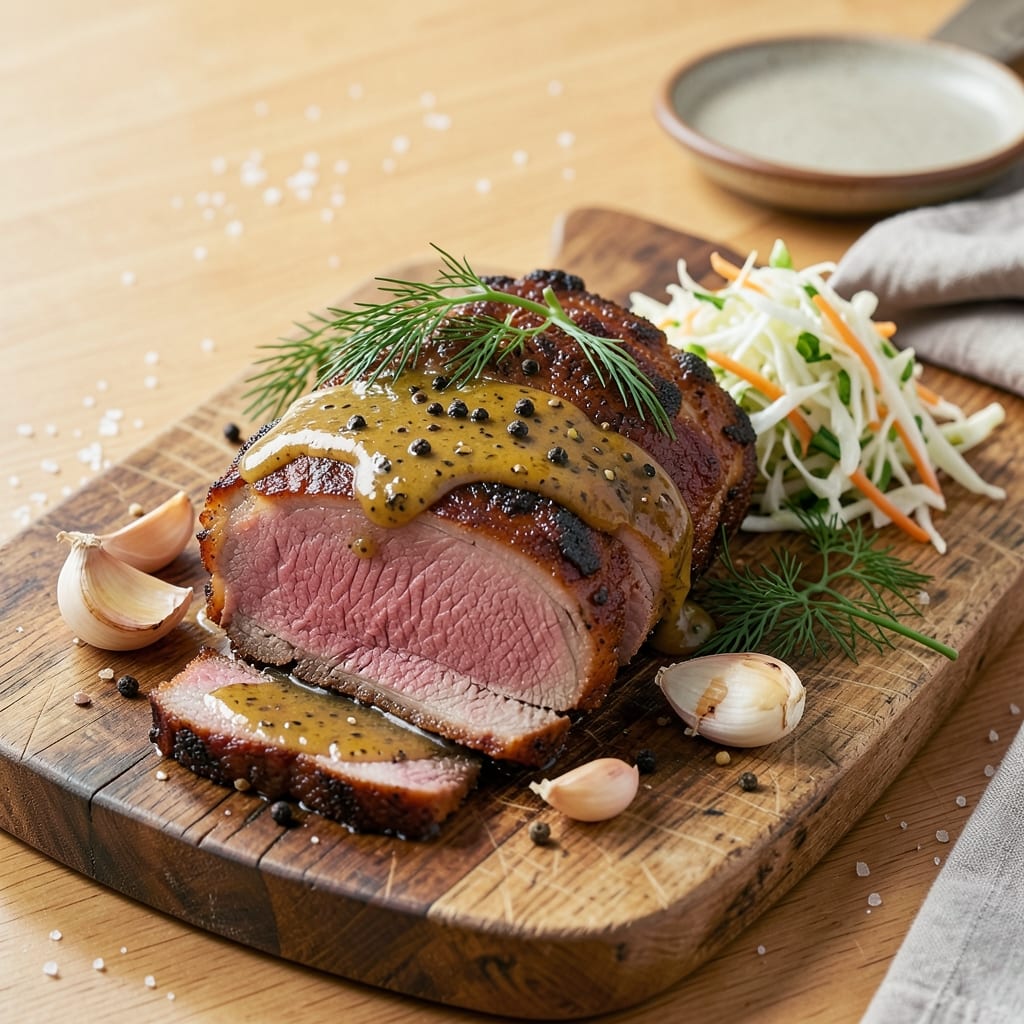
This American corned beef recipe delivers the perfect balance of tender, spiced meat and crispy potato crown that transforms St. Patrick's Day into a full sensory experience. The secret lies in a precise brining process—where the meat absorbs just the right amount of salt, garlic, and spices to create that signature melt-in-your-mouth texture. What sets this apart is the slow-braising method, which ensures the beef stays juicy while developing deep, savory flavors that pair beautifully with classic sides like cabbage and mustard.
Professional results start with a 24-hour brine, where the corned beef absorbs its flavor foundation before a 3-hour slow cook at 300°F. This method guarantees tender, fork-tender meat with a crispy exterior that holds up perfectly for serving. The potato crown, roasted until golden and flaky, adds a satisfying contrast that elevates the dish from simple to spectacular. Every bite delivers that perfect harmony of spiced beef and crispy potato—exactly what makes this recipe a standout.
The beauty of this preparation is its versatility—whether you're hosting a traditional Irish feast or a casual family dinner, the technique remains the same. The slow-braising ensures the meat stays moist and flavorful, while the potato crown adds a restaurant-quality touch that impresses without extra effort. What you'll end up with is a dish that's rich, hearty, and packed with the kind of bold flavors that make it a year-round favorite, not just a holiday specialty.
Pair with classic sides like boiled cabbage, creamy mashed potatoes, or tangy mustard sauce for the full experience. The recipe delivers on every promise—tender, flavorful beef with that coveted crispy potato crown. Let's get started on creating this timeless American classic.
Ingredients for american corned beef
Four pounds of brisket and crispy potatoes transform into a restaurant-quality centerpiece.
| Ingredient | Amount | Notes |
|---|---|---|
| Beef Brisket 🥩 | 3 lb | Whole packer cut, trimmed of excess fat |
| Kosher Salt 🧂 | 1 ½ cups | Diamond Crystal preferred for precise measurement |
| White Sugar 🍚 | ½ cup | Granulated, for brining balance |
| Mustard Seeds 🌶️ | 2 tbsp | Whole seeds, toasted for depth |
| Garlic Cloves 🧄 | 8 cloves | Smashed, skin on for infusion |
| Black Peppercorns 🌶️ | 1 tbsp | Coarsely crushed for texture |
| Bay Leaves 🌿 | 4 whole | Fresh for optimal flavor |
| Russet Potatoes 🥔 | 4 medium | For crispy crown, peeled |
| Olive Oil 🫒 | ¼ cup | Extra-virgin for roasting |
| Yellow Onion 🧅 | 1 whole | Thinly sliced for potato crown |
| Fresh Parsley 🌿 | ¼ cup | Chopped, for garnish |
| Water 💧 | 4 cups | Filtered for best flavor |
| Beef Broth 🍲 | 1 cup | Low-sodium preferred |
The brisket is non-negotiable—look for packer-cut brisket at your local butcher shop or Costco for the best value. Trim excess fat to about 1/4-inch thickness for even cooking. Whole Foods and Trader Joe's carry pre-trimmed packs if you're short on time. For the potatoes, Russet variety is essential—they're the only ones with enough starch to achieve that perfect crispy crown. Buy them a few days ahead and store in a cool, dark place to ensure maximum crispness. The kosher salt should be Diamond Crystal if you can find it—it's finer and dissolves more evenly in the brine.
No Diamond Crystal salt? Morton kosher salt works in a pinch, but you'll need about 10% more. Running low on mustard seeds? Ground mustard at half the amount will give you similar tanginess, though the texture will differ slightly. Fresh bay leaves are ideal, but dried at one-quarter the amount works if that's what you have. For the potato crown, Yukon Golds can replace Russets, but expect slightly less crispness. The beef broth? Low-sodium versions are key here—high-sodium broth will overpower the delicate balance of flavors in the final dish. If you can't find low-sodium, dilute regular broth with an equal part water.
The brined brisket keeps in the fridge for up to 3 days before cooking—use the extra time to your advantage for a more flavorful result. Once cooked, the beef reheats beautifully—simmer gently in its juices for 15-20 minutes on the stove. The potato crown can be prepped a day ahead and stored in the fridge, but roast it just before serving for maximum crispness. Leftovers? The beef freezes for up to 3 months and reheats perfectly for sandwiches or hash. The potatoes, unfortunately, don't reheat well—best enjoyed fresh out of the oven.
Why You'll Love This Recipe
- Taste Like Sunday: That first bite? The sugar and garlic caramelize into something rich and smoky, while the mustard seeds add a little peppery punch. It’s the kind of flavor that makes you slow down and actually enjoy your meal—no fast food in sight.
- Leftovers That Don’t Suck: Between us, most corned beef recipes leave you with sad, dry slices the next day. Not this one. The slow cook transforms the brisket into tender, juicy perfection that reheats beautifully—even better in a sandwich the following lunch.
- Budget Meal for Crowds: A big brisket feeds a family for days, and the ingredients? Basic pantry stuff. No fancy marinades or specialty cuts—just salt, sugar, and a few cloves of garlic. Honestly, it’s the kind of meal that makes grocery day feel like a win.
Step-by-step instructions for slow-braised corned beef with crispy potato crown
Transform tough brisket into tender, spice-infused perfection with this methodical approach.
Prepare the Corned Beef Brine
In a large non-reactive container, combine the 3 lb beef brisket, 1.5 cups kosher salt, 0.5 cup white sugar, 2 tbsp mustard seeds, 8 cloves garlic cloves (smashed), 1 tbsp black peppercorns, and 4 whole bay leaves. The salt and sugar should dissolve completely as they penetrate the meat.
Add 4 cups water and stir until all ingredients are fully incorporated. Cover and refrigerate for 5-7 days, turning the brisket daily to ensure even curing. The meat should develop a pinkish hue and absorb the brine completely. This long cure transforms tough muscle fibers into tender, flavorful beef.
Rinse and Simmer the Corned Beef
After curing, remove the brisket from the brine and rinse it thoroughly under cold water for 2 minutes to remove excess salt. In a large pot, combine the rinsed brisket, 1 cup beef broth, and enough water to cover the meat by 2 inches. Bring to a boil over high heat, then immediately reduce to a gentle simmer.
Skimming any foam that rises to the surface, simmer uncovered for 3 hours, turning the brisket occasionally. The liquid should reduce to about half its original volume, creating a rich, concentrated broth. The beef should be fork-tender but not falling apart—this ensures it holds its shape when sliced.
Prepare the Crispy Potato Crown
While the beef simmers, preheat your oven to 425°F. Peel and thinly slice the 4 medium russet potatoes into ¼-inch rounds. Toss them with 0.25 cup olive oil and 1 whole yellow onion (thinly sliced) until evenly coated. Spread the potato mixture in a single layer on a parchment-lined baking sheet.
Roast for 25-30 minutes, stirring once, until the potatoes are golden brown and crispy around the edges. They should be tender when pierced with a fork but still hold their shape. The onions should caramelize slightly, adding sweetness to balance the savory beef.
Finish the Corned Beef and Assemble
Once the beef is tender, remove it from the pot and let it rest for 15 minutes before slicing. Strain the cooking liquid through a fine-mesh sieve to remove any impurities, then return it to the pot and reduce over medium-high heat until it thickens slightly—about 5 minutes. This creates a glossy, flavorful sauce to drizzle over the beef.
Slice the rested brisket against the grain into ¼-inch thick portions. Serve the corned beef topped with the crispy potato crown, garnished with 0.25 cup chopped fresh parsley. The contrast of tender, spiced beef with crispy, caramelized potatoes creates a symphony of textures and flavors that defines this classic American dish.
Pro Tips For Making American Corned Beef
- CRANK THE HEAT FIRST: Start your corned beef pot on high—yes, even with all that liquid. I used to simmer gently from the beginning, and it took forever to dissolve the sugar and salt into the brine. Hit medium-high until it boils, then drop to a low simmer. That first rush gets the spices working faster.
- PEEL THE GARLIC WRONG: Don’t waste time peeling whole cloves—smash them first. Place unpeeled garlic cloves in a heavy pan, cover with a dry skillet, and crush with another pan. The skins slide right off. Toss the smashed cloves directly into the pot; they’ll infuse the broth better than pre-peeled ones.
- SKIP THE BOIL-OVER: After the first hour, the fat will rise and threaten to spill. Scrape it off with a spoon and save it for roasting potatoes later. If you let it boil hard, you’ll end up with a greasy mess and a burnt crust on your brisket. Keep the heat low enough that the liquid barely bubbles.
- SALT THE MEAT TWICE: Don’t assume the corning mix does all the work. Pat the brisket dry, then rub it with a second layer of kosher salt (about 1 tablespoon per pound) right before submerging it. I learned this after my first attempt tasted bland—extra salt on the surface guarantees flavor penetration.
Pro cooking tips for this recipe
Brine Precision
Your brining game makes or breaks the texture—Diamond Crystal kosher salt is non-negotiable here. Use a 1:1 ratio of salt to water by weight (not volume) for perfect penetration. I weigh my ingredients for accuracy: 3 lbs brisket needs 1.5 cups kosher salt (about 300g) dissolved in 4 cups water. The sugar helps balance the salt while adding subtle sweetness. Pro tip: Use a non-reactive container like glass or food-grade plastic—metal can react with the acidity. 🧂
Temperature Control
Slow cooking at 300°F is your secret weapon for tender beef. I use a meat thermometer (like the ThermoWorks Smoke) to track internal temp—aim for 203°F for perfect doneness. The 3-hour simmer builds deep flavor while keeping the meat moist. If your oven runs hot, prop the door open 2 inches to maintain steady heat. For stovetop simmering, keep the heat at a gentle bubble—too vigorous and the beef will toughen. 🌡️
Potato Crown Perfection
Thin, even slices are key for crispy potatoes. Use a mandoline slicer (set to ¼-inch) for consistency—I slice mine while holding the potato firmly to prevent uneven cuts. Toss immediately with extra-virgin olive oil and spread in a single layer—overcrowding steams instead of crisps. For extra flavor, add 1 tsp smoked paprika to the potato mix. Roast on the middle rack for even browning, and stir once at 15 minutes to prevent sticking. 🥔
Resting Matters
Skipping the 15-minute rest is a rookie mistake. After simmering, let the beef rest in its juices—this redistributes moisture and makes slicing cleaner. I place it on a cutting board lined with paper towels to catch any drips. For the potato crown, serve immediately—it loses crispness within 10 minutes. If you must prep ahead, roast the potatoes and store at room temp (they'll soften but stay edible) or refrigerate for up to 2 hours before reheating at 400°F for 5 minutes. ⏳
Sauce Thickening
Straining the cooking liquid removes impurities, but don't skip the reduction step. Simmer the strained broth uncovered for 5-7 minutes until it coats the back of a spoon. For extra richness, whisk in 1 tbsp cornstarch mixed with 2 tbsp cold water if needed. This sauce elevates the dish—drizzle it over the beef and potatoes right before serving. I like to finish with a squeeze of lemon juice (just ½ tsp) to brighten the flavors. 🍋
Garnish Like a Pro
Fresh parsley isn't just decoration—it adds a pop of color and freshness. I chop ¼ cup parsley finely and sprinkle it over the beef and potatoes right before serving. For extra flair, add 1 tsp toasted mustard seeds or a pinch of smoked paprika. A drizzle of hot honey (mix 1 tbsp honey + ½ tsp cayenne) takes this dish to the next level. Trust me, these small touches make a huge difference in presentation. ✨
Nutrition facts
Frequently asked questions
Why does American corned beef need a 5-7 day brine?
The long brine transforms tough brisket into tender, flavorful meat by breaking down muscle fibers. The salt and spices penetrate deeply during this time, creating that signature melt-in-your-mouth texture. Skipping this step results in chewier beef that lacks the rich, spiced profile.
Can I use a pressure cooker instead of slow simmering?
Yes! Pressure cooking reduces the cooking time to about 90 minutes on high pressure. After brining, place the beef in the pressure cooker with 1 cup broth and cook until the internal temp reaches 203°F. The meat will be just as tender but with a slightly different texture.
What's the best way to serve this corned beef?
Classic sides include boiled cabbage, creamy mashed potatoes, and carrots. For a Reuben sandwich, layer the beef with sauerkraut, Swiss cheese, and Russian dressing on rye bread. The crispy potato crown works beautifully as a standalone side or atop the beef.
What if my corned beef tastes too salty?
Rinse the brined beef thoroughly under cold water for 2-3 minutes before cooking. If it's still too salty after cooking, balance the flavor with sweet elements like caramelized onions, applesauce, or a drizzle of honey. The potato crown's crispy texture also helps cut through saltiness.
Can I make this recipe without a mandoline slicer?
Use a sharp chef's knife to slice the potatoes into ¼-inch rounds. For even slices, place the potato on a cutting board and hold it firmly while slicing. A potato peeler can help create thin, even slices if you're not comfortable with a knife.