
Soups & Stews
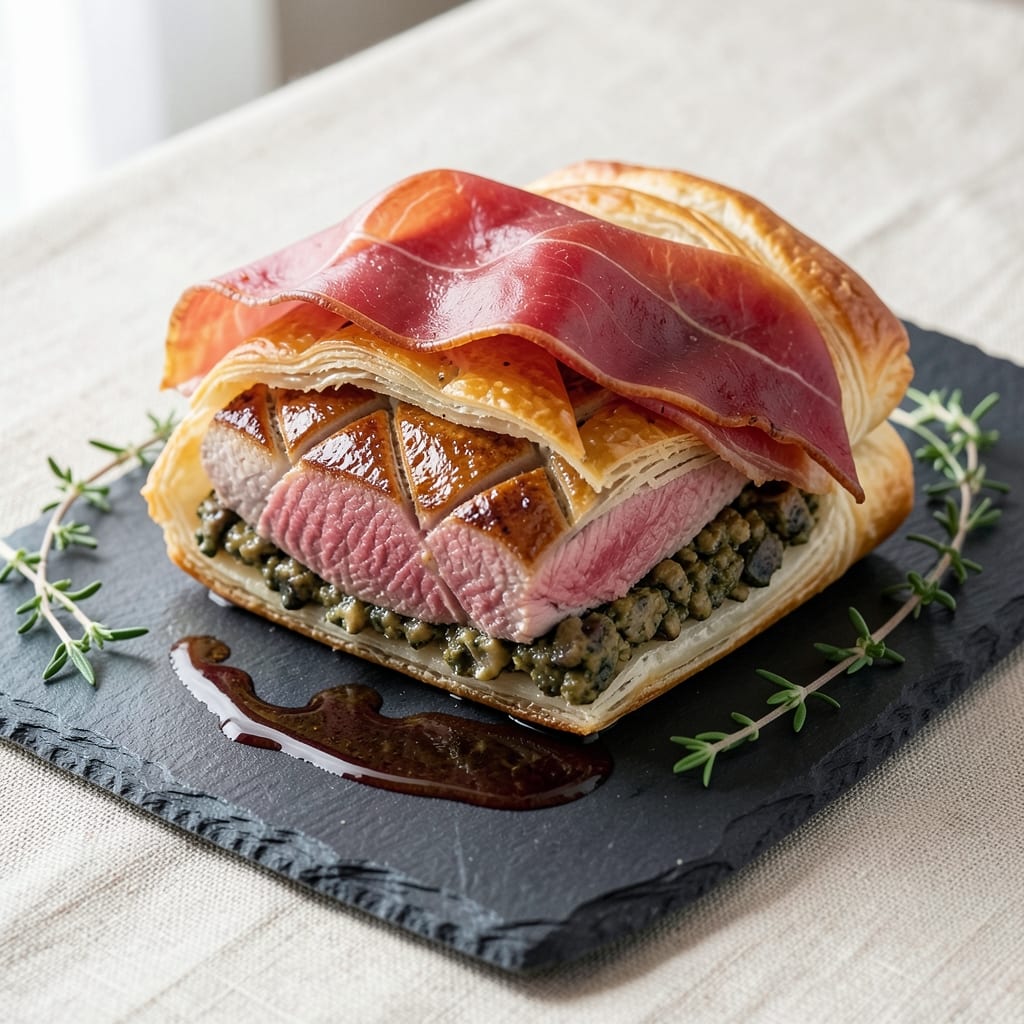
American Beef Wellington recipe transforms a simple beef tenderloin into a showstopping centerpiece with layers of flavor and texture. The secret lies in perfectly seared beef wrapped in prosciutto and mushroom duxelles, then encased in flaky puff pastry that bakes to golden perfection. I've refined this technique over years of trial and error—because getting that crust just right while keeping the meat juicy is no small feat.
What sets this recipe apart is the balance of textures: the crispy pastry shell contrasts beautifully with the tender, juicy beef inside, while the mushroom duxelles adds earthy depth. The prosciutto layer infuses subtle saltiness that ties everything together. Most importantly, this isn't just a fancy restaurant dish—it's achievable at home with the right steps and patience.
By following this method, you'll end up with a restaurant-quality Wellington that's impressive enough for special occasions but simple enough for weeknight dinners. The key is searing the beef properly before wrapping, which locks in juices, and baking at the right temperature to ensure the pastry stays flaky while the meat stays perfectly pink in the center.
Serve with a classic side like roasted asparagus or creamy mashed potatoes to complete the meal. The combination of rich beef and delicate pastry makes this dish unforgettable—just don't be surprised if everyone asks for seconds. Let's get started on creating your perfect Wellington.
Ingredients for american beef wellington
The foundation of a perfect Wellington: premium beef, delicate prosciutto, and rich mushroom duxelles wrapped in flaky pastry.
| Ingredient | Amount | Notes |
|---|---|---|
| Beef Tenderloin 🥩 | 1 ½ lb | Center-cut, trimmed of silver skin |
| Prosciutto di Parma 🥓 | 8 oz | Thinly sliced, high-quality |
| Mushroom Duxelles 🍄 | 2 cups | Finely chopped mushrooms, sautéed |
| Puff Pastry 🥧 | 1 sheet | Store-bought or homemade, thawed |
| Unsalted Butter 🧈 | ½ cup | Softened, for sealing |
| Fresh Thyme 🌿 | ¼ cup | Leaves only, finely chopped |
| Fresh Parsley 🌿 | 0.1 cup | Chopped, for garnish |
| Shallots 🧅 | 2 whole | Minced, for duxelles |
| Garlic Cloves 🧄 | 4 cloves | Minced, for duxelles |
| Dijon Mustard 🍯 | 1 tbsp | For beef searing |
| Olive Oil 🫒 | ¼ cup | For searing |
| Kosher Salt 🧂 | 1 ½ tsp | Diamond Crystal preferred |
| Black Pepper 🌶️ | 1 tsp | Freshly ground |
| Egg Wash 🥚 | 1 whole | Beaten egg, for pastry |
| Semolina Flour 🌾 | 2 tbsp | For dusting |
The beef tenderloin is non-negotiable—center-cut ensures tenderness, and trimming the silver skin prevents bitterness. Whole Foods or local butchers carry the best quality, often pre-trimmed for convenience. For the prosciutto, Prosciutto di Parma delivers the right balance of salt and fat without overpowering. If using store-bought, ensure it's thinly sliced and free of additives. The mushroom duxelles requires cremini or shiitake mushrooms for depth—avoid button mushrooms, which lack flavor. Sauté them until completely dry to remove moisture before blending with shallots and garlic.
No prosciutto? Thinly sliced pancetta works in a pinch, though it's saltier. For the duxelles, walnut oil instead of olive oil adds richness, but traditional olive oil keeps the dish balanced. Fresh thyme and parsley can be swapped for dried at one-third the amount, though fresh is ideal. The Dijon mustard should be high-quality, not the cheap powdered kind—it adds subtle tang that complements the beef. If your puff pastry isn't pre-sliced, use a sharp knife to cut it into a rectangle slightly larger than your beef package. And for the love of pastry, don't skip the egg wash—it's what gives that golden, crisp finish.
The prosciutto and duxelles can be prepped a day ahead and stored in airtight containers in the fridge. The beef, however, should be seared and wrapped no more than 4 hours before baking to maintain juiciness. Once assembled, the Wellington keeps 2 days in the fridge before baking. For leftovers, slice and reheat in a 350°F oven for 10-15 minutes—never microwave, or the pastry will turn soggy. Portion into individual servings for easy reheating, and store any unused pastry wrapped in plastic for up to 3 days.
Why You'll Love This Recipe
- Puff Pastry Shortcut: Honestly, the store-bought puff pastry here is my secret weapon—no rolling, no stress. Just unwrap, wrap, and bake. That golden crust happens while you’re still prepping the duxelles, so you’re not stuck watching the oven like a hawk.
- Prosciutto Magic: Between us, the prosciutto isn’t just decoration—it melts into the beef like a salty, savory hug. One thin slice per side, and suddenly you’ve got that restaurant-worthy depth without extra effort.
- Weeknight to Dinner Party: I make this for my book club just as easily as I do for Tuesday dinners. The leftovers? Even better cold the next day, sliced thin with a sprinkle of flaky salt. (Yes, even on a Tuesday night.)
- Tenderloin Luxury: No dry beef here—the tenderloin stays juicy while the butter-basted crust turns crisp. That first bite? Rich, buttery, and so satisfying it makes grocery-store steak feel like a mistake. Worth every penny.
Step-by-step instructions for american beef Wellington
Here's how to assemble this showstopper with perfect balance between tender beef and crisp pastry.
Prepare the Beef Tenderloin for Sealing
Begin by trimming the 1.5 lb beef tenderloin of any remaining silver skin and pat it completely dry with paper towels. This step is crucial for creating a proper seal with the prosciutto. Using a sharp boning knife, make shallow cuts about ¼-inch deep in a diamond pattern across the entire surface—this creates channels for the mustard to penetrate deeply.
In a small bowl, combine 1 tbsp Dijon mustard, 1.5 tsp kosher salt, and 1 tsp black pepper. Spread this mixture evenly over the cut surface of the beef, pressing gently to ensure it adheres completely. The mustard acts as both a flavor enhancer and a natural glue that will help the prosciutto stick during assembly. Let the seasoned beef rest at room temperature for 30 minutes while you prepare the remaining components.
Assemble the Wellington Layers
Lay out the 8 oz prosciutto di Parma on a clean work surface and arrange the seasoned beef tenderloin in the center. Spread the 2 cups mushroom duxelles evenly over the prosciutto, creating an even layer that extends slightly beyond the edges of the beef. The duxelles should be cool but not cold to prevent the pastry from becoming soggy later.
Roll the prosciutto tightly around the beef, tucking in the sides as you go to create a compact cylinder. Secure with kitchen twine at 2-inch intervals to maintain the shape during baking. This step requires patience—press gently but firmly to ensure the prosciutto adheres completely to the beef. The result should be a tightly wrapped bundle that resembles a small sausage.
Seal with Butter and Prepare the Pastry
Generously coat the wrapped beef with 0.5 cup softened unsalted butter, using your fingers to spread it evenly over the entire surface. This butter acts as both a sealant and a flavor enhancer, creating a golden crust during baking. Place the buttered bundle on a parchment-lined baking sheet and refrigerate for 15 minutes to firm up slightly.
While the beef chills, roll out the 1 sheet puff pastry on a lightly floured surface to about ⅛-inch thickness. Using a sharp knife or pastry cutter, cut a rectangle large enough to wrap completely around the beef bundle with about 2 inches of overlap on all sides. Brush the edges with the egg wash and sprinkle lightly with 2 tbsp semolina flour to prevent sticking.
Encase and Bake to Golden Perfection
Carefully lift the chilled beef bundle onto the center of the pastry rectangle. Fold the long sides inward first, then bring the short ends together and seal completely by pressing the edges firmly. Trim any excess pastry and crimp the edges with a fork for a decorative finish. Brush the entire surface with additional egg wash and sprinkle with 0.1 cup chopped fresh parsley for color and freshness.
Preheat your oven to 400°F. Place the assembled Wellington on a parchment-lined baking sheet and bake for 30-35 minutes until the pastry is deep golden brown and reaches an internal temperature of 130°F (medium-rare). For best results, rotate the pan halfway through baking to ensure even browning. The pastry should be crisp and flaky while the beef remains perfectly juicy inside.
Rest and Serve with Confidence
Transfer the Wellington to a cutting board and let it rest for 10-15 minutes before slicing. This resting period allows the juices to redistribute throughout the beef, ensuring each slice remains moist and flavorful. To serve, carefully slice through the pastry and prosciutto with a sharp knife, removing any twine as you go.
The result should be a perfectly balanced dish where the crisp, flaky pastry contrasts beautifully with the tender, juicy beef and rich mushroom duxelles. Serve immediately with your choice of red wine sauce or roasted vegetables to complete the presentation. The key to success lies in precise assembly and proper resting—skip either, and you risk compromising both texture and flavor.
Pro Tips For Making American Beef Wellington
- SEAR THE LOIN HOT AND FAST: The second you put that beef tenderloin in the pan, crank the heat to medium-high and walk away for 30 seconds. I used to hover, flipping every 10 seconds, and ended up with gray, rubbery crusts. Let it develop a deep brown crust—about 2 minutes per side—before even thinking about the duxelles. That’s where the flavor hides.
- DRY THE PROSCIUTTO LIKE IT’S 1950: Skip the microwave—it turns the prosciutto into sad, limp paper. Instead, lay the slices on a wire rack over a baking sheet and let them air-dry in the fridge for 1–2 hours. The edges will crisp up just enough to add texture without overwhelming the beef. (Yes, it’s boring, but it works.)
- DON’T OVERWORK THE DUXELLES: Once you start chopping those mushrooms for the duxelles, stop when they’re still slightly uneven—no need for perfect uniformity. Then, cook them low and slow until all the moisture evaporates, but resist the urge to mash them into paste. A little texture keeps the filling from turning into a gluey mess when wrapped in puff pastry.
- REST THE BEEF UNDER FOIL: After roasting, tent that tenderloin with foil and let it sit for a solid 10 minutes before slicing. I know, you’re eager—we’ve all been there—but cutting into it too soon means juices pooling on your plate instead of staying where they belong. This is the one time patience pays off.
Common mistakes when making your american beef wellington
Overcooking the Beef
I've seen this happen more times than I can count—beef that's dry and tough because it was cooked past medium-rare. The Wellington's internal temperature should hit 130°F for medium-rare, not 145°F or higher. Use a meat thermometer to check the thickest part of the beef, and pull it from the oven immediately when it reaches the target. Overcooking turns that tender tenderloin into shoe leather, and no amount of rich duxelles can save it. 🔥
Skipping the Mustard
The Dijon mustard isn't just for flavor—it acts as a glue that helps the prosciutto stick to the beef during baking. Without it, your layers might separate, and the prosciutto could slip off while cooking. I recommend using high-quality Dijon (like Maille) rather than the powdered kind. Spread it evenly in those diamond-pattern cuts you made earlier, and press it in gently. This simple step makes all the difference in keeping your Wellington intact.
Not Resting the Beef
Rushing to slice into your Wellington right after baking is a recipe for disaster. The beef needs that 10-15 minute rest to redistribute its juices. I've sliced into Wellingtons too soon and ended up with dry, sad slices. Trust the process—this resting time ensures every bite stays juicy and flavorful. While it rests, use that time to prep your sides or pour yourself a glass of wine. Patience pays off here!
Using Cold Ingredients
Cold ingredients can make your pastry soggy and prevent proper browning. Let your beef sit at room temperature for 30 minutes before assembling, and make sure your mushroom duxelles are cool but not cold. I've seen home cooks skip this step and end up with a Wellington that looks more like a meatloaf than a showstopper. The duxelles should be room temperature when you spread them over the prosciutto—this helps them meld beautifully with the beef without adding moisture to the pastry.
Overworking the Pastry
Puff pastry is delicate, and overworking it will make it tough instead of flaky. Roll it out gently on a lightly floured surface to about ⅛-inch thickness, and avoid pressing down too hard. I like to use a rolling pin with just enough pressure to shape it without flattening it completely. The key is to handle it as little as possible—every fold and press can disrupt the layers that give puff pastry its signature texture. Less is more here!
Poor Pastry Sealing
If your pastry edges aren't properly sealed, you'll end up with leaks during baking, and that's a mess no one wants to clean up. Brush the edges with egg wash and press them firmly together. For extra security, I like to crimp the edges with a fork to create a decorative seal. This not only keeps everything contained but also gives your Wellington that restaurant-worthy presentation. A little extra effort here makes all the difference in the final result. 💫
Nutrition facts
Frequently asked questions
What's the secret to keeping the beef juicy?
The key is searing the beef properly before wrapping and baking it to 130°F (medium-rare). Never exceed 145°F or the tenderloin will turn dry. Also, let the beef rest for 10-15 minutes after baking—this redistributes juices for perfect slices every time.
Can I make the mushroom duxelles ahead of time?
The duxelles can be prepared 1-2 days ahead and stored in an airtight container in the fridge. Just make sure it's completely cool before spreading it over the prosciutto to prevent soggy pastry. Reheat gently if needed before assembling the Wellington.
What if I don't have prosciutto?
Use thinly sliced pancetta as a substitute—it's saltier but works in a pinch. For a vegetarian option, try thinly sliced smoked tofu> or omit it entirely, adding extra duxelles for moisture. Just adjust seasoning if using saltier alternatives.
Why is my pastry not flaky?
Overworking the pastry or using cold ingredients are common culprits. Handle the puff pastry gently and keep all components (especially beef and duxelles) at room temperature. Also, avoid pressing too hard when rolling—just enough to shape it. The layers in puff pastry are delicate!
What's the best way to reheat leftovers?
Slice the Wellington and reheat portions in a 350°F oven for 10-15 minutes on a baking sheet. Never microwave—it'll make the pastry soggy. For individual servings, wrap slices in foil before reheating to maintain moisture.