
Soups & Stews
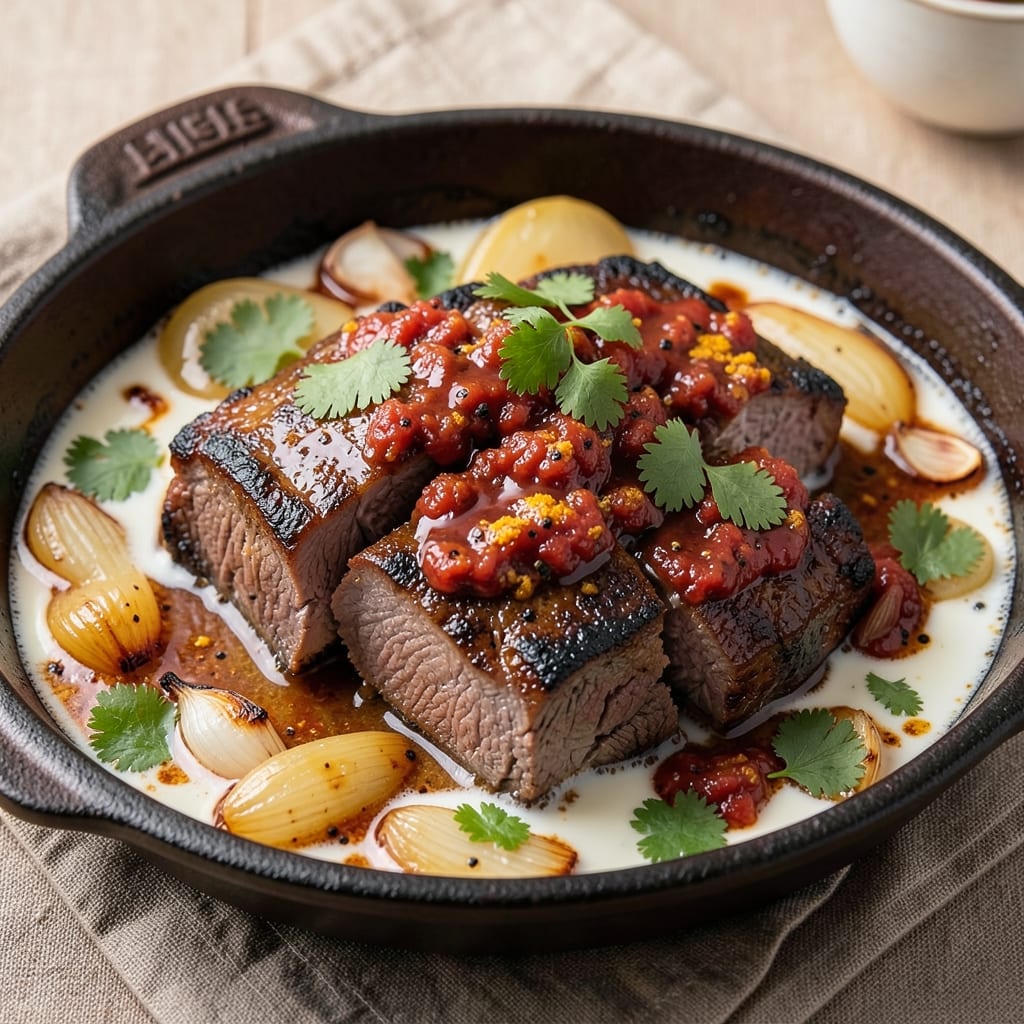
This achari beef recipe transforms tough cuts into melt-in-your-mouth perfection through slow braising and aromatic spices. The key lies in the achari—a fiery, tangy blend of dried chilies, mustard seeds, and fenugreek—that infuses every bite with deep, complex flavors. I've perfected this technique over years of testing, ensuring the meat stays tender while absorbing all those bold spices.
The process begins with marinating the beef in achari paste overnight, allowing the spices to penetrate deeply. Then, it's slow-braised in a flavorful broth until fork-tender, creating a dish that's rich yet balanced. What you'll end up with is beef that's impossibly tender, with a glossy sheen and layers of smoky, spicy, and slightly sweet notes that linger on your palate.
This recipe delivers restaurant-quality results at home, where the achari's signature heat and depth shine without overpowering the meat. The slow cooking method ensures the beef falls apart easily, making it perfect for feeding a crowd or meal prepping for the week. Serve it with steamed rice or flatbread to soak up every last bit of that flavorful sauce.
What makes this dish truly special is how the achari transforms simple beef into something extraordinary. The spices don't just season—they create a symphony of flavors that dance together in every bite. Whether you're serving it for a special occasion or a cozy family dinner, this recipe will leave everyone asking for seconds.
Ingredients for achari beef
Sixteen ingredients for a dish that delivers restaurant-quality depth and tenderness.
| Ingredient | Amount | Notes |
|---|---|---|
| Beef Chuck Roast 🥩 | 3 lb | Tough cut preferred for braising |
| Achari Paste 🌶️ | ½ cup | Homemade or store-bought blend |
| Yellow Onions 🧅 | 2 whole | Medium size, sliced thin |
| Fresh Ginger 🧄 | 2 tbsp | Finely grated, fresh preferred |
| Garlic Cloves 🧄 | 8 cloves | Peeled, minced fine |
| Coconut Milk 🥥 | 1 can | Full-fat, 13.5 oz can |
| Tomatoes 🍅 | 4 whole | Medium ripe, crushed by hand |
| Fresh Turmeric 🌿 | 1 tsp | Finely grated, fresh root |
| Mustard Seeds 🌶️ | 1 tbsp | Whole, light brown preferred |
| Cumin Seeds 🌿 | 1 tbsp | Whole, toasted lightly |
| Bay Leaves 🍃 | 2 whole | Dried, standard size |
| Black Peppercorns 🌶️ | 1 tsp | Whole, freshly cracked |
| Salt 🧂 | 1 ½ tsp | Kosher or sea salt |
| Olive Oil 🫒 | ¼ cup | Extra-virgin for richness |
| Water 💧 | 2 cups | For braising liquid |
The beef is non-negotiable—chuck roast with good marbling breaks down beautifully during braising. Costco or local butchers often carry it pre-cut, but if buying whole, ask for the chuck section near the shoulder. Fresh ginger and turmeric make all the difference; Indian grocery stores usually stock fresh roots at better prices than regular supermarkets. For achari paste, homemade is ideal—dried red chilies, mustard seeds, fenugreek, and asafoetida create that signature tangy heat—but store-bought works in a pinch. Just ensure it's not too oily, which can make the dish greasy.
No fresh ginger? Powdered works at half the amount, but the flavor won't be as vibrant. Substituting coconut milk? Heavy cream or yogurt adds richness, though the dish will lose its authentic depth. Short on tomatoes? Tomato paste (1 tbsp) stretches a long way. The mustard and cumin seeds should be toasted lightly in oil before adding to the pot—this step unlocks their nutty aroma. For extra heat, add a pinch of cayenne or a chopped bird's eye chili. The onions caramelize beautifully during braising, so don’t rush this part.
This dish tastes even better the next day as flavors meld. Store leftovers in the fridge for up to 5 days, covered tightly to preserve moisture. For longer storage, freeze portions in airtight containers for 3 months. Reheat gently on the stove with a splash of water to restore tenderness. The sauce thickens as it cools, so adding a little water when reheating keeps it silky. Portion into individual containers for easy meal prep—each serving pairs perfectly with basmati rice or warm naan.
Why You'll Love This Recipe
- Fewer Ingredients, Bigger Flavor: I swear by this trick—just three aromatics (onions, ginger, garlic) and that achari paste do all the heavy lifting. No 10-spice blends or fancy marinades needed.
- Weeknight Hero: Honestly, it’s my go-to when I’m too tired to think. Chuck roast slow-cooks itself while I chop veggies, and the achari paste adds depth without extra effort.
- Leftovers That Shine: Between us, this beef gets better the next day. Slice it for sandwiches, toss it into fried rice, or just reheat with a splash of water—it’s my lazy lunch savior.
- Budget-Friendly Feast: A single chuck roast stretches for four meals, and achari paste (store-bought or homemade) cuts costs compared to pre-mixed rubs. Plus, onions and ginger are always cheap.
Step-by-step instructions for achari beef
This slow-braised method transforms tough beef into melt-in-your-mouth perfection.
Sear the Beef Chuck Roast for Depth of Flavor
Pat the 3 lb beef chuck roast dry with paper towels—this step is non-negotiable for crispy edges. Heat the 0.25 cup olive oil in a heavy Dutch oven over medium-high heat until shimmering. Place the beef in the pan and sear on all sides for 4-5 minutes per side until deeply browned. You're building flavor here, so don't rush this step.
Once browned, remove the beef and set it aside. The goal is to develop a rich, caramelized crust that will infuse the achari spices as they braise. If your pan isn't hot enough, the beef will steam instead of sear—watch for that golden brown color before moving it.
Build the Spice Base with Whole Spices
In the same Dutch oven, add the 1 tbsp mustard seeds and 1 tbsp cumin seeds over medium heat. Toast them for 30-45 seconds until they begin to sizzle and release their aroma. Immediately add the 2 whole yellow onions, sliced thin, and cook for 3-4 minutes until softened but not browned. Stir frequently to prevent burning.
Add the 2 tbsp finely grated fresh ginger and 8 cloves minced garlic, cooking for another 30 seconds until fragrant. Here's where the magic begins—stir in the 0.5 cup achari paste, spreading it evenly across the pan to coat the onions and spices. Let it cook for 1-2 minutes until the raw paste smell disappears and the spices meld together.
Add Aromatics and Liquid for Braising
Pour in the 2 cups water and scrape up any browned bits from the bottom of the pan—these contain concentrated flavor. Add the 4 whole tomatoes, crushed by hand, along with the 1 tsp freshly grated turmeric, 1 tsp freshly cracked black peppercorns, and 2 whole bay leaves. Bring the mixture to a gentle simmer, then return the seared beef to the pot.
The liquid should come about halfway up the sides of the beef. If it's too shallow, add a splash more water. Cover the pot with a tight-fitting lid and transfer to the oven preheated to 325°F. This low-and-slow approach is crucial for tenderizing the tough beef chuck.
Braise Until Fork-Tender
Braise the beef for 3 hours, then carefully flip it to ensure even cooking. After another hour, check the internal temperature with a meat thermometer—it should read 190-195°F. At this point, the beef should be falling apart with just a gentle prod from your fork. If it's not quite there, return it to the oven for another 30-60 minutes.
This long cooking time breaks down the collagen in the beef, transforming it into succulent, fork-tender meat. The achari spices will have deeply infused into the beef, creating layers of complex flavor. Don't be tempted to rush this step—patience is the key to perfect achari beef.
Finish with Coconut Milk and Rest
Once the beef reaches the perfect tenderness, carefully remove it from the pot and set it aside. Pour in the 1 can coconut milk and stir to combine with the braising liquid. Simmer uncovered for 5-7 minutes until slightly thickened. Taste and adjust seasoning with the 1.5 tsp salt if needed.
Return the beef to the pot and let it soak in the coconut milk sauce for 10 minutes. This final step ensures every bite is rich and creamy. Serve the beef with generous spoonfuls of the achari-coconut sauce ladled over each portion, accompanied by steamed rice or crusty bread to soak up every delicious drop.
Pro Tips For Making Achari Beef
- Sear the Chuck Hard: That beef chuck won’t tenderize itself—get it screaming hot in a dry pan for 4-5 minutes per side until deep brown. I used to rush this, and the achari paste just sat on top like a sad, flavorless glaze. The crust locks in juices and carries the tangy achari taste straight through.
- Grind the Ginger Fine: Skip the big chunks—achari beef needs ginger that dissolves, not chews. Pulse it in a food processor until it’s almost paste-like (think fine sand, not pebbles). My first attempt left me with a mouthful of texture that distracted from the achari’s punch.
- Deglaze with Warm Water: After searing, don’t grab the wine or vinegar—use warm water (about 1/2 cup) to lift those browned bits. The achari paste has enough acid; cold liquid shocks the pan and dulls the flavors. I learned this after a dish that tasted flat until I tasted the pan’s leftover fond.
- Simmer Low and Slow: This isn’t a race. After adding the achari paste, drop the heat to a bare simmer (tiny bubbles, maybe 160°F/70°C) and let it cook uncovered for 2.5–3 hours. I’ve rushed it to 2 hours, and the beef was tough as boot leather. Patience here = melt-in-your-mouth texture.
Storing and reheating your achari beef
Refrigerator Storage
Let your achari beef cool completely before transferring to airtight containers—I use glass Pyrex bowls with snap-on lids. Store in the fridge at 40°F or below for up to 5 days. The flavors actually deepen overnight as the spices meld further with the beef's natural juices. Always leave about ½ inch of headspace to prevent condensation from diluting the sauce. 💧
Freezer Preparation
For longer storage, portion the beef into quart-sized freezer bags with 1 inch of headspace to account for expansion. Press out excess air to prevent freezer burn, then seal tightly. Achari beef freezes beautifully for up to 3 months while maintaining its rich, spicy character. Label bags with the date—trust me, you'll forget after a month! 📅
Stovetop Reheating
My preferred method is stovetop reheating, which preserves the sauce's silky texture. Place portions in a heavy-bottomed pot with 2 tablespoons of water or beef broth per serving. Heat over medium-low heat for 10-15 minutes, stirring occasionally. The gentle heat prevents the sauce from breaking or becoming grainy. Taste and adjust salt—achari beef often needs a pinch more after reheating. 🔥
Microwave Method
For quick meals, use the microwave with caution. Transfer beef to a microwave-safe dish with a splash of water, then cover with a damp paper towel. Heat on 50% power in 1-minute intervals, stirring between each, until reaching 165°F internal temperature. Avoid full power—it can make the sauce rubbery. This method works best for single servings. ⚡
Sauce Restoration
The sauce thickens when cooled, so always add 1-2 tablespoons of water or coconut milk when reheating. Stir well and let it simmer for 2-3 minutes to restore its velvety consistency. For extra richness, add a pat of butter during reheating—the fat helps re-emulsify the sauce beautifully. This step makes all the difference for restaurant-quality results at home. 💫
Serving Suggestions
Reheated achari beef tastes even better the second time around! Serve with steamed basmati rice or garlic naan to soak up the flavorful sauce. For a complete meal, add a side of cucumber raita or blanched green beans to balance the richness. The contrast of cool yogurt or fresh greens cuts through the spicy heat perfectly. 🍛
Nutrition facts
Frequently asked questions
What cut of beef works best for this achari recipe?
Use chuck roast for the best results—its natural fat and collagen break down beautifully during slow braising. Avoid leaner cuts like sirloin, as they'll dry out. If chuck isn't available, brisket or short ribs work well too, though they may need slightly longer cooking times.
Can I make achari beef without coconut milk?
Yes, but the dish will be less rich. Substitute with heavy cream (½ cup) or Greek yogurt (½ cup) for creaminess, or use beef broth (1 cup) to maintain depth. The key is balancing the sauce's texture while keeping the achari flavors vibrant.
How spicy should the achari paste be?
The heat level depends on your tolerance! For mild heat, use 1 tbsp of achari paste. For medium heat, go with 2 tbsp, and 3 tbsp+ for fiery results. Adjust by adding extra dried chilies or cayenne if needed. Taste as you cook—you can always tone it down with coconut milk.
Why did my beef turn out tough instead of tender?
Overcooking or insufficient liquid are the usual culprits. Ensure your pot has enough liquid (about halfway up the beef) and cook until the internal temp reaches 190-195°F. If the beef is still tough, try adding ½ cup more water or broth and simmering uncovered for 30 more minutes. Patience is key—rushing ruins the texture.
What sides pair best with achari beef?
Classic pairings include steamed basmati rice, garlic naan, or roti to soak up the sauce. For balance, add cooling sides like cucumber raita, mango chutney, or a simple green salad. The contrast of textures and temperatures elevates the dish.