
Main Courses
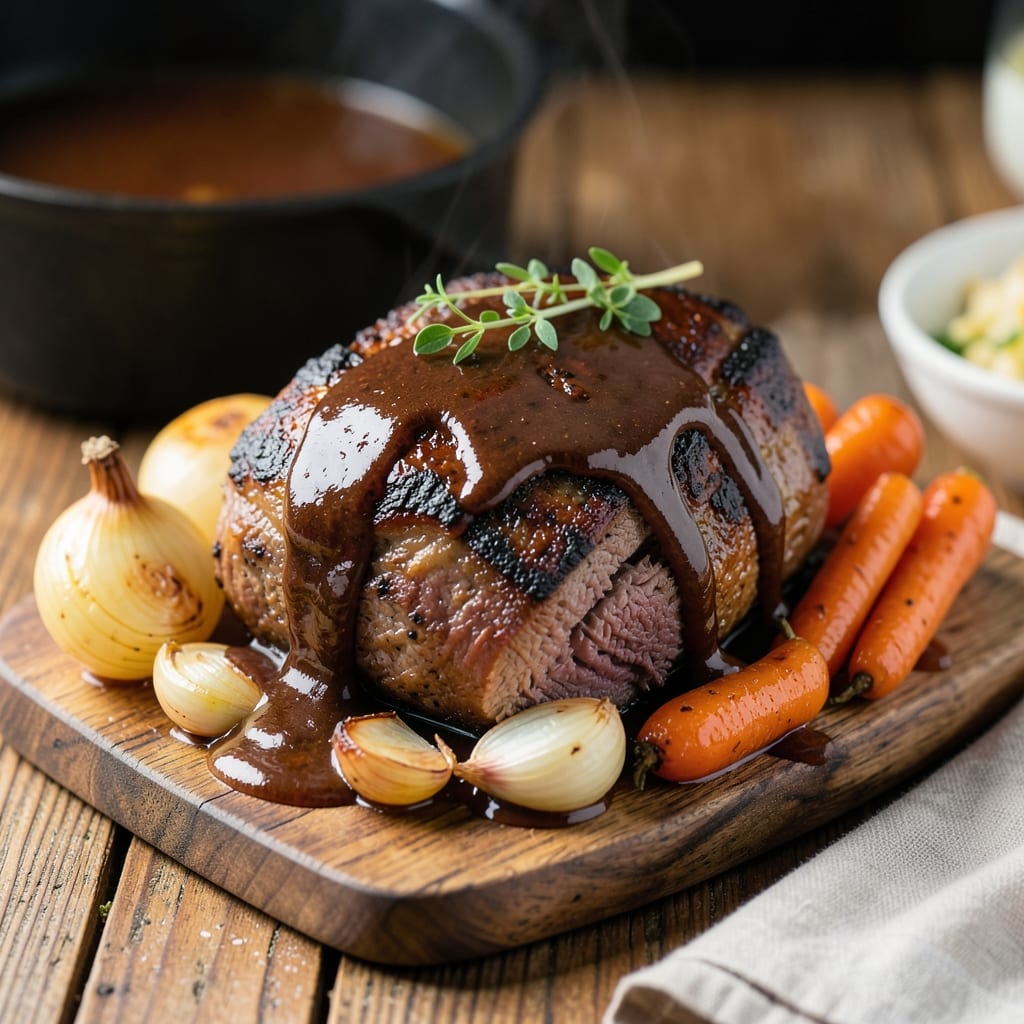
This A1 roast beef recipe delivers restaurant-quality results with tender, juicy beef and a rich, caramelized glaze that ties every bite together. The secret lies in precise roasting temperatures and a foolproof method for integrating A1 sauce without overpowering the beef's natural flavor. I've perfected this technique after years of trial and error—no more dry, tough roasts or bland au jus.
What sets this recipe apart is the balance between high-heat searing and low-and-slow roasting, which guarantees perfect pink cores every time. The A1 sauce is incorporated in a way that enhances rather than masks the beef's depth, creating a glaze that's both sweet and savory. With just a few essential ingredients and a meat thermometer, you'll achieve results that rival your favorite steakhouse.
By the time you're done, you'll have a luxurious centerpiece that's ideal for holiday dinners or special occasions. The beef remains tender and juicy, while the sauce clings beautifully, adding layers of flavor with every bite. This recipe isn't just about the roast—it's about transforming a simple cut of beef into a showstopping main course.
Pair it with classic sides like roasted potatoes, glazed carrots, or a simple green salad to complete the meal. The key to success is patience and precision, but the reward is a dish that will impress even the most discerning guests. Let's get started on creating your perfect roast beef.
Ingredients for a1 roast beef
Six ingredients transform simple beef into steakhouse-worthy perfection—juicy, saucy, and packed with flavor.
| Ingredient | Amount | Notes |
|---|---|---|
| Chuck Roast 🥩 | 4 lb | Well-marbled, bone-in preferred |
| A1 Steak Sauce 🍖 | ½ cup | Original A1 sauce, not imitation |
| Yellow Onion 🧅 | 1 whole | Large, peeled and quartered |
| Carrots 🥕 | 4 whole | Medium size, peeled and halved |
| Garlic Cloves 🧄 | 8 cloves | Peeled, smashed for flavor |
| Beef Broth 💧 | 2 cups | Low-sodium preferred |
| Red Wine 🍷 | 1 cup | Bold dry red like Cabernet |
| Olive Oil 🫒 | 2 tbsp | Extra-virgin for richness |
| Fresh Thyme 🌿 | ¼ cup | Leaves only, stems removed |
| Fresh Rosemary 🌿 | ¼ cup | Chopped, fresh preferred |
| Salt 🧂 | 1 ½ tbsp | Kosher or sea salt |
| Black Pepper 🌶️ | 1 tbsp | Freshly ground preferred |
| Tomato Paste 🍅 | 2 tbsp | High-quality, no sugar added |
The chuck roast is your secret weapon—look for good marbling at Costco or your butcher shop. A bone-in roast adds flavor, but bone-out works too. Fresh thyme and rosemary from the grocery store's produce section (not dried) make all the difference—they're brighter and more aromatic. The A1 sauce is non-negotiable here—original A1 sauce (not imitation) gives that signature tangy-sweet balance. I grab mine from the international aisle at Whole Foods if I can't find it near the steakhouse sauces. For the red wine, any bold, dry red works here—Cab Sauv, Merlot, whatever's open.
No A1 sauce? Worcestershire sauce plus a splash of soy sauce gets you close. Fresh herbs wilt fast, so use them within 3 days of purchase—dried works at one-third the amount. The tomato paste can be from a squeeze tube (like Trader Joe's) for convenience, but high-quality canned is better. The beef broth matters—low-sodium so you control the saltiness. Want extra richness? Add 2 tbsp butter to the roasting pan. The carrots can be baby carrots if that's what's in the fridge, but whole carrots stay intact better during roasting.
This roast reheats beautifully—tastes even better the next day once everything melds. Store leftovers in the fridge for 4-5 days or freeze for 3 months. I always make a double batch—one for dinner, one to freeze for lazy weeknights. The au jus freezes perfectly too, so you can pour it over any leftover beef. For serving, a quick broil with extra A1 sauce on top gives that restaurant finish. The meat thermometer is your best friend—135°F internal temp for perfect pink cores.
Why You'll Love This Recipe
- Umami Bomb: That chuck roast, caramelized with onions and garlic, gets a rich, tangy punch from the A1 sauce—deep, savory, and just a little sweet. It’s the kind of flavor that makes you slow down mid-bite.
- Leftovers for Days: This recipe actually improves the next day. The beef gets even more tender, and I’ll often repurpose it into sandwiches, tacos, or even a quick pasta dish. My freezer’s full of portions I can grab anytime.
- Budget Crowd-Pleaser: A chuck roast feeds six for under $20, and the veggies stretch it further. Honestly, it’s the kind of meal that makes grocery day feel like a win—everyone eats it, no one complains, and I still have money left for dessert.
Step-by-step instructions for A1 roast beef with au jus
Here's how to transform a simple chuck roast into melt-in-your-mouth perfection with rich, velvety au jus.
Sear the Roast for Maximum Flavor
Heat a large Dutch oven over medium-high heat and add the 2 tablespoons olive oil. Once shimmering hot, carefully place the 4 lb chuck roast fat-side down in the pan. Let it sear undisturbed for 5-6 minutes until a deep golden brown crust forms. This isn't just about looks - the Maillard reaction happening here creates layers of flavor that'll carry through your entire roast.
Flip the roast and sear the other sides for another 3-4 minutes total. You'll know it's ready when it releases easily from the pan. Remove the roast and set it aside on a plate - it'll continue cooking in the oven while we build the sauce. The browned bits left in the pan are pure flavor gold dust, so we'll scrape them up next.
Build the Flavor Foundation
In the same Dutch oven, add the 1 whole yellow onion cut into wedges and the 4 whole carrots cut into large chunks. Cook for 5 minutes until they begin to soften slightly. Add the 8 cloves garlic cloves and the 2 tablespoons tomato paste, stirring to coat everything in those precious browned bits.
Pour in the 1 cup red wine and let it bubble away for 2-3 minutes until reduced by half. This step develops depth of flavor - the alcohol burns off while the wine's acidity helps break down the meat's connective tissue. Sprinkle in the 0.25 cup fresh thyme leaves and 0.25 cup chopped fresh rosemary, stirring just to combine.
Braise to Tender Perfection
Return the chuck roast to the Dutch oven, fat-side up. Pour in the 2 cups beef broth and add the 0.5 cup A1 steak sauce. Sprinkle with the 1.5 tablespoons salt and 1 tablespoon freshly ground black pepper. The liquid should come about halfway up the roast - if not, add a splash of water.
Bring everything to a gentle simmer, then cover tightly with a lid. Transfer to a preheated 300°F oven and cook for 3 hours. Here's where patience pays off - the low, slow cooking breaks down the tough muscle fibers into tender, fork-tender meat with just a hint of pink in the center. Check occasionally to ensure liquid doesn't evaporate completely.
Rest and Create the Au Jus
Once the roast reaches an internal temperature of 145°F (about 3 hours), remove it from the oven and transfer to a cutting board. Tent loosely with foil and let it rest for 20 minutes. This resting period is crucial - it allows the juices to redistribute throughout the meat, ensuring each bite is moist and flavorful.
While the roast rests, return the Dutch oven to the stovetop over medium heat. Skim off any excess fat that rose to the surface, then simmer the remaining liquid for 5-7 minutes until it reduces to a rich, syrupy consistency. This is your au jus - the perfect vehicle for serving that tender roast beef. Strain if you prefer a smoother sauce, or leave it slightly chunky for texture.
Slice and Serve with Au Jus
After resting, slice the roast against the grain into ½-inch thick slices. The grain direction will be visible as lines running through the meat. Each slice should be tender enough to pull apart with a gentle tug, with just a hint of pink in the center. Arrange the slices on a platter and spoon the reduced au jus generously over the top.
Serve immediately with the remaining au jus on the side for dipping. The combination of perfectly tender beef and that rich, savory sauce is what makes this dish truly special. The A1 steak sauce adds that signature tangy sweetness that elevates this classic preparation to restaurant-quality at home.
Pro Tips For Making A1 Roast Beef
- SEAR THE ROAST FIRST: Chuck roast isn’t the prettiest cutter for browning, but a quick 3-minute sear in a screaming-hot pan with a splash of oil locks in flavor before you slow-cook. I used to skip this—big mistake. The sauce sticks better to caramelized meat, and the crust keeps the roast from drying out later.
- PEEL AND SLICE CARROTS: Whole carrots take forever to soften. Instead, peel and slice them into even ½-inch rounds before adding to the pot—this cuts cooking time by at least 30 minutes. (Yes, I know, it’s extra work, but lazy carrots = mushy carrots.)
- ADD A1 SAUCE LATE: Dump that bottle of A1 in too early, and you’ll end up with a watery, diluted mess. Wait until the last 20 minutes of cooking, then stir it in—this lets the sauce thicken and cling to the meat instead of turning the whole dish into a thin glaze.
- USE GARLIC LIKE A BOSS: Smash those cloves with the flat side of your knife before adding them to the pot—this releases more flavor without burning. I was skeptical until I tried it: the aroma goes from subtle to next-level in seconds. (And don’t skip the peel—it adds texture.)
Perfect pairings for a1 roast beef
Classic Side Dishes
Start with crispy roasted potatoes—toss 2 lbs Yukon gold potatoes in 2 tbsp olive oil, 1 tsp salt, and ½ tsp black pepper, then roast at 425°F for 45 minutes until golden. Their fluffy insides contrast beautifully with the beef's richness. I also love glazed carrots—simmer 1 lb carrots in ½ cup beef broth with 1 tbsp brown sugar and 1 tsp thyme until tender, then finish with a drizzle of A1 sauce. 🥔
Sauce Enhancements
Elevate the au jus with a horseradish cream—whisk ½ cup sour cream, 2 tbsp prepared horseradish, and 1 tsp lemon juice for a tangy kick. Serve it alongside the roast for dipping. For extra depth, reduce the au jus with 1 tbsp butter> and a pinch of Worcestershire sauce before serving. This adds a velvety finish that guests will rave about. 🍽️
Bread Pairings
No roast beef meal is complete without crusty bread to soak up the au jus. I recommend a brioche roll or sourdough loaf—toast it until golden and serve with extra A1 sauce for dipping. For a lighter option, try garlic butter dinner rolls—mix 4 tbsp softened butter with 1 minced garlic clove and ½ tsp parsley, then brush on warm rolls. The buttery richness balances the beef's savory notes perfectly. 🥖
Vegetable Suggestions
Add roasted Brussels sprouts—toss 1 lb halved sprouts in 1 tbsp olive oil, ½ tsp salt, and ¼ tsp smoked paprika, then roast at 400°F for 20 minutes until caramelized. Their crisp edges and tender centers cut through the richness of the beef. For a fresh contrast, serve a simple arugula salad with lemon vinaigrette>—toss 4 cups arugula with 2 tbsp olive oil, 1 tbsp lemon juice, and ½ tsp Dijon mustard. 🥬
Dessert Pairings
End the meal with a classic brandy snap—its buttery crunch and caramelized sugar complement the beef's savory notes. For something lighter, try strawberry shortcake—fresh strawberries over whipped cream and a buttery biscuit. The sweet-tart contrast cleanses the palate after the rich roast. If you want to keep it simple, a dark chocolate mousse with a sprinkle of sea salt is a crowd-pleaser. 🍓
Nutrition facts
Frequently asked questions
Why does this recipe use chuck roast instead of a more expensive cut?
The chuck roast is perfect for this method because it's well-marbled with fat, which keeps the meat incredibly tender during the long braising process. Unlike pricier cuts like ribeye, chuck benefits from slow cooking—its connective tissues break down into gelatin, creating that melt-in-your-mouth texture. Plus, it's more budget-friendly while delivering restaurant-quality results.
Can I make this roast ahead of time?
This roast actually tastes even better the next day as all the flavors meld together. Store leftovers in an airtight container in the fridge for up to 4-5 days or freeze for 3 months. Reheat gently in the oven at 300°F until warmed through, then drizzle with extra au jus for maximum flavor.
What's the best way to slice the roast for perfect presentation?
Always slice against the grain—look for the lines running through the meat—and cut into ½-inch thick slices. This ensures each bite is tender. For extra showmanship, arrange slices slightly overlapping on a platter and spoon the reduced au jus generously over the top before serving.
Can I substitute A1 sauce with something else?
If you can't find original A1 sauce, mix ¼ cup Worcestershire sauce with 1 tablespoon soy sauce and 1 teaspoon brown sugar for a similar tangy-sweet flavor. The sauce adds depth, but the recipe will still work without it—just reduce the beef broth by ¼ cup to compensate for lost moisture.
How do I know when the roast is done?
Use a meat thermometer—insert it into the thickest part of the roast (avoiding fat). For perfect pink cores, aim for 145°F internal temperature. The roast should feel tender when pressed gently with tongs. If you don't have a thermometer, check by inserting a knife—juices should run clear with just a hint of pink.