
Soups & Stews
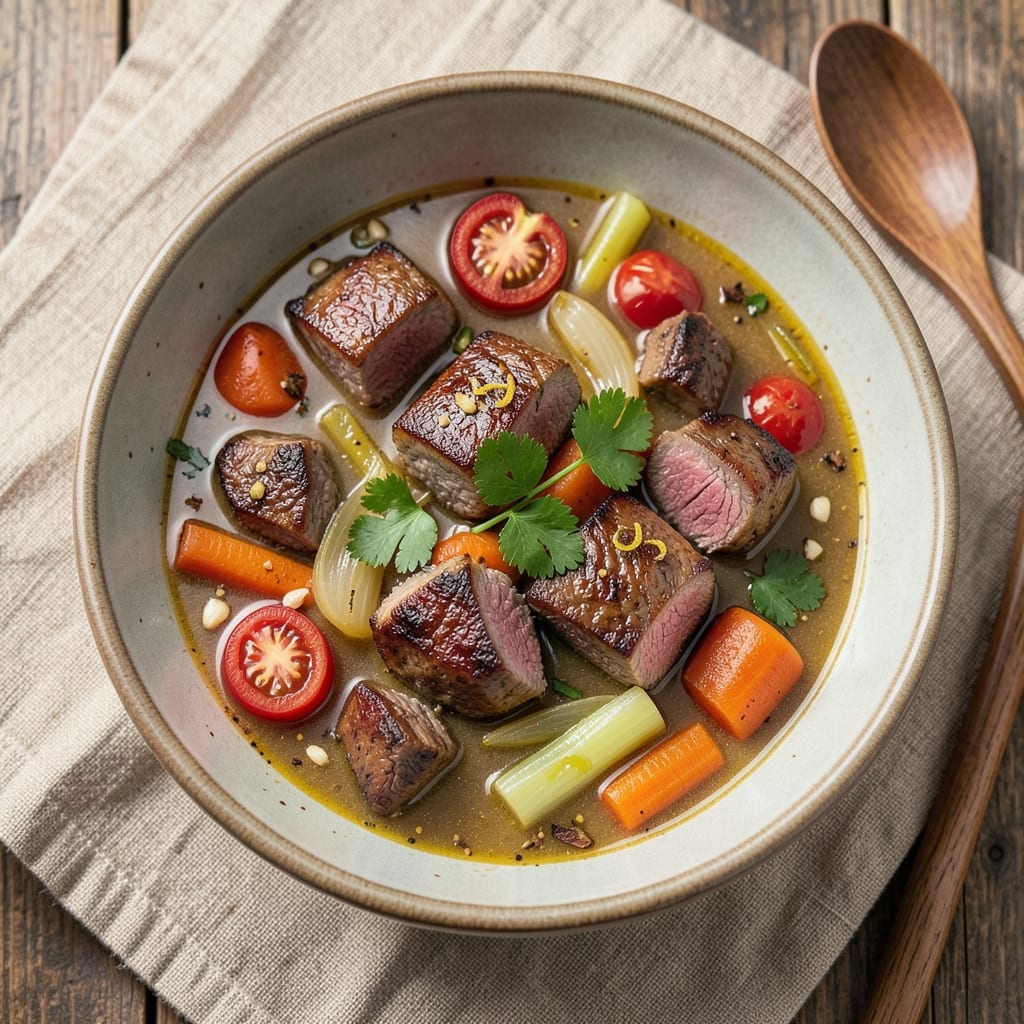
This 5-star vegetable beef soup recipe delivers restaurant-quality depth in every spoonful—caramelized roots, tender beef, and a silky broth that feels like a hug. The secret lies in slow simmering, where beef transforms from tough to melt-in-your-mouth tender while vegetables develop natural sweetness. I’ve perfected this technique over years, balancing traditional methods with modern efficiency for home cooks who crave flavor without fuss.
The foundation starts with searing beef chunks until deeply browned, locking in rich flavor that infuses the broth. Carrots, celery, and onions caramelize in the pot, building layers of complexity before being submerged in a simmering broth of beef, vegetables, and aromatic herbs. This isn’t just soup—it’s a foolproof method for achieving depth that rivals gourmet versions, with a texture that’s velvety yet substantial.
By the time you’re done, you’ll have a bowl of soup where every ingredient shines: beef that falls apart at the touch, vegetables tender yet vibrant, and a broth so rich it coats your spoon. The aroma alone will have everyone gathering around the table, and the first bite delivers on that 5-star promise—comforting, hearty, and packed with restaurant-quality flavor.
Whether you’re feeding a crowd or meal prepping for the week, this recipe scales beautifully while keeping the same depth of flavor. The slow simmering ensures the beef stays tender, and the caramelized vegetables add a touch of sweetness that balances the savory broth. Ready to elevate your soup game? Let’s get started.
Ingredients for 5 star vegetable beef soup
Sixteen ingredients transform into a velvety soup with caramelized roots and melt-in-your-mouth beef.
| Ingredient | Amount | Notes |
|---|---|---|
| Chuck Roast 🥩 | 2 lb | Cut into 1.5-inch cubes |
| Yellow Onions 🧅 | 2 whole | Medium, sliced into half-moons |
| Carrots 🥕 | 4 whole | Medium, peeled, cut into chunks |
| Celery Stalks 🧄 | 4 whole | Trimmed, cut into 1-inch pieces |
| Garlic Cloves 🧄 | 6 cloves | Peeled, lightly smashed |
| Tomatoes 🍅 | 2 whole | Roma, diced (or 1 can crushed) |
| Beef Broth 💧 | 6 cups | Low-sodium preferred |
| Red Wine 🍷 | 1 cup | Dry, like Cabernet Sauvignon |
| Olive Oil 🫒 | ½ cup | Extra-virgin, for searing |
| Fresh Thyme 🌿 | 2 sprigs | Leaves only, stems removed |
| Fresh Parsley 🌿 | ¼ cup | Chopped, for garnish |
| Bay Leaves 🍃 | 2 whole | Dried, removed before serving |
| Salt 🧂 | 2 tsp | Kosher or sea salt |
| Black Peppercorns 🌶️ | 1 tsp | Freshly cracked |
| Tomato Paste 🍅 | 2 tbsp | For deepening flavor |
The beef is non-negotiable—chuck roast delivers that perfect fall-apart texture. Look for well-marbled cuts at Whole Foods or your local butcher shop. If you're short on time, most grocery stores sell pre-cubed chuck, which saves chopping. For the vegetables, organic carrots and celery from the store's produce section have better flavor, but conventional works too. The key is to slice them evenly so they cook at the same rate. Fresh thyme and parsley from the market add brightness—Trader Joe's has great bundles if you're not near a farmers market.
No red wine? Substitute beef broth with a splash of balsamic vinegar—it mimics the acidity. Fresh herbs unavailable? Dried thyme at one-third the amount works, but fresh is ideal. The tomato paste can be swapped for crushed tomatoes if you prefer, though paste intensifies the flavor. For a vegetarian twist, replace the beef with mushrooms or lentils, but the caramelized roots remain essential for that restaurant-quality depth. If you're meal prepping, double the broth and freeze it separately—just reheat and add fresh veggies later.
This soup tastes even better the next day as flavors meld. Store in the fridge for up to 5 days or freeze for 3 months. I always make a double batch—one for dinner, one for lunches. The broth freezes beautifully, so I portion it into ziplock bags for easy reheating. For serving, garnish with fresh parsley and a drizzle of olive oil. The caramelized onions and beef cubes reheat perfectly, so leftovers are just as satisfying as the first bowl.
Why You'll Love This Recipe
- Chuck Roast Magic: I swear, that slow-cooked chuck roast turns tough into melt-in-your-mouth perfection—no fancy cuts needed. The onions and celery build this deep, savory base that makes every spoonful feel like a hug.
- Garlic Bomb Flavor: Between us, the roasted garlic cloves and caramelized onions take this soup to another level—sweet, rich, and just a little smoky. It’s the kind of flavor that makes you pause mid-bite, even when you’re rushing.
- Weeknight Workhorse: This is my go-to when I’m tired but still need a real meal—dump everything in the pot, let it simmer, and boom. Works for busy weeknights, potlucks, or when unexpected company shows up.
- Budget-Friendly Feast: A single chuck roast stretches into five servings, and the veggies? They’re the affordable kind. Honestly, it’s the most satisfying way to stretch a dollar without sacrificing taste—leftovers taste just as good the next day.
Step-by-step instructions for creating silky vegetable beef soup
Here's how to transform simple ingredients into a restaurant-worthy soup with deep flavor and velvety texture.
Sear the Chuck Roast for Maximum Flavor
Pat the 2 lb chuck roast dry with paper towels and cut it into 1.5-inch cubes. Heat 0.5 cup olive oil in a large Dutch oven over medium-high heat until shimmering. Working in batches, add the beef cubes and sear for 3-4 minutes per side until they develop a deep brown crust. This caramelization creates the rich foundation for your soup.
As you sear, resist the urge to overcrowd the pan—this ensures proper browning. Remove the beef and set it aside on a plate. You'll notice the oil will bubble vigorously, which is perfect for building flavor. Once all beef is browned, reduce the heat to medium and add the 2 whole yellow onions sliced into half-moons, 4 whole carrots cut into chunks, and 4 whole celery stalks in 1-inch pieces. Cook these vegetables for 8-10 minutes, stirring occasionally, until they begin to soften and take on color.
Develop the Flavor Base with Aromatics and Wine
Add the 6 cloves garlic cloves (lightly smashed) and 2 tbsp tomato paste to the Dutch oven. Stir well to coat the vegetables in the paste, which will deepen the soup's color and flavor. Cook for 2 minutes until the raw smell of garlic disappears and the paste darkens slightly. This is where the magic happens—those caramelized bits sticking to the bottom will become the soul of your soup.
Pour in the 1 cup red wine and scrape up any browned bits from the bottom of the pot with a wooden spoon. Let the wine simmer for 3-4 minutes until it reduces by about half and its alcohol notes mellow. The wine's acidity will cut through the richness of the beef, balancing the flavors beautifully. Add 2 sprigs fresh thyme and 2 whole bay leaves, then pour in the 6 cups beef broth. Bring everything to a gentle boil, then reduce heat to low to maintain a gentle simmer.
Simmer and Infuse the Beef
Return the seared beef cubes to the pot, along with the 2 whole Roma tomatoes diced (or 1 can crushed tomatoes). The tomatoes will add natural sweetness and acidity that complements the rich beef. Add 2 tsp salt and 1 tsp freshly cracked black peppercorns, then cover the pot. Let the soup simmer gently for 1 hour 15 minutes, stirring occasionally to prevent the vegetables from sticking to the bottom.
Here's the thing—patience is key. The beef needs this time to become fork-tender while the vegetables soften and release their natural sweetness. You'll know it's ready when the beef easily pulls apart with a fork and the vegetables are tender but still hold their shape. The soup should have a velvety consistency with a deep, aromatic scent that fills your kitchen.
Finish with Fresh Herbs and Garnish
Remove the 2 whole bay leaves and 2 sprigs fresh thyme from the soup. Taste and adjust the seasoning if needed—you might need a touch more salt or pepper to balance the flavors. Stir in the 0.25 cup chopped fresh parsley just before serving. The parsley adds a bright, fresh note that cuts through the richness of the beef and vegetables.
Ladle the soup into bowls and serve immediately. The silky smooth texture comes from the long simmering that breaks down the beef and vegetables, while the caramelized root depth provides a satisfying contrast. Each spoonful should deliver layers of flavor—rich beef, sweet carrots, earthy celery, and aromatic herbs—all perfectly balanced. This is the kind of soup that tastes even better the next day, so consider making extra for leftovers.
Pro Tips For Making 5 Star Vegetable Beef Soup
- SEAR THE ROAST FIRST: Chuck roast needs that deep, caramelized crust to build flavor—don’t skip the high-heat sear. After patting it dry, hit it with oil and salt, then let it brown for 4-5 minutes per side (yes, even if it looks uneven). I used to rush this, and the soup always tasted like it needed more seasoning—turns out, the crust locks in the meat’s natural juices and adds richness that nothing else can.
- CUT VEGETABLES UNIFORMLY: Onions, carrots, and celery should be the same size—about ½-inch chunks—so they cook at the same rate. I learned this the hard way when my celery turned to mush while the carrots stayed crunchy. Use a knife or mandoline for consistency, and don’t overcrowd the pot when sautéing; crammed veggies steam instead of brown, and that’s when your soup starts tasting bland.
- SIMMER LOW AND SLOW: After the initial sear and veggie cook, drop the heat to a bare simmer—just a few bubbles breaking the surface—and cover the pot. Chuck roast needs 2.5–3 hours to become tender, but high heat will turn it tough. I was impatient once and ended up with shreds that fought back when I tried to pull them apart. Trust the process; the longer it cooks gently, the more the collagen melts into a velvety broth.
- ADD GARLIC LATE: Toss whole garlic cloves into the pot with the veggies, but don’t crush them until the very end. Raw garlic burns easily and can turn bitter, but when added whole, it infuses flavor without overpowering. Five minutes before serving, smash the cloves with the back of a spoon—this releases their aroma without cooking them to oblivion. (Your future self will notice the difference.)
Perfect pairings for these flavors
Crusty Bread Pairing
Serve this hearty soup with warm, crusty bread to soak up every last drop of that rich, velvety broth. I love using a sourdough loaf from my local bakery—its tangy flavor and dense texture complement the soup perfectly. For a quicker option, French baguettes or Italian ciabatta work beautifully too. Toast the bread lightly before serving so it stays firm enough to handle the soup without turning mushy. 🥖
Cheese Board Contrast
A simple cheese board adds an elegant touch and lets guests customize their bowls. I recommend aged cheddar, Gruyère, and brie for their creamy textures and rich flavors that pair beautifully with the soup’s depth. Add a few crackers and dried fruits like apricots or figs to balance the savory notes. The contrast of cool cheese against warm soup is pure comfort food magic.
Wine Pairings
For a classic pairing, reach for a medium-bodied red wine like Pinot Noir or Merlot. These wines have enough acidity to cut through the soup’s richness while complementing the beef’s depth. If you prefer white, a Chardonnay with a touch of oak adds a creamy contrast. I always keep a bottle of Cabernet Sauvignon on hand—its bold tannins stand up to the soup’s robust flavors, especially if you’ve added a splash of red wine to the recipe. 🍷
Herbed Yogurt Swirl
Brighten each bowl with a dollop of herbed yogurt—mix ½ cup Greek yogurt with 1 tbsp chopped dill, 1 tsp lemon zest, and a pinch of salt. Swirl it into the soup just before serving for a cooling, tangy contrast. This adds freshness and balances the soup’s heartiness without overpowering its natural flavors. It’s a trick I learned from a chef in Italy, and it’s become a staple in my kitchen.
Garlic Butter Toast
Elevate your soup with a side of garlic butter toast. Melt 2 tbsp butter with 2 minced garlic cloves and a pinch of red pepper flakes, then spread it on toasted bread. The garlic’s aroma enhances the soup’s savory notes, while the butter adds a luxurious finish. This simple touch turns an everyday meal into something special—perfect for impressing guests or treating yourself. 🧄
Pickled Vegetable Garnish
Add a tangy crunch with quick-pickled vegetables—slice ½ cup red onions and ½ cup carrots into thin rounds, then soak in ½ cup vinegar, 1 tbsp sugar, and ½ tsp salt for 15 minutes. The bright acidity cuts through the soup’s richness, adding a refreshing bite. I like to sprinkle these on top right before serving so they stay crisp. It’s a game-changer for adding texture and brightness. 🥕
Nutrition facts
Frequently asked questions
Can I use ground beef instead of chuck roast?
Ground beef works but won't give you that same melt-in-your-mouth texture. For a richer result, stick with chuck roast—it's budget-friendly and becomes fork-tender when slow-simmered. If you must use ground beef, brown it well first and reduce the cooking time to 45 minutes to avoid drying it out.
How do I make this soup vegetarian?
Swap the beef for mushrooms or lentils—both add hearty texture. Use 8 oz cremini mushrooms sliced or 1 cup dried lentils (cooked separately). Boost umami with 1 tbsp soy sauce or 1 tsp miso paste to compensate for the missing beef flavor. The caramelized roots remain essential for that restaurant-quality depth.
Why does my soup taste bland after simmering?
Bland soup usually means insufficient browning or seasoning. Always sear the beef until deeply browned—this locks in flavor. Taste as you go and adjust with salt (add gradually) and a splash of red wine or lemon juice for acidity. The tomato paste and bay leaves also deepen flavor—never skip them!
Can I make this in an Instant Pot?
Yes! Sear the beef first, then sauté the vegetables. Add all remaining ingredients and cook on high pressure for 30 minutes, followed by a 10-minute natural release. The pressure cooker cuts time but may require extra broth (8 cups) to prevent thickening. Finish with fresh parsley and a drizzle of olive oil for brightness.
What if I don't have red wine?
No problem! Substitute with 1 cup beef broth + 1 tbsp balsamic vinegar for acidity. Alternatively, use 1 cup apple cider or 1 cup cranberry juice—both add depth. The key is balancing the richness of the beef with a touch of acidity to brighten the flavors.