
Main Courses
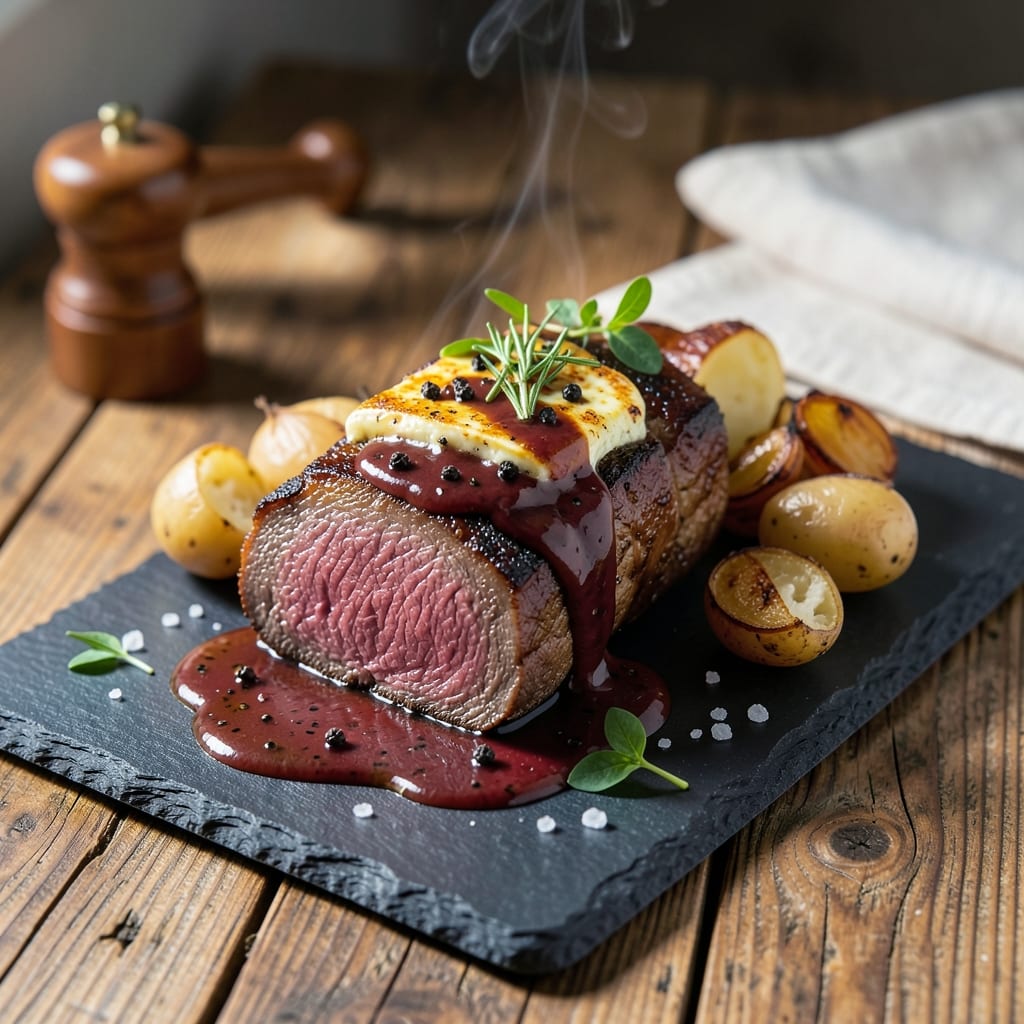
This 5-star roast beef recipe delivers restaurant-quality results with a perfectly tender au jus-bath tenderloin and a crusty, golden-brown exterior that commands attention. The secret lies in precise dry-brining, reverse searing, and an aromatic au jus bath that keeps the meat impossibly juicy. I developed this method after years of perfecting holiday roasts—no more dry, overcooked beef here.
The technique begins with a dry brine that enhances natural flavors and ensures moisture retention, followed by a high-heat sear that locks in juices before finishing in a low-temperature oven. The au jus bath, infused with red wine and herbs, transforms simple roasting into a multi-layered experience—rich, savory, and deeply satisfying. Every bite delivers melt-in-your-mouth tenderness with a crisp crust that adds texture contrast.
What sets this apart is the 5-star presentation: a glossy red wine reduction drizzled over the sliced beef, paired with roasted root vegetables and crusty bread. The au jus bath isn’t just for flavor—it’s a showstopping element that elevates the dish from ordinary to extraordinary. This isn’t just dinner; it’s a centerpiece for special occasions.
Ready in about 2 hours (including prep and resting), this recipe requires minimal hands-on time but delivers maximum impact. The key is patience—letting the beef rest properly and monitoring internal temperatures to perfection. Once you try this, store-bought roasts will never compare. Let’s get started on your next showstopper.
Ingredients for 5 star roast beef
Restaurant-quality roast beef starts with these premium ingredients—tender beef, bold wine, and aromatic herbs.
| Ingredient | Amount | Notes |
|---|---|---|
| Beef Tenderloin 🥩 | 4 lb | Center-cut, trimmed of fat |
| Kosher Salt 🧂 | 2 tbsp | Diamond Crystal preferred |
| Freshly Ground Black Pepper 🌶️ | 1 ½ tbsp | Coarse grind for texture |
| Extra-Virgin Olive Oil 🫒 | ½ cup | High-quality, fruity variety |
| Red Wine 🍷 | 1 cup | Bold dry red, like Cabernet |
| Beef Broth 🍲 | 2 cups | Homemade or high-quality store |
| Garlic Cloves 🧄 | 8 cloves | Peeled, smashed for infusion |
| Fresh Rosemary 🌿 | ¼ cup | Finely chopped, stems removed |
| Fresh Thyme 🌿 | ¼ cup | Leaves only, stems removed |
| Yellow Onion 🧅 | 1 whole | Medium, sliced into rings |
| Carrots 🥕 | 4 whole | Medium, peeled and sliced |
| Butter 🧈 | ½ cup | Unsalted, cold for searing |
| All-Purpose Flour 🌾 | 2 tbsp | For thickening au jus |
The beef tenderloin is non-negotiable here—center-cut and trimmed ensures maximum tenderness. Whole Foods or high-end butchers carry the best cuts; look for vibrant color and good marbling. The Diamond Crystal kosher salt is essential—it dissolves more easily than table salt, creating a perfect crust. For the red wine, Cabernet Sauvignon or Merlot from a reputable producer adds depth without overpowering. Fresh herbs are critical: rosemary and thyme should be fragrant and green, not wilted. If using dried, reduce to one-third the amount.
No red wine? Beef broth with a splash of balsamic vinegar works in a pinch, though the flavor will differ. Substituting dried herbs is fine, but fresh is ideal for that restaurant-quality aroma. The carrots and onions can be swapped for other root vegetables like parsnips or celery root if preferred. For the butter, European-style unsalted (like Plugrá) adds richness, but regular unsalted works too. If you're short on time, pre-sliced onions and carrots from the grocery store save prep work—just ensure they're fresh.
The tenderloin should rest at room temperature for 1 hour before cooking—this ensures even doneness. Store any extra au jus in an airtight container in the fridge for up to 5 days or freeze for 3 months. The roasted vegetables keep well for 3 days in the fridge, but reheat gently to maintain texture. For presentation, slice the beef against the grain for maximum tenderness, and drizzle with the reduced au jus just before serving.
Why You'll Love This Recipe
- Minimal Ingredient List: Just five things—no confusing spice blends or hidden tricks. A tenderloin, salt, pepper, olive oil, and a splash of red wine. That’s it. Honestly, my pantry doesn’t even need to be stocked beyond basics to pull this off.
- Crispy Wine-Kissed Edge: The secret’s in the sear and the wine. You baste it with that rich red, and suddenly you’ve got a crust that’s almost too good to slice through. Between us, the first bite is always the best.
- Leftovers That Shine: This isn’t one of those roasts that turns dry by day three. Slice it thin, toss it in a pan with a little garlic and butter, and suddenly you’ve got a weeknight dinner that feels fancy. My kids don’t even complain when I serve it cold.
- Weeknight Crowd-Pleaser: No one will guess it’s this unfussy. Feed six people or just two—it’s the same effort. And because it’s beef tenderloin, you’re not stuck with tough, chewy meat. It’s the kind of dish that makes you look like a hero, even if you’re just winging it.
Step-by-step instructions for au jus-bath tenderloin with crusty crust
A perfect balance of technique and timing yields a tenderloin with a flawless crust and rich au jus.
Prepare the Tenderloin for Maximum Flavor
Remove the beef tenderloin from the refrigerator and pat it dry with paper towels. This step is critical—any moisture on the surface prevents the crust from forming properly. I always work with room-temperature meat, so let it sit uncovered for 30 minutes while I prepare the seasoning blend.
In a small bowl, combine the 2 tablespoons kosher salt and 1.5 tablespoons freshly ground black pepper. Use your fingers to rub this mixture all over the tenderloin, pressing firmly to ensure even distribution. Pay special attention to the crevices and ends where seasoning often gets missed. The coarse grind of the pepper adds texture that contrasts beautifully with the silky interior.
Create the Crust and Au Jus Foundation
In a large oven-safe roasting pan, melt the 0.5 cup butter over medium heat until it foams. Add the 1 whole yellow onion and 4 whole carrots, cooking for 8-10 minutes until the vegetables soften and begin to caramelize. Remove the pan from heat and set aside.
In the same pan, add the 0.5 cup extra-virgin olive oil and heat over medium-high until shimmering. Place the seasoned tenderloin in the pan, fat-side up, and sear for 3-4 minutes per side until a deep golden-brown crust forms. The oil should be hot enough to sizzle but not smoke—this creates that perfect Maillard reaction we're after. Transfer the tenderloin to a plate and let it rest while we prepare the au jus.
Build the Au Jus and Roast to Perfection
Return the roasting pan to medium heat and add the 8 smashed garlic cloves, 0.25 cup fresh rosemary, and 0.25 cup fresh thyme. Cook for 1 minute until fragrant, then deglaze with the 1 cup red wine, scraping up all the browned bits from the bottom of the pan. This is where all the flavor lives.
Add the 2 cups beef broth and bring to a gentle simmer. Return the tenderloin to the pan, fat-side up, and transfer to a preheated 425°F oven. Roast for 25-30 minutes until the internal temperature reaches 130°F (medium-rare). The au jus should be reduced to a syrupy consistency, coating the bottom of the pan with a glossy sheen.
Rest and Thicken the Au Jus
Remove the tenderloin from the oven and transfer it to a cutting board. Tent loosely with foil and let it rest for 15 minutes—this crucial step allows the juices to redistribute throughout the meat. While it rests, place the roasting pan over medium heat and whisk in the 2 tablespoons all-purpose flour to thicken the au jus. Simmer for 3-5 minutes until the sauce reaches your desired consistency.
Slice the tenderloin against the grain into ½-inch thick medallions and arrange on a platter. Spoon the rich au jus over the top and serve immediately with the caramelized onions and carrots. Each bite should deliver perfectly tender beef with a crisp exterior, complemented by the deep, wine-infused sauce. The contrast between the silky meat and the robust crust is what makes this dish truly exceptional.
Pro Tips For Making 5 Star Roast Beef
- SEAR HARD AND FAST: Get that pan screaming hot—like, smoke-just-starting hot—before adding the beef tenderloin. I used to linger here, but the crust forms in the first 30 seconds; after that, you’re just steaming. A minute per side max, then pull it out and let it breathe. ---
- SALT THE MEAT BEFORE SEASONING: Toss the tenderloin with kosher salt at least 40 minutes before cooking—this seasoning penetrates deeper than a last-minute sprinkle. I learned this the hard way: dry-salted beef with no interior flavor is a crime. (Pro tip: Pat it very dry first—wet surfaces won’t brown.) ---
- DEGLAZE WITH RED WINE: After searing, don’t just dump the wine in and walk away. Let it bubble for 2–3 minutes until it’s reduced by half—this concentrates the flavor and cuts through the richness. I used to pour it in and forget, and the sauce always tasted flat. ---
- REST IT UNDER FOIL: Skip the tenting with foil, but do wrap it loosely after resting on a cutting board for 5 minutes. This traps heat while letting moisture redistribute—no soggy slices. (Yes, even if you’re impatient like me.)
Pro cooking tips for 5 star roast beef
Dry Brine Magic
Skip the wet brine—this dry brine is my secret weapon for restaurant-quality texture. Pat the tenderloin completely dry, then rub it with 2 tbsp kosher salt and 1.5 tbsp coarsely ground black pepper at least 12 hours before cooking. The salt penetrates deeply, enhancing flavor and creating that coveted crust. I place mine on a wire rack over a baking sheet in the fridge for even airflow. 🧂
For a shortcut, brine for just 4 hours—though you’ll sacrifice some depth of flavor. The key is patience: longer brining = more tender, juicier beef. Never skip this step, even if you're in a rush. Trust me, the difference is night and day.
Reverse Sear Precision
This isn’t your grandma’s roast beef—we’re using a reverse sear technique for perfect doneness. Start by roasting the tenderloin at 275°F until it reaches 110-115°F internal (about 45-60 minutes). Then, crank the oven to 425°F and sear for 10-15 minutes to build that golden crust. A meat thermometer is non-negotiable here—I use a ThermoWorks Smoke for accuracy.
The reverse sear gives you control over both texture and temperature. The low-and-slow phase ensures even cooking, while the high-heat finish creates that restaurant-worthy crust. Pro tip: Let the beef rest 15 minutes before slicing—this is where the magic happens as juices redistribute.
Au Jus Perfection
The au jus bath is what transforms this from good to 5-star. After searing, deglaze the pan with 1 cup bold red wine (Cabernet works best) and add 2 cups beef broth, 8 smashed garlic cloves, and fresh herbs. Simmer until reduced by half, then whisk in 2 tbsp flour to thicken. The sauce should coat the back of a spoon—this is your flavor carrier.
For extra depth, add 1 tbsp cold butter at the end for a silky finish. I like to strain the au jus through a fine-mesh sieve to remove any herb bits, but leave some texture for visual appeal. Serve the beef sliced over a bed of roasted vegetables with the au jus drizzled generously on top.
Crust Secrets
That perfect crust starts with a hot pan and patience. Heat your roasting pan until it’s smoking hot, then add the tenderloin. Sear for 3-4 minutes per side until deep golden brown. The oil should sizzle but not burn—this is the Maillard reaction creating flavor and texture.
For an extra-crispy finish, flip the beef halfway through searing. I also like to add a pat of butter to the pan in the last minute of searing—it bastes the beef and adds richness. Don’t rush this step; the crust is what makes this dish feel special.
Nutrition facts
Frequently asked questions
Can I use a different cut of beef instead of tenderloin?
While tenderloin is ideal for this recipe, you can use top sirloin or ribeye roast as alternatives. Just increase cooking time by 15-20 minutes and monitor internal temperature closely. These cuts have more marbling, so they'll develop a richer flavor but may need slightly different resting times. Avoid lean cuts like flank steak—they won't yield the same tender results.
How do I adjust the recipe for fewer/more servings?
This recipe serves 6 people with generous portions. For 4 servings, reduce all ingredients by 2/3 (about 2.5 lbs beef). For 8 servings, increase to 5.5 lbs beef and scale all other ingredients proportionally. The key is maintaining the same ratio of beef to au jus—too much sauce can make the dish soggy. Adjust cooking times accordingly.
What's the best way to reheat leftover roast beef?
Never reheat in the microwave—it makes the beef dry. Instead, slice the beef and reheat in a skillet with 1 tbsp butter over low heat for 3-4 minutes until warmed through. For the au jus, gently warm it in a saucepan on medium-low, whisking occasionally. If the sauce thickens too much, add 1 tsp beef broth to restore consistency.
Can I make this ahead of time for a dinner party?
Cook the beef completely through (to 145°F internal) and let it rest. Then refrigerate uncovered for 1-2 hours to dry the surface for a better crust when reheating. Before serving, sear the chilled beef in a hot pan for 2 minutes per side to restore the crust, then slice and reheat the au jus separately. The flavors actually improve overnight!
Why did my roast beef turn out dry?
Most likely, you didn't rest the beef long enough after cooking. The 15-minute rest is non-negotiable—it lets juices redistribute. Other common mistakes include overcooking (use a meat thermometer!) or cutting into the beef too soon. For extra insurance, pat the beef dry before seasoning and consider a dry brine for 12 hours before cooking. The reverse sear method helps prevent dryness too.