
Soups & Stews
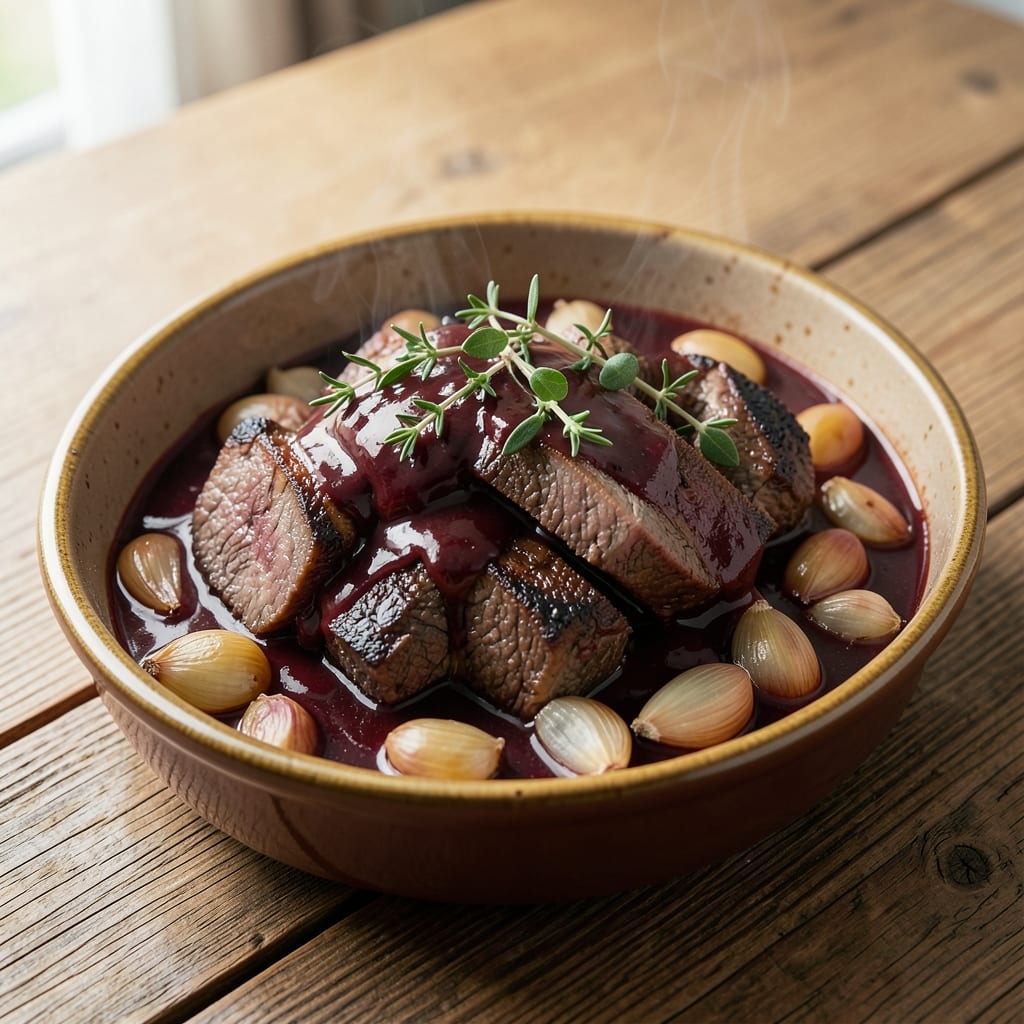
This 5-star beef bourguignon recipe transforms tough beef chuck into melt-in-your-mouth tenderness, all thanks to a deep red wine reduction that simmers for hours. 💛 The secret lies in proper searing and slow braising—techniques that build rich, complex flavors without shortcuts. I’ve perfected this version to deliver restaurant-quality results at home, with a sauce so velvety it coats every bite.
What sets this recipe apart is the balance of technique and simplicity. You’ll start with a deep sear to develop the Maillard reaction, then deglaze with red wine to create the foundation for a sauce that’s both bold and refined. The slow simmer breaks down the beef while infusing it with aromatics like garlic, thyme, and bay leaves, resulting in a dish that’s hearty yet elegant.
By the time you serve it, you’ll have perfectly tender beef chunks swimming in a glossy, wine-infused sauce that’s rich but not heavy. The aroma alone will have everyone gathering at the table—this is the kind of meal that feels special without requiring hours of prep. Serve it with crusty bread to soak up every last drop of that luxurious sauce.
Ready in just 3 hours (including prep), this beef bourguignon is ideal for weekend dinners or holiday gatherings. The beauty of this recipe is that it gets better as it sits, allowing flavors to meld and deepen. Here’s how to make it—step by step—for a dish that rivals your favorite bistro.
Ingredients for 5 star beef bourguignon
Pantry staples plus a few specialty items for restaurant-quality beef bourguignon.
| Ingredient | Amount | Notes |
|---|---|---|
| Beef Chuck Roast 🥩 | 2 lb | Pre-cut into 1.5-inch cubes |
| Red Wine 🍷 | 2 cups | Bold, dry variety like Cabernet Sauvignon |
| Beef Broth 💧 | 2 cups | Low-sodium preferred |
| Shallots 🧅 | 4 whole | Peeled and thinly sliced |
| Garlic Cloves 🧄 | 6 cloves | Peeled and smashed |
| Fresh Thyme 🌿 | ½ cup | Stems removed, chopped |
| Fresh Rosemary 🌿 | 1 tbsp | Needles chopped, stems removed |
| Bay Leaves 🌿 | 2 whole | Dried or fresh |
| Tomato Paste 🍅 | 2 tbsp | Smooth, no sugar added |
| All-Purpose Flour 🌾 | 2 tbsp | For thickening sauce |
| Carrots 🥕 | 2 medium | Peeled and sliced into rounds |
| Olive Oil 🫒 | ½ cup | Extra-virgin for richness |
| Salt 🧂 | 1 ½ tsp | Kosher or sea salt |
| Black Pepper 🌶️ | 1 tsp | Freshly ground |
| Butter 🧈 | 2 tbsp | Unsalted, for finishing |
The beef is non-negotiable—chuck roast gives you that fall-apart texture. Grab the pre-cut cubes from Costco or your butcher counter to save time. For the wine, any bold, dry red works—Cab Sauv, Merlot, whatever's open. The broth matters too: low-sodium keeps the flavors balanced. Shallots add subtle sweetness, but if you can't find them, extra shallot-flavored onion works in a pinch. Fresh thyme and rosemary are ideal, but dried works at one-third the amount if you're in a bind.
No red wine? Beef broth with a splash of balsamic gets you close. The tomato paste can be the squeeze-tube kind from Trader Joe's—no waste, keeps forever. For the carrots, baby carrots work just fine if you're short on time. The butter at the end is crucial—unsalted so you control the seasoning. Want more depth? Add a dash of Worcestershire sauce when deglazing. The flour is just for thickening, so don't skip it—it gives that silky texture to the sauce.
This reheats beautifully—honestly tastes better the next day once everything melds. Keeps 4-5 days in the fridge, freezes for 3 months. I portion mine into containers so lunches are sorted for the week. For leftovers, just reheat with a splash of broth or water to loosen the sauce. The wine reduction gets more concentrated overnight, so save some sauce for drizzling on top before serving.
Why You'll Love This Recipe
- Let’s talk about the real MVP: reheated bourguignon. Most stews turn dry or gluey, but this? It gets better the next day. The flavors meld even more, and the beef stays juicy. I freeze half the batch for lazy Mondays—just thaw and reheat, and boom, you’ve got restaurant-quality comfort food without the fuss. Budget-friendly? Absolutely. Worth it? Always.
- One-Pan Magic: I swear by this recipe because it’s one pan—no chopping boards, no messy sauces splattering everywhere. Just sear the chuck roast, toss in the shallots and garlic, deglaze with wine, and let it slow-cook. The broth thickens right in the pot, so cleanup is just a quick wipe-down. (Yes, even on a Tuesday night.)
- Wine-Infused Richness: That red wine isn’t just for flavor—it’s the secret weapon. The alcohol cooks off, leaving behind deep, savory notes that make the beef ridiculously tender. Add the beef broth, and suddenly you’ve got a sauce so velvety, it’ll make you forget takeout exists. Honestly, the first time I tasted this, I nearly spilled my glass.
- Weeknight to Dinner Party: This dish works everywhere. Need a quick weeknight meal? Toss it in the slow cooker for hands-off dinner. Hosting friends? Serve it with crusty bread and a side salad—suddenly, you’re the hero. Between us, my in-laws now ask for it at holidays, and I’ve never had to stress over a complicated menu again.
Step-by-step instructions for wine-braised beef bourguignon
Here's how to create restaurant-quality beef bourguignon with deep, wine-infused flavors.
🔥 Step 1: Sear the Beef Chuck Roast to Lock in Juices
Heat 0.25 cup of the olive oil in a large Dutch oven over medium-high heat until shimmering. Working in batches, add the 2 lb beef chuck roast cubes and sear for 3-4 minutes per side until deeply browned. This step is crucial—it creates the Maillard reaction that builds rich, caramelized flavors.
Don't overcrowd the pan or the temperature will drop and you'll end up with steamed meat instead of seared. Once all pieces are browned, transfer them to a plate and set aside. You'll notice the beef releases its juices during searing—this is perfect, as it will baste the meat during braising.
🍳 Step 2: Build the Flavor Base with Aromatics
In the same Dutch oven, add the remaining 0.25 cup olive oil and reduce heat to medium. Add the 4 whole shallots and cook for 5 minutes until softened and golden. Add the 6 cloves garlic cloves and cook for 30 seconds until fragrant—don't let them burn.
Stir in the 2 tbsp tomato paste and cook for 1 minute to deepen its flavor. This step creates the flavor foundation that will infuse the beef during braising. Sprinkle the 2 tbsp all-purpose flour over the aromatics and stir for 30 seconds to cook off the raw flour taste.
🍷 Step 3: Deglaze and Simmer with Wine and Broth
Pour in the 2 cups red wine and scrape up all the browned bits from the bottom of the pot. This deglazing step captures all the flavor you've built. Let the wine simmer for 5 minutes until reduced by half. Add the 2 cups beef broth, 2 medium carrots, 2 whole bay leaves, 0.5 cup fresh thyme, and 1 tbsp fresh rosemary.
Return the beef to the pot along with any accumulated juices. The liquid should come about halfway up the beef. Bring to a simmer, then reduce heat to low. Cover partially and cook for 2 hours, turning the beef occasionally. You'll know it's ready when the meat is fork-tender and easily pulls apart.
⏰ Step 4: Finish with Butter for Richness
Once the beef is tender, remove it from the pot and set aside. Skim off any excess fat from the surface of the sauce. Return the pot to medium heat and stir in the 2 tbsp butter until melted and incorporated. Season with 1.5 tsp salt and 1 tsp black pepper to taste.
Return the beef to the pot and let it warm through for 2-3 minutes. The sauce should coat the back of a spoon and have a velvety consistency. Taste and adjust seasoning if needed—this is your chance to perfect the balance of flavors. The butter adds richness that elevates this classic dish to restaurant-quality.
🍽️ Step 5: Serve with Crusty Bread and Mashed Potatoes
Transfer the beef bourguignon to a serving dish, spooning the sauce over the top. Let it rest for 5 minutes before serving to allow the juices to redistribute. This dish tastes best when served immediately, so have your sides ready.
Each bite should deliver tender, flavorful beef with a sauce that's rich, velvety, and packed with wine-infused depth. The carrots should be tender but still hold their shape, and the aromatics should be subtly present in every spoonful. Serve with crusty bread to soak up the delicious sauce and creamy mashed potatoes to balance the richness.
Pro Tips For Making 5 Star Beef Bourguignon
- SEAR THE ROAST UNTIL DARK: I learned this the hard way—rushing the sear means gray meat instead of rich, caramelized crust. Use a heavy pot (Dutch oven if you have one) and cook the chuck roast over medium-high heat until the bottom turns deep brown, almost black in spots. This isn’t about burning; it’s about building flavor that’ll dissolve into the sauce later.
- DEGLaze WITH PATIENCE: After searing, don’t just splash in the wine and stir. Let the wine sit for 30 seconds first—it’ll loosen those browned bits (the fond) that hold all the meaty flavor. Then scrape with a wooden spoon, working in circles, not just straight up and down. This makes a real difference in how rich the sauce becomes.
- SALT THE BROTH LIBERALLY: Store-bought beef broth is usually bland, and bourguignon needs depth. Add 1½ teaspoons of salt per quart of broth (or more if it’s low-sodium) while it simmers. Taste it—you want it to taste like something worth drinking, not just water with flavorings. This isn’t the prettiest method, but it’s the tastiest.
- SKIP THE PRE-COOKED ONIONS: Fresh shallots and garlic cloves, cooked low and slow, add layers of sweetness and complexity that frozen or pre-chopped ingredients can’t match. Slice the shallots thinly (a mandoline helps) and smash the garlic cloves with the flat side of your knife before adding them. They’ll infuse the sauce without turning bitter—your future self will thank you.
Best sauces and condiments for these flavors
Classic Red Wine Sauce
This deep, velvety sauce is the heart of your beef bourguignon, built entirely from the red wine you braise with. The key is patience—simmering the wine with aromatics for 5 minutes reduces it by half, concentrating flavors while allowing the flour to create a silky texture. I recommend using a bold, dry red like Cabernet Sauvignon for its tannins that balance the richness. For extra depth, add 1 tsp balsamic vinegar with the wine to enhance complexity. 🍷
Butter Finish
The final 2 tbsp unsalted butter is non-negotiable—it adds luxurious mouthfeel and rounds out the sauce's acidity. Stir it in off the heat to prevent burning, then let the sauce warm through for 2-3 minutes to fully incorporate. This step transforms the sauce from good to extraordinary, giving it that signature bistro-quality shine. For a lighter touch, use 1 tbsp butter + 1 tbsp cream instead.
Herb-Infused Garnish
Fresh herbs elevate the dish without overpowering. Just before serving, sprinkle with chopped parsley and a pinch of fresh rosemary for brightness. I also like adding toasted breadcrumbs for texture—simply toast 2 tbsp panko in a dry pan until golden and sprinkle on top. This adds a subtle crunch that contrasts beautifully with the tender beef. 🌿
Umami Boosters
For an extra layer of depth, consider these optional additions:
- 1 tsp Worcestershire sauce during deglazing
- 1 tsp soy sauce for umami richness
- 1 tsp fish sauce for complexity (trust me, it works!)
Add these with the wine to let the flavors meld into the sauce. These ingredients are especially useful if you're using a lighter wine or need to compensate for saltiness.
Sauce Variations
Need to adapt? Swap the red wine for 2 cups beef broth + 2 tbsp balsamic vinegar for a non-alcoholic version. For a creamier sauce, stir in ½ cup heavy cream at the end (reduce simmering time to 1 hour to prevent curdling). For a spicier kick, add ½ tsp smoked paprika with the tomato paste. Each variation keeps the core technique intact while tailoring to your preferences.
Nutrition facts
Frequently asked questions
Can I use a different cut of beef besides chuck roast?
While chuck roast is ideal for its fat content and flavor, you can substitute with brisket or short ribs. Avoid lean cuts like sirloin—they won't develop the same tenderness. If using short ribs, reduce cooking time to 1.5 hours as they're already more tender. The key is choosing a cut with enough marbling to stay juicy during braising.
How do I know when the beef is fully tender?
The beef is ready when it easily pulls apart with a fork and the internal temperature reaches 203°F. Press a piece gently—it should feel soft like mashed potatoes. If it's still tough after 2 hours, add ½ cup hot water and simmer uncovered for 30 more minutes. The sauce will concentrate as the liquid evaporates.
What's the best way to reheat leftovers?
Reheat in a covered pot over low heat with 2 tbsp beef broth or water to prevent drying. Stir occasionally and cook for 10-15 minutes until warmed through. For microwave reheating, cover with a damp paper towel and heat in 1-minute intervals on medium power. The sauce will thicken slightly—add a splash of broth if needed.
Can I make this dish ahead of time?
This dish actually tastes better the next day as flavors meld. Cook it completely, then refrigerate for up to 4 days or freeze for 3 months. Reheat gently to preserve texture. For serving, let it sit at room temperature for 15 minutes before reheating to ensure even warmth throughout.
What's the secret to getting that restaurant-quality sauce?
The secret lies in three steps:
- Searing the beef deeply to build flavor,
- Reducing the wine until syrupy, and
- Finishing with butter for richness. Skim excess fat before adding butter, and never boil the sauce—simmer gently to maintain velvety texture. The flour helps thicken, but patience is key—rushing makes the sauce grainy.